24 September 2026, 11:23
Loading...
Havlíček: Changes to ETS are merely cosmetic, Czechia seeks fundamental rethink

oEnergetice.cz, ČTK
24 September 2026, 11:23
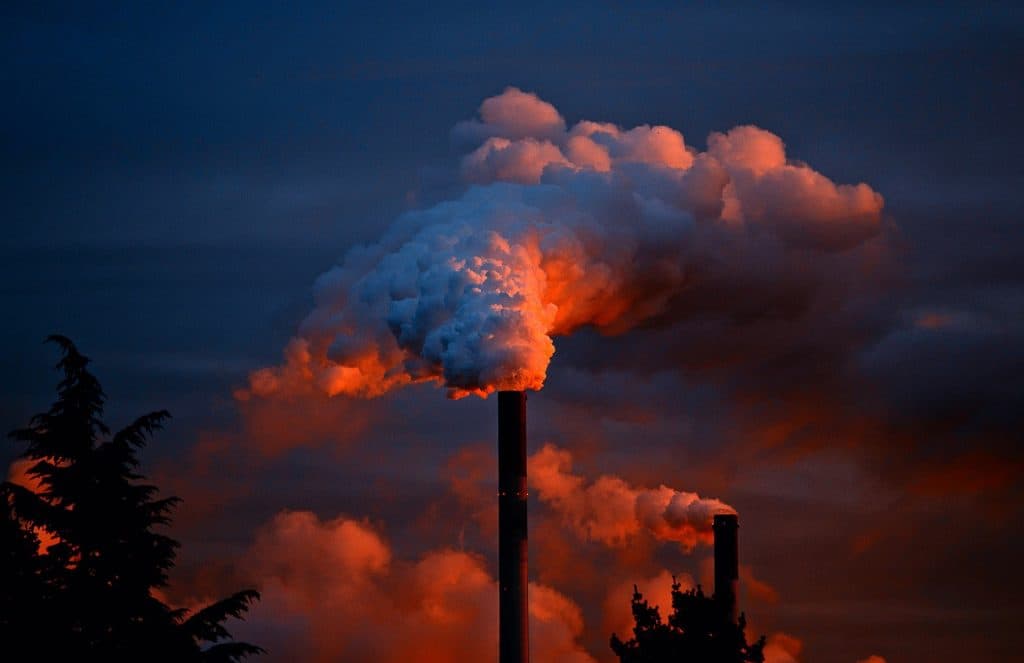
Brussels/Prague, 24 September (ČTK correspondent) - The current proposals for changes to the EU ETS emissions trading system are clearly insufficient, according to Czech Industry Minister Karel Havlíček. Havlíček said this ahead of today’s meeting of industry ministers from European Union countries in Brussels. In his view, these are so far only cosmetic changes. Czechia welcomes every minor improvement, but is calling for a fundamental reassessment of the ETS 1 system and a postponement of the ETS 2 system.
The European Commission proposed in April to amend the so-called market stability reserve (MSR), which regulates the supply of allowances on the market. Under the new proposal, allowances should not be cancelled if more than 400 million are held in the reserve. Instead, they should remain in the reserve as a stock for the future. The EU Council, which represents member states, on Wednesday approved an amendment under which allowances will not be cancelled until 2030. From 2031, however, allowances above the 800 million threshold should be cancelled in the MSR. Czechia supported the proposal, although Prague considers the European Commission’s original proposal to be better.
In addition to the April proposal concerning the market stability reserve, the Commission subsequently came forward in July with an overall review of the ETS 1 emissions trading system. It says, for example, that it wants to maintain the free allocation of allowances after 2030, but newly wants to link it more closely to investments in decarbonisation. Companies will therefore have to submit and implement emissions-reduction plans in order to continue receiving support.
"We welcome every minor improvement. We cannot say that small steps which reduce further increases in energy prices are fundamentally wrong," Havlíček told Czech female journalists in Brussels.
"What is fundamentally wrong is something quite different: that we still do not realise that this will not be enough," the Czech minister added. In his view, everything needs to be done to reduce energy prices in Europe, rather than merely slow their rise.
According to Havlíček, the solution to the current situation would be to postpone the introduction of the ETS 2 system and fundamentally reassess the ETS 1 system. ETS 1 is Europe’s main emissions allowance market, covering energy, large industry and aviation in the EU. The ETS 2 system is due to become operational in 2028 after a one-year delay and should cover road transport and building heating.
"The absolutely ideal option would be to suspend trading under ETS 1 for a certain period, meaning to minimise the impact on large companies as much as possible," the Czech industry minister said.
According to him, 10 to 13 countries share a similar position to Czechia, including Italy and Central and Eastern European states, with the exception of Germany.
Havlíček’s predecessor as minister and current STAN MP Lukáš Vlček told ČTK that he sees the proposed changes as a positive step for Czech energy-intensive industry. "It is necessary to realise that a number of states have different positions... It is therefore important that an agreement was reached," he said. "However, in the context of this issue and the risk of another energy crisis due to Europe’s heavy dependence on fossil fuel imports, I see the modernisation of the European energy sector, aimed at lower energy prices and lower dependence on fossil fuels, as a key issue," he added. According to him, this means not only significant investment in low-emission sources, but also greater interconnection of European energy systems. "This issue is genuinely very difficult and very financially demanding," Vlček said.
The ETS emissions allowance system is intended to motivate companies to reduce emissions. Companies must buy allowances for every tonne of CO2 they emit. The more emissions they produce, the higher their costs, making it worthwhile for them to invest in cleaner technologies.
ETS is the EU’s main tool for combating climate change, but it is not the main cause of the current rise in energy prices in Europe, Reuters noted. However, the changes now proposed by the Commission respond to calls from some governments, including Czechia, Italy and Poland, which want to mitigate the impact of ETS on electricity prices.
According to EU data, ETS costs account on average for around 11 percent of electricity bills in Europe. However, this differs across the 27-member bloc; in Poland, for example, it is 24 percent due to the dominant role of coal-fired power plants in its energy mix. In Czechia, it is 20 percent, while Italy has a similarly high percentage.
Translation disclaimer
This article is a machine translation of the Czech original and has not yet been fully reviewed. In case of any doubt, please refer to the Czech version.
Sdílejte článek prostřednictvím:
You might also like
24 September 2026, 10:30
24 September 2026, 06:56
23 September 2026, 17:27