
24 September 2026, 10:30
Loading...
New EU compromise: major change to emissions allowances market

oEnergetice.cz, ČTK
23 September 2026, 17:27
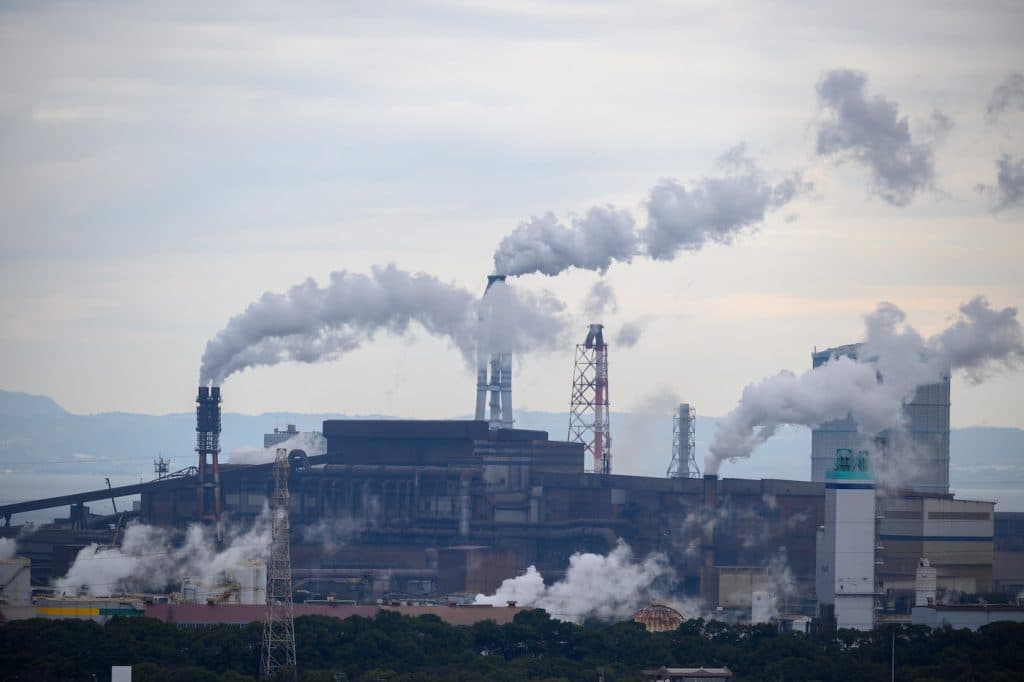
Brussels, 23 September (ČTK correspondent) - EU member states today agreed to amend the European Commission’s April proposal concerning the ETS 1 emissions trading system. The Commission proposed adjusting the so-called market stability reserve (MSR), which regulates the supply of allowances on the market. Under the EC’s new proposal, allowances should not be cancelled if more than 400 million are held in the reserve. Instead, they should remain in the reserve as a supply for the future. However, the states today proposed an amendment under which allowances will not be cancelled until 2030. From 2031, allowances above the 800 million threshold should be cancelled in the MSR, Reuters reported.
"Czechia today supported the presidency’s proposal, although we consider the European Commission’s original proposal to be better," Minister of Industry and Trade Karel Havlíček (ANO) told ČTK.
Cancellation needs to be stopped as soon as possible; the final effect after 2030 will be the same, he added. More allowances mean a more stable and lower price, he said. "Anything that provides even a little relief to industry counts," he said, adding that Czechia had played an important and very active role in the negotiations.
EU member states’ ambassadors discussed the EU Council’s position in Brussels today. The Irish presidency subsequently announced that an agreement had been reached. "Through cooperation and compromise, we have reached an agreement on amending the ETS market stability reserve. We are protecting the integrity of the European carbon market while providing businesses with the predictability they need to decarbonise," said Irish Minister for Climate, Energy and the Environment Darragh O’Brien. Member states will now begin negotiations with the European Parliament, with the aim of agreeing a joint compromise proposal.
The market stability reserve reduces the supply of emissions allowances on the market when there is a surplus and releases them when there is a shortage. According to the Commission, the change it proposed strengthens the mechanism’s role as a buffer and improves its ability to respond to future developments, including market tensions or excessive price volatility. The aim is therefore to increase stability and predictability, the Commission said previously. Czech Prime Minister Andrej Babiš is among those calling for changes to the emissions allowances system.
MEPs approved their position on the Commission’s proposal in September. They also propose changes, although different ones from those of the EU Council. They want to retain the cancellation mechanism and only raise its threshold to 650 million allowances from 1 March 2027.
In addition to the April proposal concerning the market stability reserve, the Commission in July put forward an overall review of the ETS 1 emissions trading system. It says, for example, that it wants to preserve the free allocation of allowances after 2030, but to link it more closely to investments in decarbonisation. Companies will therefore have to submit and implement emissions reduction plans in order to continue receiving support. Negotiations on these proposals in the European Parliament have only just begun.
The ETS emissions allowances system is intended to motivate companies to reduce emissions. Companies must buy allowances for every tonne of CO2 they emit. The higher their emissions, the higher their costs, making it worthwhile for them to invest in cleaner technologies.
The ETS 1 system is Europe’s main emissions allowances market, covering energy, large industry and aviation in the EU. The ETS 2 system is due to become operational in 2028 after a one-year delay and should cover road transport and building heating.
ETS is the EU’s main tool for combating climate change and is not the main cause of the current rise in energy prices in Europe, Reuters noted. However, the agreed changes respond to demands from some governments, including those of Poland, Italy and Czechia, which want to mitigate the impact of ETS on electricity prices.
According to EU data, ETS costs account on average for around 11 percent of electricity bills in Europe. However, this varies across each of the EU’s 27 member states; in Poland, for example, it is 24 percent due to the dominant role of coal-fired power plants in its energy mix. In Czechia, it is 20 percent, while Italy has a similarly high share.
Translation disclaimer
This article is a machine translation of the Czech original and has not yet been fully reviewed. In case of any doubt, please refer to the Czech version.
Sdílejte článek prostřednictvím:
You might also like
24 September 2026, 06:56
23 September 2026, 17:27
23 September 2026, 17:24

23 September 2026, 13:48