3 October 2026, 13:01
Loading...
Six countries, including Czechia, urge EU to protect industry from emissions costs

oEnergetice.cz, ČTK
27 May 2026, 13:06
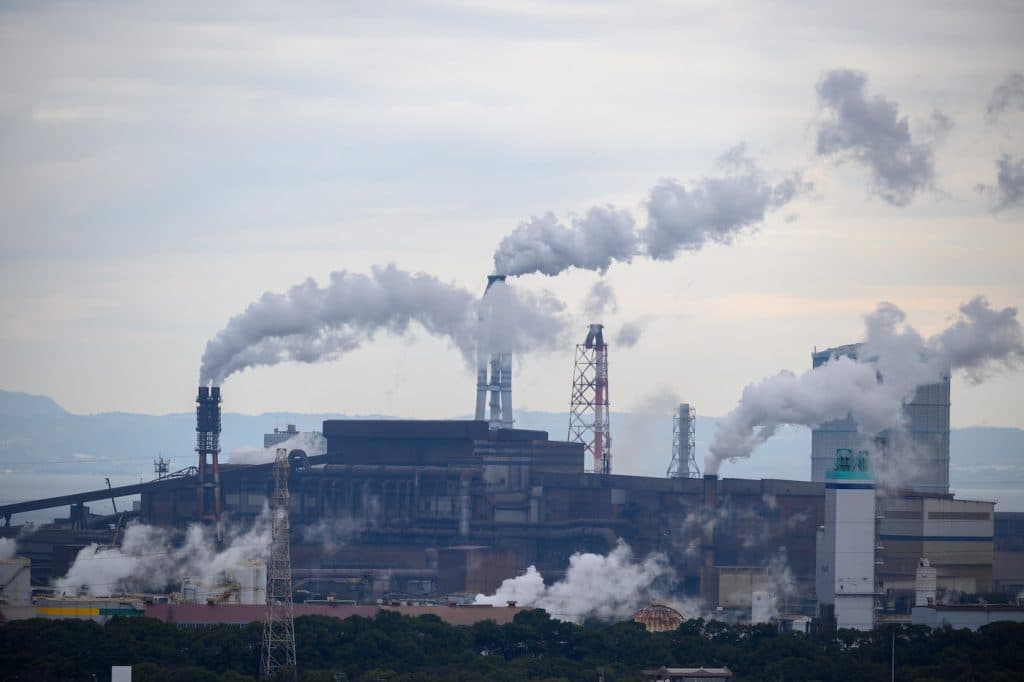
Brussels, 27 May (CTK) - Six EU member states, including the Czech Republic, have called on the European Union to protect their heavy industry from costs linked to carbon emissions. Climate policy, they say, must reflect the new reality, particularly current geopolitical crises and exceptionally high energy prices. In a so-called non-paper seen by CTK, the countries call, among other things, for maintaining the current level of free allowances that let industrial companies emit carbon under the EU ETS.
The emissions trading system, or ETS, is designed to encourage companies to cut emissions. Companies must buy allowances for every tonne of CO2 they emit. The more they emit, the higher their costs, giving them an incentive to invest in cleaner technologies. European Commission President Ursula von der Leyen has previously said that the ETS remains a "proven tool for supporting the transformation of industry", but that it needs to be modernised and made more flexible.
The Czech Republic is one of the EU countries most vocally calling for changes to the EU ETS. After the EU summit in March, Prime Minister Andrej Babiš said that Czechia would continue seeking allies for its proposals, including exempting energy-intensive industry from the emissions trading system until 2034. The European Commission is expected to present its review of the EU ETS1 on 15 July.
The Czech government has also long criticised the extension of emissions trading to road transport and heating (EU ETS 2). The EU ETS 2 system is not yet operational; it is due to start in 2028 after a one-year delay.
The current non-paper, an unofficial document intended for discussion, was backed by Czechia, Bulgaria, Greece, Poland, Romania and Slovakia. "The European Union Emissions Trading System (EU ETS) has long been one of the cornerstones of EU climate policy. It is designed to enable cost-effective emissions reductions while guiding Europe's energy and industrial sectors towards a gradual transition to EU climate neutrality," the document says.
"However, the EU's approach to climate policy must be adjusted to reflect the new reality. Ongoing geopolitical crises and exceptionally high energy prices, together with the forthcoming review of EU ETS benchmarks for the free allocation of allowances in the 2026-2030 period, pose significant challenges and risks for Europe's energy-intensive industries," the text adds.
For energy-intensive industries, including chemicals, steel, cement, ceramics and aluminium, this could risk eroding their competitiveness in global markets, forcing plant closures or relocations outside the EU, the document says.
The emissions trading system is gradually reducing the number of free allowances industrial companies receive, requiring them instead to buy and trade allowances. This creates a financial incentive to decarbonise.
As noted by the Financial Times, the system is facing increasing scrutiny, particularly from member states with more polluting industries. At a time of high energy prices, exacerbated by the war in the Middle East, it further increases their costs.
Italy is also among the countries seeking to suspend the system. Those facing the greatest difficulties include, in particular, countries in eastern and southern Europe, due to their historic dependence on more polluting energy sources. By contrast, wealthier member states in northern and western Europe are further along in decarbonisation and continue to support ambitious climate policy.
Translation disclaimer
This article is a machine translation of the Czech original and has not yet been fully reviewed. In case of any doubt, please refer to the Czech version.
Sdílejte článek prostřednictvím:
You might also like
3 October 2026, 07:43

2 October 2026, 21:55
2 October 2026, 15:14