25 September 2026, 09:51
Loading...
Study: Czech Republic must invest CZK 3 trillion in decarbonisation, unrealistic for industry

oEnergetice.cz, ČTK
26 November 2025, 13:37
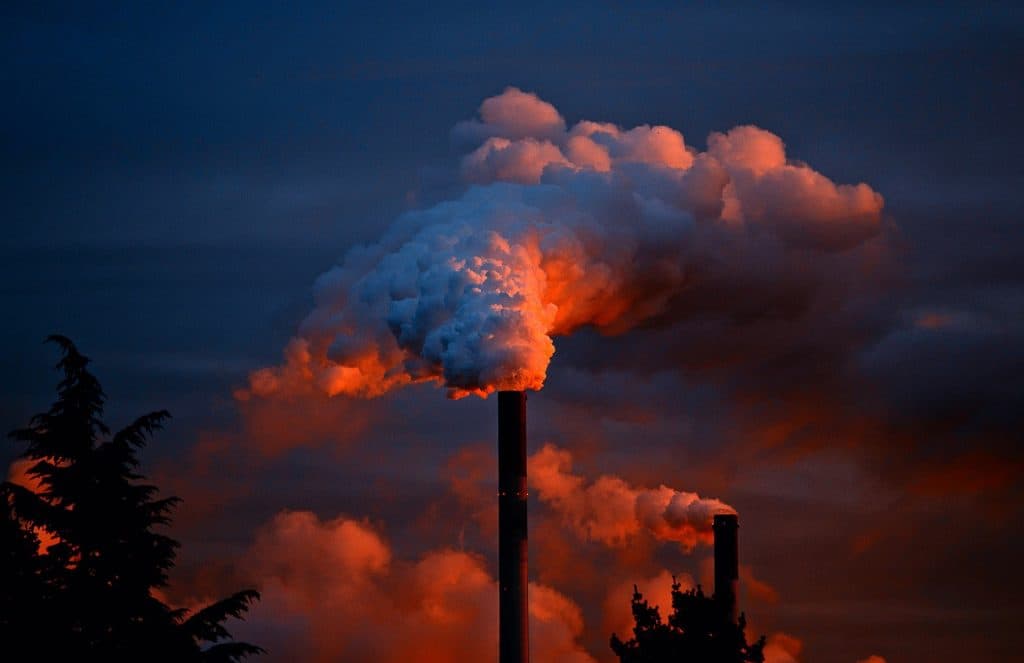
The Czech Republic will have to invest more than CZK 3 trillion in industrial transformation and decarbonisation to meet the EU's new climate targets. However, a several-fold increase in investment compared with current levels is beyond the financial and technological capacity of domestic industry. This poses a serious risk of a loss of competitiveness, particularly for energy-intensive companies. This follows from a study by consultancy EGU for the Confederation of Industry of the Czech Republic, presented to journalists today by their representatives.
In November, the EU approved a new climate target under which the bloc should reduce emissions by 90% by 2040 compared with 1990. Five percent of the emissions reduction may be achieved through investments in decarbonisation projects in third countries. The target applies to the EU as a whole, while individual member states may have different shares.
Meeting the new climate targets will require a significant acceleration of decarbonisation in domestic industry, and very soon, according to the study. Massive investments will be needed, particularly in electrification and new technologies, for example for the use of hydrogen or carbon dioxide storage. However, many of these technologies are not yet commercially viable in industry, according to the study.
"This would bring unprecedented investment and technical demands over the next 15 years that are not realistic and, at the same time, are effectively crippling for a substantial part of energy-intensive industry," said Michal Kocůrek, EGU project director and co-author of the study.
According to the Confederation of Industry and Transport, Czech companies in energy-intensive sectors have no chance of earning enough to finance such a major increase in investment. "On the contrary, their profitability is already steadily declining as a result of the measures adopted so far. The payback and profitability of such investments are also highly problematic – which is naturally of interest to every bank when negotiating potential loans," said Milan Brejchal, a member of the board of the Confederation of Industry and Transport of the Czech Republic.
Metallurgy, the chemical industry and the production of non-metallic materials – namely cement, lime, glass and ceramics – have long been under particular pressure.
The study outlined three basic scenarios. It estimates that achieving an 85% reduction in emissions would require investment of CZK 3.2 trillion, while a 90% reduction would require up to CZK 3.8 trillion. According to EGU, the third scenario shows the maximum level of investment that Czech industry can manage. It envisages investment of approximately CZK 1.2 trillion.
According to the confederation, Czech companies will lose out primarily to countries with less stringent regulation and more favourable conditions for developing renewable energy sources. It therefore calls for the targets to be adapted to domestic conditions. The confederation also called for measures that, according to industry representatives, would facilitate certain processes in the industrial transformation. These include accelerated depreciation of investments in decarbonisation projects, simplified permitting procedures and a more stable investment environment. Industry representatives are also calling for lower costs for energy-intensive companies, for example by adjusting regulated energy prices or better targeting public support.
Translation disclaimer
This article is a machine translation of the Czech original and has not yet been fully reviewed. In case of any doubt, please refer to the Czech version.
Sdílejte článek prostřednictvím:
You might also like
24 September 2026, 11:23

24 September 2026, 10:30
24 September 2026, 06:56