Can rising electricity demand from AI keep U.S. coal plants in the market?

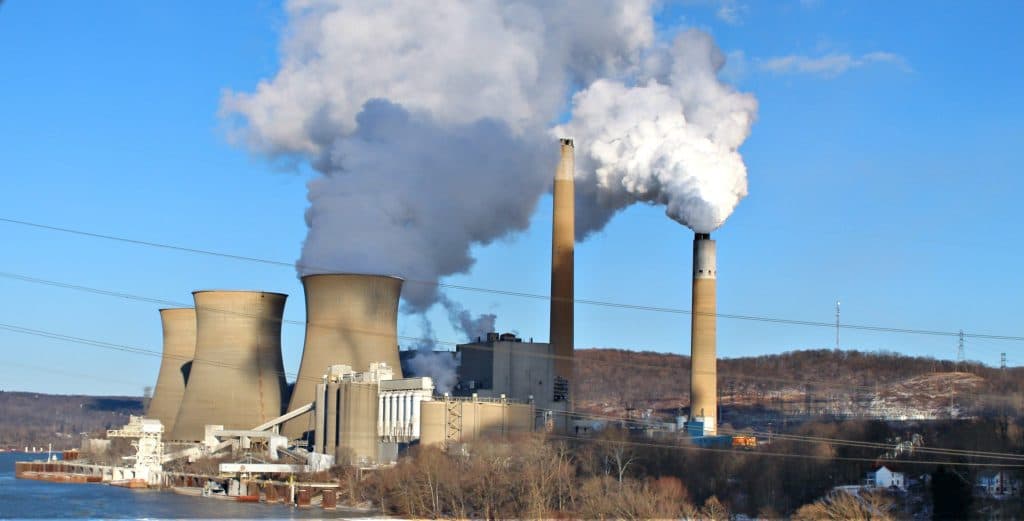
The gradual replacement of coal-fired power plants with other sources is an issue not only in Europe, but also in other parts of the world. The retirement of old coal-fired plants has also been taking place gradually in the United States in recent years. There, renewables and cheap natural gas, which the country has in abundance, are pushing coal out of the market. However, expected growth in electricity demand could slow coal’s retreat from the market. Expectations are particularly strong around the development of artificial intelligence, which is also expected to lead to a revival of nuclear power plants in the U.S.
Continued electrification and the growing use of artificial intelligence are frequently cited factors in forecasts for future electricity demand. Further growth in demand could lead to a reassessment of original plans to retire old power plants, particularly coal-fired ones. In the United States, according to S&P Global, the shift away from coal is gradually slowing.
Coal-fired plants with a combined capacity of just 3 GW are expected to close this year, the lowest figure in the past 10 years. Plant operators are also revising their plans for next year, when 14.1 GW of coal-fired capacity is expected to be retired in the U.S., according to the publication. At the end of last year, however, analysts at S&P Global Market Intelligence had expected 16.6 GW of coal capacity to be retired in 2025.
One of the key reasons is the construction of new data centers for artificial intelligence. New demand from data centers in the U.S. is expected to double to 47.5 TWh in 2024-2025, and rise more than eightfold to nearly 200 TWh by the end of the decade.
“There is certainly a strong chance that many existing coal-fired power plants will run longer than expected before the current forecasts of a sharp rise in electricity demand from data centers or due to electrification,” Nick Moglia, an analyst at CreditSights, told S&P Global Commodity Insights.
According to S&P Global’s original analysis from the end of 2023, coal plant operators planned to close plants with a capacity of 34.2 GW between 2025 and 2027. They have now reduced that forecast by more than a tenth, to 29.9 GW.
Data centers as a driver of electricity consumption
Expectations for data center consumption in the United States may sound very ambitious. A preliminary study by Lawrence Berkeley National Laboratory, part of the U.S. Department of Energy, shows that data centers could account for 9% of U.S. electricity consumption as early as this year, according to S&P Global. The Electric Power Research Institute has similarly said that data centers could account for 4.6 to 9.1% of consumption by 2030.
“The industry faces a regulatory mandate to close its coal fleet by 2032 or modernize it using technologies that have not yet been commercially proven at scale or made available at a reasonable cost,” Conor Bernstein, a spokesperson for the National Mining Association, told S&P Global. “This mandate runs up against the country’s energy reality: sharply rising demand for new power, rapidly declining grid reliability and enormous challenges in actually building and effectively integrating renewable energy sources,” he added.
The future operation of coal-fired plants is a question not only for their operators, but also for coal miners. They have steadily lost a large number of customers in recent years, but some are now counting on rising electricity demand.
“When you look at the situation we’re in, you see that electricity demand is at a record high and continues to grow because of data centers, electrification, manufacturing and other things that will require more electricity, not less. We’re in such a hurry to transition to renewables and shut down coal-fired power plants that it could have serious unintended consequences,” said Jimmy Brock, chief executive of Pennsylvania coal miner Consol Energy Inc.
Not everyone sees a bright future for coal
The Institute for Energy Economics and Financial Analysis disputes the view that a sharp rise in electricity demand can keep coal-fired power plants in the game. Based on announced plant closures, the age of the coal fleet and the steady decline in the use of operating units, the institute believes that the coal capacity remaining in the U.S. at the end of 2030 could be retired by 2040.
“The outlook will not improve, particularly because the rapid build-out of solar power and battery storage, along with additional wind and gas-fired power plants, continues to undermine coal’s economic and technological viability,” the institute’s analysts said, according to S&P Global.
Translation disclaimer
This article is a machine translation of the Czech original and has not yet been fully reviewed. In case of any doubt, please refer to the Czech version.