23 October 2026, 14:38
Loading...
Czech coal regions to share CZK 41 billion. Lack of time and inadequate preparedness are a problem
Ekonews.cz
15 May 2023, 14:27
Three Czech regions will have to deal with the negative impacts of moving away from energy based on coal combustion. The Moravian-Silesian, Ústí and Karlovy Vary regions are already working to secure as much funding as possible from the Just Transition Operational Programme for projects that will create new business and employment opportunities. CZK 41 billion is currently at stake, although not all projects appear convincing.
The coal regions will divide the funding according to five indicators reflecting the current situation in each region and their anticipated needs for the transition to a low-carbon economy. The largest share, CZK 18.9 billion, is set to go to the Moravian-Silesian Region. The Ústí Region is preparing projects worth CZK 15.8 billion and the Karlovy Vary Region projects worth CZK 6.3 billion.
Projects in each region are divided by importance and investment size into strategic, umbrella and thematic projects. The first category is intended to have a significant impact on the entire region and help local companies and entrepreneurs find new ways of making money from something other than fossil fuels. These are larger-scale plans, often previously selected by the government together with the region. In each of the three regions, they will absorb roughly half of the funding allocated to the region, and each region envisages around ten projects of this scale.
For umbrella projects, support typically ranges from tens to hundreds of thousands of koruna, with a maximum of CZK 5 million per project. The region will launch calls only after applying for funding. This is expected to happen around September this year. The third category consists of projects focused thematically on preserving employment, developing digital services or the circular economy.
The problem is that everything is taking place under time pressure. Project authors were able to submit strategic projects from 31 March 2021, and the call closed on 30 April of the same year. By the end of June 2021, the regions were to select those they considered most beneficial and submit them to the Ministry of Regional Development. Calls under the Just Transition Operational Programme (OPST) were only announced late last year after delays, while the funding must be invested by 2029.
Non-profit organisations point out that project allocation should not undermine the “polluter pays” principle. That is, companies that contributed most to environmental degradation in the region in the past will now receive subsidies to remedy the consequences of their activities.
Podolupark, Black Cube and an eco-campus
The Moravian-Silesian Region has so far performed best of all the regions in submitting major projects. According to regional spokeswoman Nikola Birklenová, nine of the 13 strategic projects have already been submitted, while project preparation is being finalised for the remaining four. The submitted projects are now being assessed by the State Environmental Fund.
According to her, the selection process was standard and involved the public. “We held a number of webinars and conferences for the non-profit sector, entrepreneurs and municipalities to present the opportunities and planned strategic projects under this operational programme. At the same time, several public consultations were held directly with citizens, where the operational programme was presented, including specific planned projects in the given area,” Birklenová says.
One of the strategic projects is PDI’s Podolupark Karviná. It is to involve building a facility for a waste plasma gasification and hydrogen production centre, as well as constructing a photovoltaic park. It is also to include a residential zone. The project has a budget of CZK 7.6 billion, with subsidies expected to cover CZK 1.3 billion of that amount.
Another strategic project is Black Cube, a Moravian-Silesian scientific library costing CZK 2 billion. It aims to become a centre for the region’s digital transformation, science and innovation, and to receive CZK 1.7 billion from the programme.
Budget-intensive projects also include EDEN Karviná, a research and education park, which aims to draw CZK 2.5 billion in subsidies. The core of the project is to be an “eco-campus” of the Silesian University, linked to the construction of large-capacity greenhouses for research and environmental education.
Tykač and ČEZ also apply
In the Ústí Region, an application has so far been filed for just one strategic project: the Transformation Centre of the Ústí Region, located on the premises of a former secondary school on Stará Street in Ústí nad Labem. According to regional spokeswoman Magdalena Fraňková, others will follow in the second and third quarters, at least according to declarations by the project authors. There are ten priority strategic projects in the region, while lithium mining at Cínovec would apply only if one of them failed.
Another project is the so-called Green Mine. It involves the resocialisation and revitalisation of the ČSA mine, backed by Sev.en Inntech, owned by billionaire Pavel Tykač. In addition to transforming the ČSA mine, it is to include infrastructure upgrades, construction of an aquaponics farm and industrial zone, photovoltaic installations, a development project and retraining of the company’s employees. Around one-third of the total CZK 3.5 billion is to be drawn from European funds.
Another major project is ČEZ’s factory for manufacturing electric vehicle batteries. The semi-state energy group estimates investment costs at almost CZK 60 billion and will apply for CZK 1.25 billion from the Just Transition Operational Programme. The project is closely linked to lithium mining at Cínovec.
“We will continue active discussions on needs and projects and negotiate with ministries for the best possible conditions for drawing the funds, so that they can be used within the set deadlines, which are very tight for the OPST compared with other programmes,” Fraňková says.
“We have plenty of time”
The Karlovy Vary Region has not yet submitted any strategic project under the OPST call. According to regional spokeswoman Jitka Čmoková, the first applications could be submitted during the second quarter of this year. “Applications can be submitted until 31 December 2023, so there is still plenty of time,” Čmoková says.
The Regional Standing Conference of the Karlovy Vary Region, which selected the projects, did not set a ranking, according to her, as the aim is to support all of them. “It is a relevant possibility that a feasibility study will show that one of the projects is not viable,” she admits. Indeed, one project was already dropped during last year: the Transformation Agency of the Karlovy Vary Region.
The region is reportedly making efforts through workshops and seminars for municipalities and the private sector alike. “At roughly two-month intervals, the regional councillor responsible for regional development holds online meetings intended to provide information to the public and collect potential proposals. Several informal meetings have been held with representatives of local groups and the expert community,” Čmoková says. At the same time, potential applicants are reportedly being contacted to identify the areas with the greatest funding needs.
One project in the Karlovy Vary Region is Sokolovská uhelná’s “green development”, which is to cost CZK 3 billion. The company is seeking around CZK 1 billion in subsidies. The aim is to create carbon-neutral industrial zones on mined-out land, although their eventual use is not yet known. Plans include, for example, the construction of production halls powered by renewable energy.
Sokolovská uhelná, which among other assets owns the lignite-fired Tisková power plant, is also planning the revitalisation and resocialisation of the Medard Lake site northwest of Sokolov. This is to involve engineering and construction preparation of the area, followed by investments including a development project and investments in research and innovation services. OPST subsidies are expected to cover CZK 600 million.
Coordinator’s doubts
CZK 41 billion is not a staggering amount in terms of Czechia’s budget. However, it is quite enough money for the three selected regions simply to waste. Projects must therefore be selected carefully. The National Coordination Authority, a role performed by the Ministry of Regional Development (MMR-NOK), has its doubts. This follows from its 2022 Report on Risks in Programme Implementation.
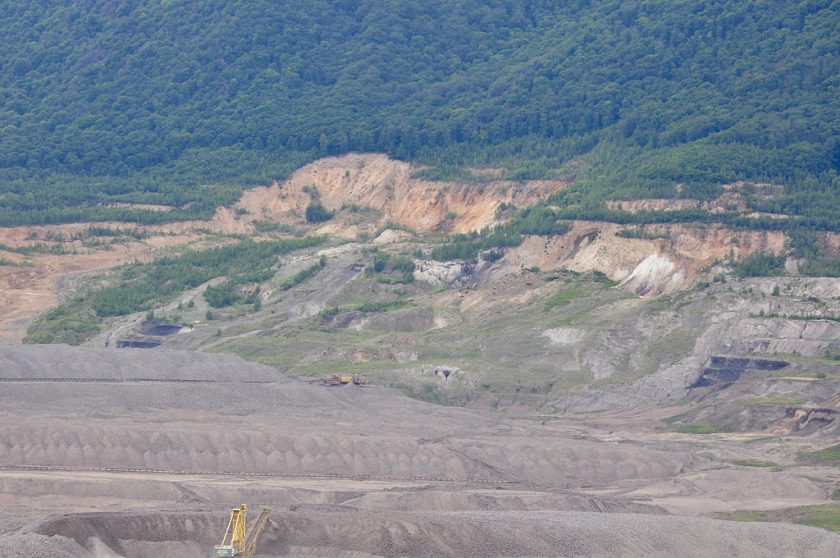 Illustrative photo
“MMR-NOK sees this programme as risky because OPST funding is largely drawn from the Next Generation EU instrument, under which commitments must be made by the end of 2023,” the report states. “Given the delayed start of the programme and the limited time for committing the allocated funding, there is a risk that all funds will not be used within the timetable and may have to be returned,” the report warns.
Transparency International, the non-governmental anti-corruption organisation, also examined the projects and their preparation two years ago. It published a document on the subject entitled Just Transition and Corruption Risks. Among other things, it objected to the aforementioned time pressure and the division into large projects.
This article is part of the series Where will the billions earmarked for the end of coal go?, supported by the Independent Journalism Foundation.Republished from the online portal EkoNews.cz, a website covering business and sustainability.
Translation disclaimer
This article is a machine translation of the Czech original and has not yet been fully reviewed. In case of any doubt, please refer to the Czech version.
Sdílejte článek prostřednictvím:
You might also like
23 October 2026, 11:01
23 October 2026, 06:34