Batteries are no longer just an add-on: they are helping Belgium manage price spikes

Martin Voříšek
Martin Voříšek
8 September 2026, 15:39
Batteries are no longer just an add-on: they are helping Belgium manage price spikes

The Belgian battery storage market has rapidly reached a stage where battery projects with capacities in the hundreds of MW are being added. The trend is also evident in operational data on injections into the grid. While at the start of last year batteries typically supplied only tens of MW, this year their output has repeatedly exceeded 500 MW. They supplied a record 640 MW in August this year, covering more than 7% of the Belgian power system’s load. Further large projects are under construction.

Belgium undoubtedly ranks among Europe’s leaders in the pace of development of electricity storage facilities. Of particular interest, however, is the availability of data on their electricity supply and consumption. Belgian transmission system operator Elia publishes battery storage data separately, meaning it can also be found on the Energostat section of oEnergetice.cz.

The data in the following chart show a marked growth in battery output. From figures in the low tens of MW at the beginning of 2025, Belgium gradually reached injections in the hundreds of MW. The highest hourly supply was 640 MW on 11 August 2026 at 20:00. In that hour, the Belgian power system’s load reached 8 957 MW and the average hourly electricity price was 193 EUR/MWh. Batteries therefore supplied output equivalent to approximately 7.1% of the entire system’s load.

Operational data to date also show that higher electricity supply from batteries is not limited to the traditional evening peak. Significant output also occurs in the morning, when demand rises rapidly. Battery revenues are not limited solely to trading on the day-ahead market – storage facilities can simultaneously trade on intraday and balancing markets or provide balancing services. A comparison with the day-ahead market therefore provides only a partial picture.

The role of batteries in price spikes has changed significantly in a year and a half

The change is clearly apparent when comparing price extremes. On 20 January 2025 at 18:00, the electricity price rose to 473 EUR/MWh with load at 12 689 MW. Battery storage facilities, however, supplied only 25 MW at the time, or less than 0.2% of system load.

Similarly, on the morning of 15 January 2025, battery output was only 98 MW at a price of 287 EUR/MWh. With system load at 11 970 MW, this represented roughly 0.8% of total consumption.

A year and a half later, the picture was markedly different. On 24 June 2026, the average hourly price at 20:00 reached 887.5 EUR/MWh, while batteries simultaneously supplied 532 MW. An hour later, the average hourly price was as high as 933.5 EUR/MWh and battery output reached 472 MW, or approximately 4.7% of system load.

The data thus point to a substantial change. While at the beginning of 2025 battery output remained relatively small even during very expensive hours, this year batteries have been supplying hundreds of MW during high price spikes.

New projects have rapidly changed the scale of the Belgian market

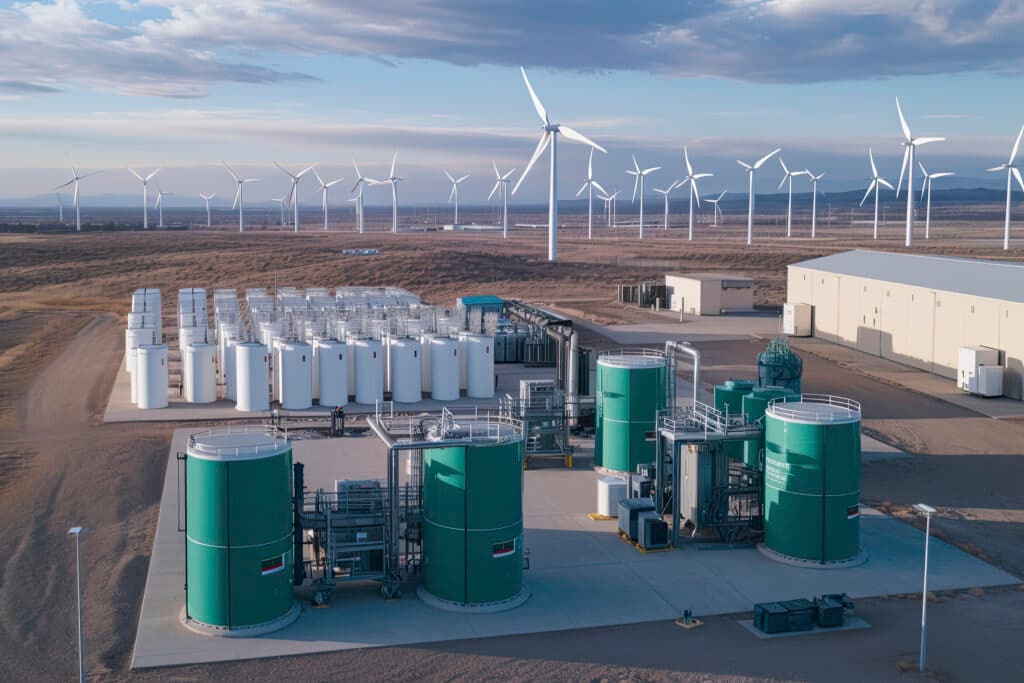
One of this year’s largest additions is the Navagne battery park, operated by EDF Group company Luminus. The storage facility has a capacity of 150 MW and 600 MWh, enabling it to supply full output for up to four hours. It has been in operation since July 2026, and Luminus officially inaugurated it on 1 September. Total investment reached EUR 160 million, and the project is directly connected to Elia’s high-voltage grid.

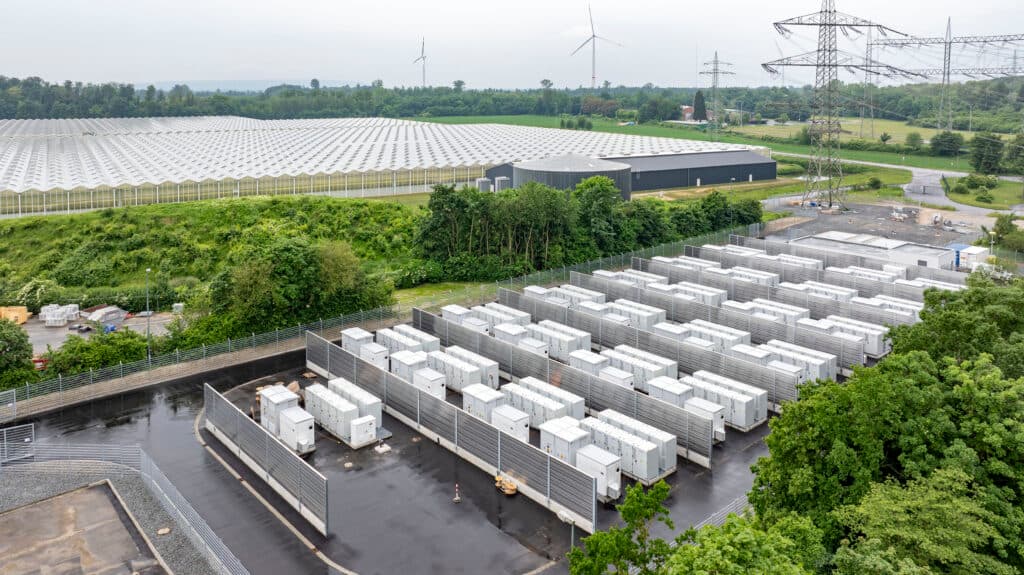
Even larger is ENGIE’s battery park in Vilvoorde, with a capacity of 200 MW and 800 MWh. All 320 lithium-ion battery containers have been in commercial operation since 14 November 2025. Vilvoorde is therefore currently the largest operational battery storage facility in Belgium.

Further projects are also in preparation, including the 700 MW, 2.8 GWh Green Turtle project, which is scheduled to enter operation in 2028.

Translation disclaimer

This article is a machine translation of the Czech original and has not yet been fully reviewed. In case of any doubt, please refer to the Czech version.