28 October 2026, 15:10
Loading...
Germany lacks a strategy to secure 11 GW of power generation needed to end coal use

David Vobořil
27 February 2024, 06:34
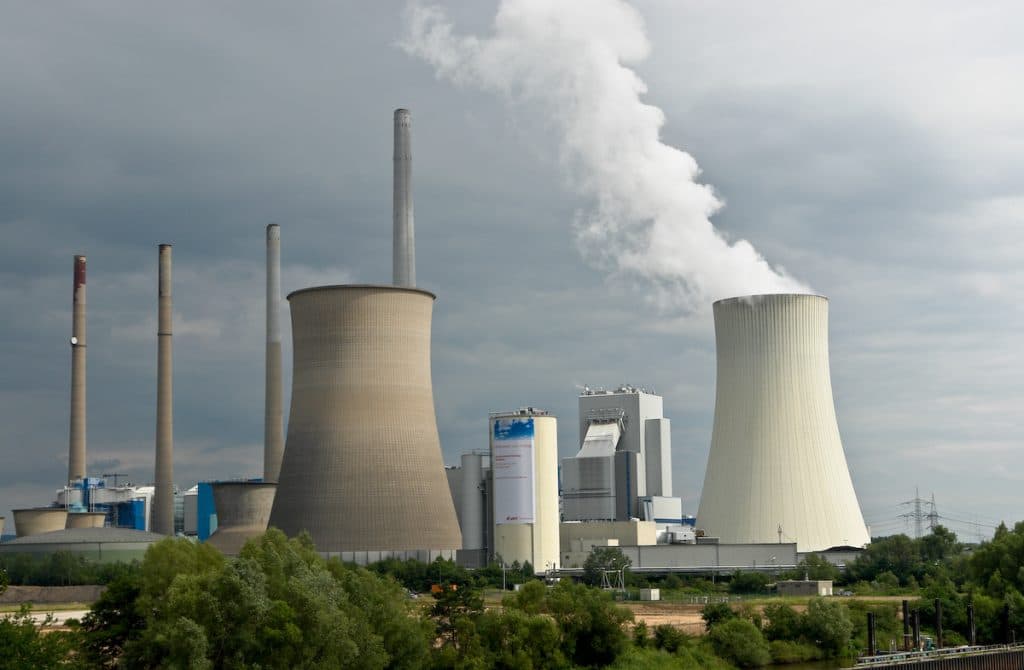
Germany needs additional power plants with a total installed capacity of 21 GW in connection with its planned phase-out of coal by 2030. The current strategy plans to support the construction of 10 GW of gas-fired power plants. That will not be enough, says Tim Meyerjürgens, chief operating officer of transmission system operator TenneT.
Germany wants to gradually stop using coal-fired power plants by 2030. To achieve this goal without jeopardising the security of electricity supply, it will need around 21 GW of additional dispatchable power generation capacity.
"To phase out coal completely, we need around 21 GW of additional reliable capacity," Meyerjürgens told Montel in an interview this week.
To provide this capacity, Germany plans government auctions to support 10 GW of new gas-fired power plants, which are intended to burn hydrogen at a later stage. These plants are to be built at specific locations selected to meet the needs of the grid. This is set out in the new government power plant strategy, whose key elements were agreed by German Chancellor Olaf Scholz, Economy Minister Robert Habeck and Finance Minister Christian Lindner.
“In principle, you could say that we need around a third of these plants in northern Germany and two-thirds in the south. In the south, it is primarily about redispatch, to ensure that capacity is available there. In the north, it is more about issues such as grid renewal and the short-circuit capacity we need in the grid,” Meyerjürgens said.
Redispatch is when generation sources at different locations are used instead of the sources originally scheduled to supply electricity to the grid, in order to prevent the overloading of power system components.
Additional capacity could be provided, for example, by combined heat and power (CHP) plants, government sources say. Meyerjürgens, however, questions whether such plants will be able to replace the remaining 11 GW. CHP plants are not as flexible when it comes to supplying the required electrical capacity to the grid, because their operation also depends on heat demand.
“CHP could be one of the possible building blocks. However, I still have some doubts about whether CHP can really replace this missing capacity. From our perspective, CHP plants need to be viewed differently from the gas-fired plants mentioned earlier in terms of their ability to serve the system, because CHP plants are not as flexible in their operation,” Meyerjürgens said.“And of course they also have to be located so that they serve the system, just like gas-fired plants. If CHP is to make up for this shortfall, an amendment to the CHP Act would certainly be needed,” he added.
The key question now is speed
Germany needs new power plants as quickly as possible as it moves away from coal. Otherwise, the government’s goal of shutting down coal-fired power plants by 2030 may not be realistic. To integrate new plants quickly, it makes sense to use the grid infrastructure of existing power plants, which often also have gas infrastructure, Meyerjürgens added.
Whether Germany will achieve its goal depends on how quickly it develops renewable energy sources and secures the necessary capacity from dispatchable sources. In other words, the country needs to replace the role coal-fired power plants currently play in ensuring security of supply and system stability.
“When it comes to ensuring system security, we can see that we need reserve power plants if we want to complete the phase-out of coal. If we do not have them, that of course means we will have to keep coal-fired power plants in the grid reserve until the necessary capacity is available,” Meyerjürgens said.
The head of RWE and other energy companies in Germany voiced criticism of the government’s goal at the end of last year.
Other technologies could also help
Germany can also use other technologies to provide the necessary capacity. So far, however, the power plant strategy’s 10 GW of gas-fired plants is the only planned measure in this area.
“Perhaps we should supplement the power plant strategy with a second stage and find out how we can secure the remaining capacity … Of course, we are aware that storage remains an area that is developing rapidly. It will not provide a large volume for now, but it is another building block. Further digitisation of the grids will also help us make more targeted use of flexibility and manage grid bottlenecks. I believe we need to continue monitoring developments closely and adapt our strategies accordingly,” Meyerjürgens said.
Translation disclaimer
This article is a machine translation of the Czech original and has not yet been fully reviewed. In case of any doubt, please refer to the Czech version.
Sdílejte článek prostřednictvím:
You might also like

28 October 2026, 13:08
28 October 2026, 11:10
28 October 2026, 09:08