European gas prices rise by up to 50 percent due to Iran and Qatar

The wholesale price of gas for the European market is surging today as a result of US-Israeli attacks on Iran. In the afternoon, the increase briefly accelerated to as much as 50 percent after reports that QatarEnergy, the Qatari company, was halting liquefied natural gas (LNG) production because of the attacks. The European Union is a major buyer of gas from Qatar.
Shortly after 13:30 CET, the price of the key front-month gas contract was up nearly 50 percent on the Title Transfer Facility (TTF), a virtual trading hub in the Netherlands. It was above 48 euros per megawatt-hour (MWh). Around 17:00, the increase slowed to below 40 percent, with the price above 44.60 euros per MWh.
"Further developments will depend mainly on the duration and scale of the conflict. A short military clash would probably mean only temporary price fluctuations followed by stabilisation. By contrast, a prolonged escalation or disruption to export routes in the Persian Gulf would mean a more sustained rise in energy prices and higher inflation," Portu analyst Lukáš Raška told the Czech News Agency.
Israel and the United States launched a military operation against Iran on Saturday. US President Donald Trump said the aim was to prevent the regime from acquiring a nuclear weapon. Iran retaliated by firing on Israel and several Arab countries, some of which host US bases. It also threatened further retaliatory strikes. Trump warned that the United States would then strike with even greater force.
"This conflict affects essentially every country in the Persian Gulf region, including Qatar, one of the world's leading gas exporters," Mind Energy said in a report on the gas market situation today.
"The market is pricing in a high risk premium amid fears of a decline in supplies. Europe's gas stocks are already significantly lower than they were a year ago, and an interruption to supplies from the Middle East would have a direct impact on prices in Europe," it added.
On Saturday, gas storage facilities in the European Union were just under 30 percent full, according to data from Gas Infrastructure Europe (GIE). In the Czech Republic, they were around 31 percent full.
"This means a significantly greater need for summer injections into storage facilities and, therefore, higher demand for LNG," XTB analyst Jiří Tyleček told the Czech News Agency.
He said the situation in the Strait of Hormuz, a key route for oil and gas exports from the Middle East, would be crucial to further developments.
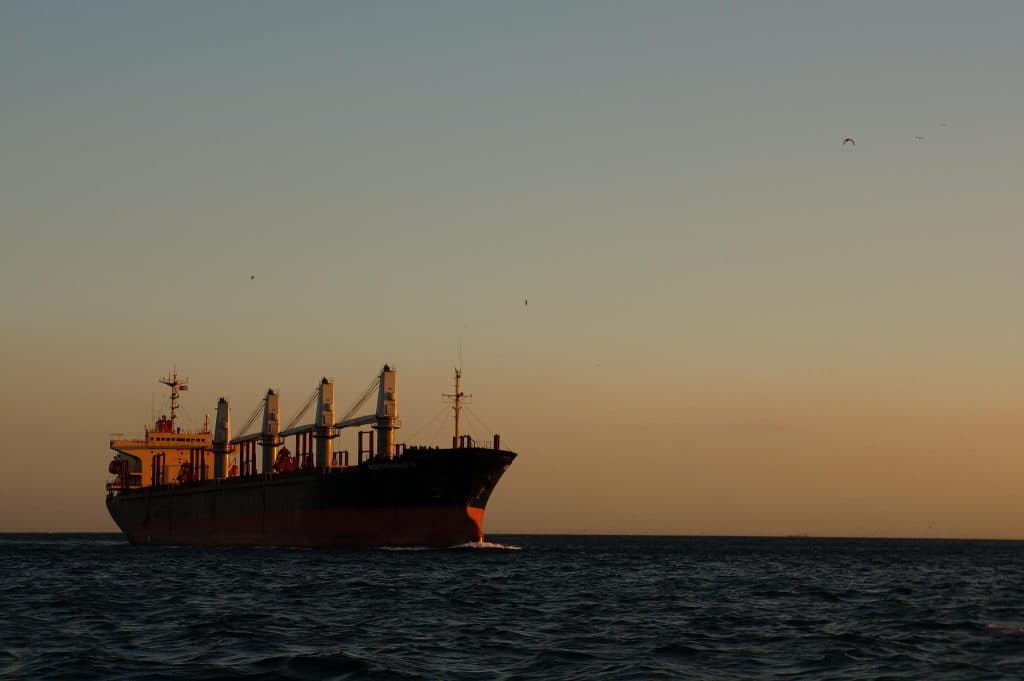
On Saturday, after the Israeli-US attack began, several gas tankers halted their journeys to avoid the Strait of Hormuz, Bloomberg reported. Qatar is the world's second-largest LNG exporter, and its LNG shipments to Europe pass through the Strait of Hormuz.
Iran's Tasnim news agency said the Strait of Hormuz had been effectively closed since Saturday. Iran's Revolutionary Guards warned ships that sailing through the area was unsafe. German shipping company Hapag-Lloyd then announced it was suspending voyages through the strait. However, some tankers continued sailing in limited numbers, Bloomberg reported, although traffic was significantly lighter than usual over the weekend.
The EU is seeking to partially replace Russian gas supplies, which it sanctioned after Russia launched its invasion of Ukraine in 2022, with LNG from Qatar and the United States. In 2024, LNG accounted for 37 percent of the EU's total natural gas imports. Supplies from the United States and Qatar accounted for almost 60 percent of the EU's total LNG imports.
Translation disclaimer
This article is a machine translation of the Czech original and has not yet been fully reviewed. In case of any doubt, please refer to the Czech version.