
23 October 2026, 14:38
Loading...
From historic highs to lows: Lithium market enters new growth cycle

Jan Budín
27 December 2025, 07:48
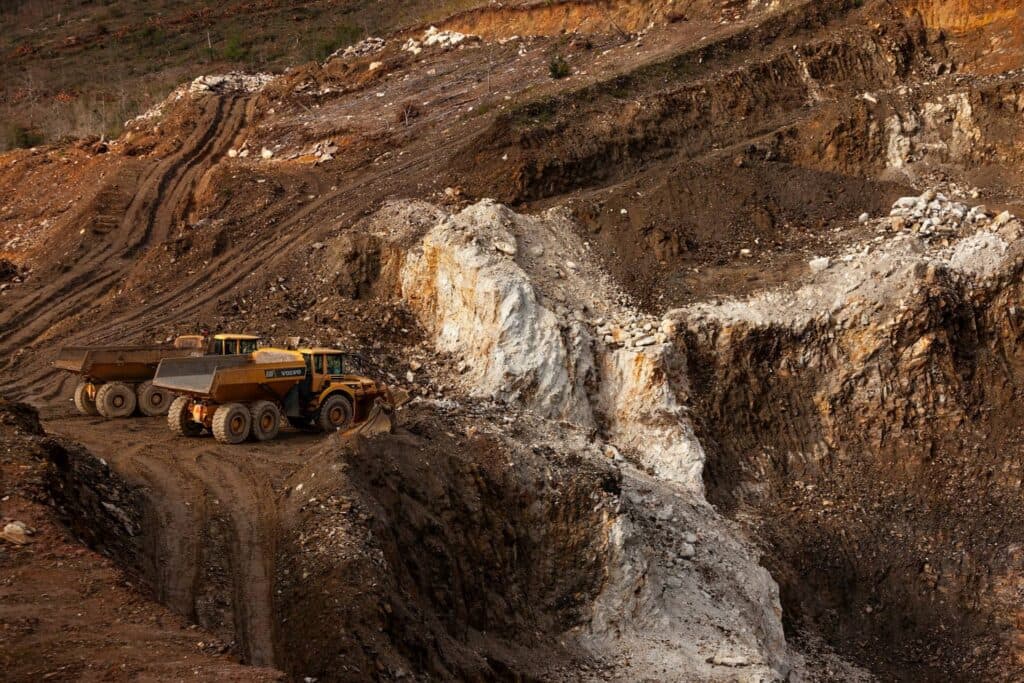
The global lithium market is on the verge of a new growth cycle after prices fell to historic lows this year. According to international outlet Argus, the price recovery will be driven primarily by new demand linked to energy and national security.
Lithium prices have undergone a more than two-year decline from the historic highs reached at the end of 2022 to the historic lows recorded in the middle of this year.
Concerns over excess supply, slow electric vehicle deployment and the trade war between China and the US pushed prices for the battery-making commodity below USD 7,500/t. Prices have since recovered slightly and stood at around USD 11,500/t in mid-December. However, this remains well below the aforementioned highs at the end of 2022, when prices reached around USD 80,000/t.
"A new long-term growth cycle is now expected, driven by accelerating deployment of battery storage, which many believe could surpass demand from electric vehicles by the end of the 2020s," Argus said, adding that increased supply-chain scrutiny by sustainability-conscious buyers and greater involvement by Western governments will lead to fairer pricing and pressure on monopolistic practices.
The latest lithium price growth cycle was driven by electric vehicle deployment; according to Argus, the next one will rely more on demand related to the development of solar power plants, data centres, autonomous machines and humanoid robots. Electric vehicles should nevertheless remain a significant component of demand.
Price floors and stricter standards
Argus analysts further said that lithium prices are increasingly influenced by policy measures, financing conditions and the geopolitical situation. After years of extreme volatility, the industry is beginning to agree on the need for price stability, which will be necessary to create sufficient supply.
"This is already being reflected in contract structures, government interventions and new efforts to formalise trust and transparency across the supply chain," Argus said.
According to Argus, one of the strongest signals is the growing use of minimum-price provisions in long-term lithium supply contracts. Producers, processors and financing institutions are thus moving away from exposure to spot prices towards so-called hybrid contracts, resulting in more stable project economics.
At the same time, the lithium industry is seeking to address growing pressure over credibility. The emergence of initiatives such as PCF (Product Carbon Footprint), backed by the International Lithium Association, reflects efforts to create credible lithium products, particularly for buyers facing growing regulatory, environmental or social pressure.
"Over time, this could lead to the creation of a two-tier market, where verified, low-carbon lithium with clear provenance is sold at a premium. Although this is not a pricing mechanism, a similar certification system could support higher price floors by narrowing the volume of acceptable supply for Western buyers," Argus added.
Translation disclaimer
This article is a machine translation of the Czech original and has not yet been fully reviewed. In case of any doubt, please refer to the Czech version.
Sdílejte článek prostřednictvím:
You might also like
23 October 2026, 11:01

23 October 2026, 06:34