23 October 2026, 14:38
Loading...
Natural gas demand growth to accelerate in 2026 thanks to new LNG terminals, IEA says
Daniel Grecman
2 August 2025, 13:04
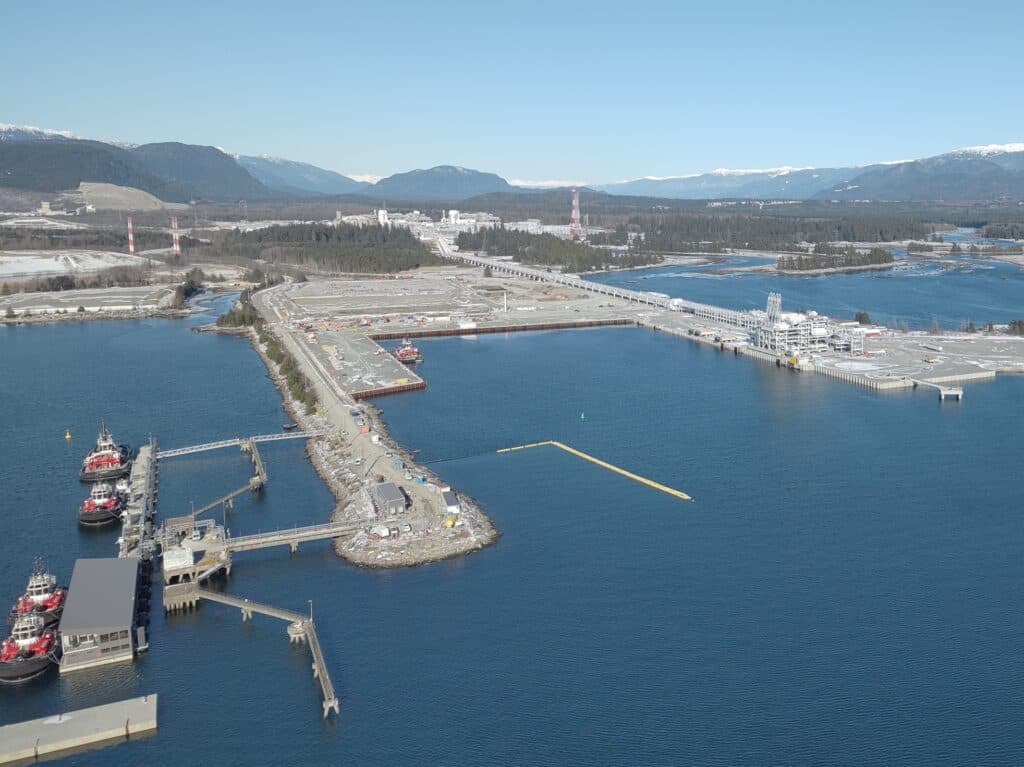
A slowdown in the pace of natural gas demand growth in 2025 will be followed by an acceleration in 2026, according to a report by the International Energy Agency (IEA). The main reason is expected to be new liquefied natural gas (LNG) supply coming onto the market, specifically the commissioning of new liquefaction facilities, which should ease the currently very tight market. Despite the more favourable outlook, however, the market is likely to remain highly sensitive to the geopolitical and macroeconomic situation.
The global natural gas market has undergone a major transformation since the turn of the previous and current decades, further intensified and accelerated by the gas crisis linked to Russia’s aggression against Ukraine and the EU’s move away from Russian pipeline gas supplies. This concerns in particular the development of the LNG market and, ultimately, greater price interconnectedness between individual markets, correlated with expanding liquefaction and regasification capacity across continents.
From 2019 to June 2025, final investment decisions (FIDs) were made for more than 340 billion m³/year of liquefaction export capacity. More than half of these decisions concerned terminals in the United States. Facilities with capacity of 295 billion m³/year are due to be commissioned between 2025 and 2030. For comparison, EU demand stood at 325 billion m³ in 2023.
Current market situation
According to the IEA report, demand growth will slow this year due to a combination of lower Russian pipeline gas supplies to the EU and the EU’s need to replenish its gas storage facilities ahead of the coming winter season. Gas consumption in Europe has risen by 6.5% year on year this year, mainly due to lower wind and hydropower generation.
China, by contrast, saw the opposite trend in gas demand, which fell by 1%, while LNG imports dropped by more than 20%. Nevertheless, EU demand is creating market tightness that is keeping gas prices at higher levels and slowing the pace of growth. Growth is forecast at 1.3% this year, down from 2.8% last year. In 2026, however, the growth rate should return to around 2%. The main reason is the aforementioned commissioning of new capacity.
“The wave of new LNG capacity set to come to market will ease the tight situation and support further demand growth, particularly in Asia,” said Keisuke Sadamori, the IEA’s Director of Energy Markets and Security. “However, our current outlook is subject to an exceptionally high degree of uncertainty due to global macroeconomic developments and an unstable geopolitical situation.”
The IEA report also highlights the importance of the Middle East, where geopolitical tensions in recent months have further contributed to price volatility. Overall, the IEA warns that the market remains fragile and that further developments will need to be monitored closely.
Translation disclaimer
This article is a machine translation of the Czech original and has not yet been fully reviewed. In case of any doubt, please refer to the Czech version.
Sdílejte článek prostřednictvím:
You might also like

23 October 2026, 11:01

23 October 2026, 06:34