23 October 2026, 14:38
Loading...
Slovakia restores part of aluminium production, electricity price will be decisive

Jakub Malý
4 July 2026, 12:57
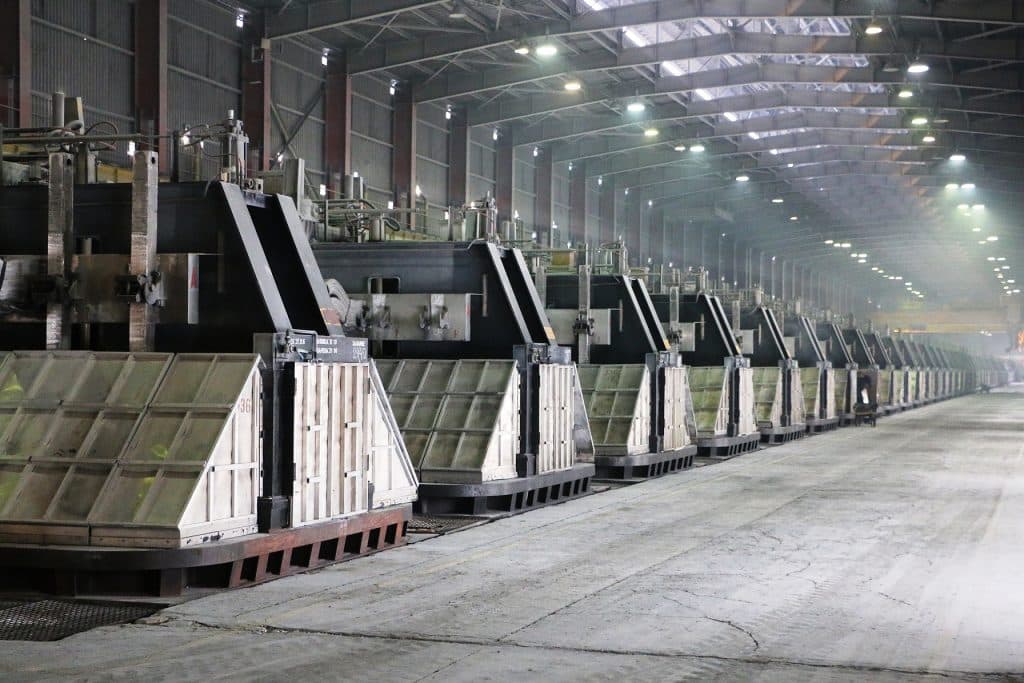
The Slovak aluminium smelter Slovalco in Žiar nad Hronom, majority-owned by Norway's Norsk Hydro, is set to partially restart primary aluminium production after a shutdown lasting several years. The plant was curtailed in 2022, when the sharp rise in electricity prices in Europe, together with costs associated with emissions allowances, put the European aluminium industry under exceptional pressure.
According to Norsk Hydro, an agreement with the Slovak government will enable the restart of 75 thousand tonnes of annual production capacity, with production expected to resume in the fourth quarter of 2026. The plant's total capacity is 175 thousand tonnes of aluminium per year; restarting the remaining 100 thousand tonnes will depend on conditions after 2030 and on securing further long-term electricity contracts.
A key element of the agreement is a long-term framework for electricity supply and compensation for indirect carbon costs. Slovalco has signed a ten-year electricity supply contract with state-owned company Vodohospodárska výstavba and is also set to use a new state aid scheme for energy-intensive businesses. According to the Slovak government, the support is to be financed from proceeds from the sale of emissions allowances, rather than directly from taxpayers' funds. Hydro says the restart is also conditional on the European Commission approving an updated Slovak scheme for compensating indirect emissions costs.
Slovalco's importance extends beyond Slovak industry
Aluminium is a key raw material for power grids, renewable energy, transport, defence and infrastructure. At the same time, it is a commodity with extremely high sensitivity to electricity prices. Hydro President and CEO Eivind Kallevik said that, with a capacity of 175 thousand tonnes a year, Slovalco has the potential to restore a significant share of Europe's domestic primary aluminium production, strengthen Europe's industrial resilience and reduce dependence on imports.
Hydro also notes that approximately 50% of aluminium production capacity in the EU has been curtailed since 2022, mainly due to high energy prices and global competition.
The decision is also affected by the tense situation on the global market. Aluminium prices have risen by nearly 50% since the deepest phase of the energy crisis, with part of the recent increase linked to geopolitical tensions in the Middle East. The region accounts for around a tenth of global aluminium supply and helped replace lost European production after the energy crisis. Restrictions on flows through the Strait of Hormuz and direct attacks on smelting operations have shown that Europe's dependence on imports of strategic industrial materials creates not only price but also security risks.
"Slovalco has the potential to restore a significant part of domestic primary aluminium production in the EU. Let Slovalco's story be a textbook example of what overly ambitious climate targets do to Slovak industry,"said Slovak Prime Minister Robert Fico.From an expert perspective, Slovalco's restart is important mainly because it demonstrates the real cost of maintaining energy-intensive production in Europe. It is not enough to declare the need for strategic raw materials, resilient supply chains and a low-carbon industrial base. Such production requires long-term access to affordable electricity, predictable compensation for indirect emissions costs and a clear framework for instruments such as CBAM, the EU's Carbon Border Adjustment Mechanism.
If these conditions are not met, Europe may formally reduce its own industrial emissions, but in reality it will shift part of its production to regions with a higher carbon footprint and a lower regulatory burden.
Translation disclaimer
This article is a machine translation of the Czech original and has not yet been fully reviewed. In case of any doubt, please refer to the Czech version.
Sdílejte článek prostřednictvím:
You might also like
23 October 2026, 11:01
23 October 2026, 06:34