US exchange for hourly derivatives opens to institutions. Electricity is increasingly traded as a financial asset

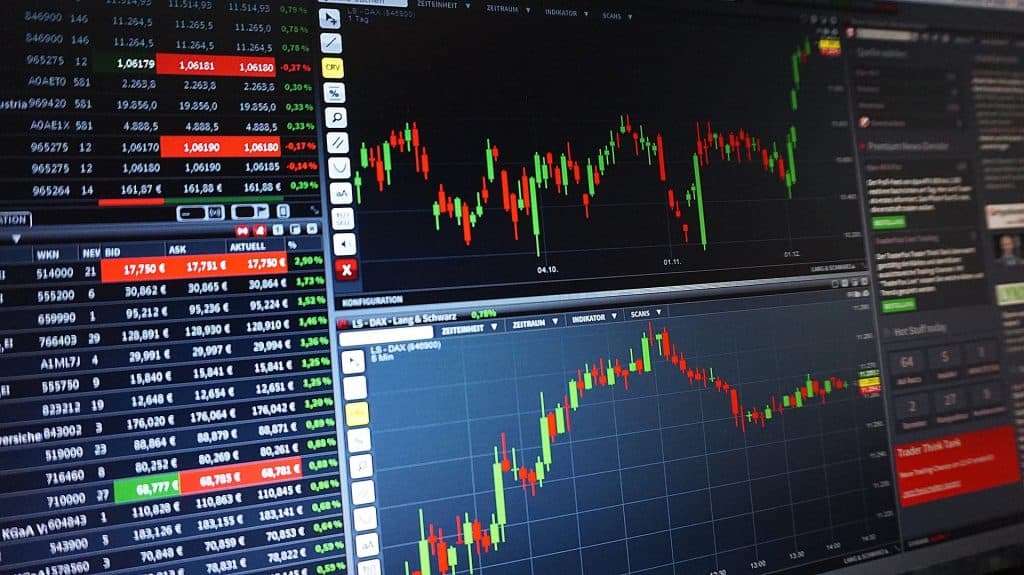
Hedge against, or speculate on, the price of electricity in a single specific hour. That is what the US exchange ElectronX enables, having received regulatory approval at the start of August to admit major institutions to its market for hourly derivatives. Its launch is underpinned by a broader trend in the electricity market. Generation from solar and wind is driving short-term prices into increasingly wild swings, and experts say electricity is therefore being traded ever more like a financial asset that needs to be hedged hour by hour.
ElectronX is a Chicago-based exchange that describes itself as the first regulated US market with direct access for electricity derivatives. It does not trade electricity itself, but contracts linked to its price. It differs from traditional energy exchanges mainly in its product offering: it offers contracts for every individual hour up to five days ahead, in small volumes of one megawatt-hour each. This makes it possible to hedge price risk in a precisely specified hour.
The US derivatives market regulator (CFTC) granted it permission to operate as a regulated exchange last August. According to Forbes, the company then gradually launched trading for the four largest US grids, which together cover roughly 60 % of US electricity consumption. In February for the Texas grid ERCOT, in April for PJM in the eastern and midwestern US, and in June for MISO in the Midwestern belt stretching from the Great Lakes to Louisiana and for California's CAISO. It also set a record in July, when more than 37 thousand contracts were concluded.
The company also has a solid foundation for further growth. Since 2024, it has raised more than $55 million. Alongside funds, the latest investment round last November included leading global market makers, i.e. firms that provide liquidity on exchanges — XTX Markets, Five Rings and GTS.
The importance of short-term electricity markets has been growing for years
The growing importance of short-term markets is confirmed by regulators and analysts alike. According to the EU Agency for the Cooperation of Energy Regulators (ACER), daily fluctuations in wholesale prices in the Union were roughly five times higher last year than in 2020, mainly due to variable generation from solar and wind.
The International Energy Agency (IEA) also confirmed in its report in the middle of this year that intraday volatility remains high in a number of markets and that widening price differences between hours are increasing the value of flexibility.
“Flexibility is becoming a real source of value,”said Luca Pedretti of Swiss software and advisory company Pexapark, which specialises in renewable energy trading, in a January report.
According to Pexapark reports, volatility has become the market's dominant force, while financial hedging and optimisation are essential to remain competitive. Traditional futures markets tend to focus on longer periods, leaving a gap for hourly hedging. This is the gap targeted by projects such as ElectronX, which aims, among other things, to serve battery storage operators and data centres.
The US and Europe are experiencing the same trend
Analysts see a similar shift on both sides of the Atlantic. According to Pexapark, renewable energy markets in Europe and the US are entering a fundamentally new phase in which value is shifting towards flexibility. The number of flexibility procurement agreements alone roughly doubled last year, according to the company.
Europe's short-term market is ahead in terms of granularity. The EU day-ahead market switched from hourly trading intervals to 15-minute intervals on 1 October 2025, with Czech market operator OTE and transmission system operator ČEPS also part of it. Previously, electricity had a single price for the entire hour. Now, the price is set every 15 minutes.
Translation disclaimer
This article is a machine translation of the Czech original and has not yet been fully reviewed. In case of any doubt, please refer to the Czech version.