20 October 2026, 15:34
Loading...
ČEZ has exited Bulgaria and Albania, and most of its operations in Turkey and Romania

oEnergetice.cz, ČTK
12 November 2024, 10:54
A roundup of information on the energy group ČEZ’s discontinued foreign activities (ČEZ is selling its Polish coal assets to investment company ResInvest Group; countries listed alphabetically):
Albania – In 2009, ČEZ acquired a majority stake in electricity distributor Operatori i Sistemit te Shperndarjes, later renamed CEZ Shpërndarje, for approximately 102 million euros. In January 2013, however, the Albanian regulator revoked the company’s licence, citing its failure to secure electricity imports and invest in the distribution network. A state administrator was appointed to run the distributor, depriving ČEZ of control of the company, and ČEZ launched international arbitration proceedings against Albania. The dispute was settled under an agreement reached in the summer of 2014, under which ČEZ was to receive 100 million euros in annual instalments through 2018, an amount roughly equivalent to its investment. ČEZ subsequently withdrew from Albania.
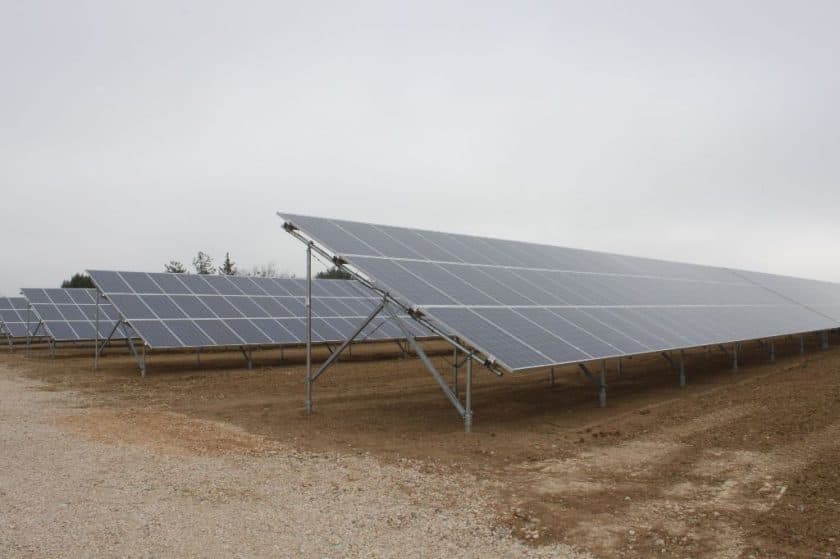
Bulgaria – ČEZ focused mainly on electricity distribution and sales in Bulgaria, where it also operated the Orešec solar power plant (with an installed capacity of 5.0 MW) and provided energy services. ČEZ served approximately three million customers in Bulgaria, a country of seven million people. Its activities were coordinated by CEZ Bulgaria. ČEZ entered the Bulgarian market in 2004, when it bought three Bulgarian distribution companies for 281.5 million euros. ČEZ completed the sale of its Bulgarian assets in July 2021; the buyer, Bulgarian financial company Eurohold, paid 335 million euros (about 8.6 billion crowns). ČEZ decided to leave the country because of ongoing disputes with local authorities. Its withdrawal from Bulgaria began as early as 2017 with the sale of the decommissioned coal-fired power plant in Varna. ČEZ is still pursuing international investment arbitration against Bulgaria, seeking several hundred million euros (equivalent to several billion crowns).
Poland – ČEZ entered the Polish market in 2006 by buying the Skawina and Elcho (now Chorzów) coal-fired power plants from US company PSEG. The investment amounted to 10.8 billion crowns. Skawina is the second-largest supplier of heat to Kraków and Skawina, while Chorzów is one of the largest suppliers of heat to Katowice and other urban areas in Silesia. In addition to coal, Chorzów also burns biomass. Both plants also operate as heating plants. In Poland, ČEZ also operates a small hydropower plant and is building another. In addition to generating electricity and heat, it also sells electricity and gas to end customers.
ČEZ later also established ČEZ ESCO (Energy Service Company), incorporating businesses that provide commodity supplies, energy audits and consultancy, as well as the construction of cogeneration units and solar power installations. In 2020, ČEZ announced that it was beginning to seek buyers for its five Polish companies. Fourteen potential investors expressed interest. In autumn 2021, the group halted the sale, saying the offers were not economically attractive enough.
ČEZ has now said it is selling its Polish coal assets – the Skawina and Chorzów power plants – to investment company ResInvest Group. The deal is subject to approval by the Polish antitrust authority. ČEZ plans to continue developing its companies in Poland that focus on providing modern energy services. These include companies in the Elevion Group, which offer comprehensive decarbonisation and energy-efficiency solutions.
Romania – ČEZ entered the Romanian market in February 2005, acquiring a 51 percent stake in distribution company Electrica Oltenia. In 2009, ČEZ became its sole owner. The Romanian assets included one of the country’s largest distribution companies, with 1.4 million customers; Fantanele-Cogealac, the largest onshore wind farm in Europe; the Reşita hydropower system, comprising four reservoirs and four small hydropower plants; and electricity and gas sales to customers.
However, the ČEZ group has already disposed of most of its Romanian assets, completing their sale to Macquarie Infrastructures and Real Assets (MIRA) in 2021. The companies signed the sale agreement in 2020, and the transaction was subsequently approved by the European antitrust authority and Romania’s national security council. The companies did not disclose the sale price; analysts had previously estimated that ČEZ received 25 to 30 billion crowns. The sale included seven companies, among them a distribution company, an energy retailer and the Fântânele-Cogealac wind farm.
The rest of ČEZ’s activities in Romania are managed by its subsidiary Elevion Group. In Romania, it also owns High-Tech Clima, a company involved in ESCO services.
Turkey – ČEZ has begun its withdrawal from Turkey, which it entered in 2009. Last December, the energy group announced that it had completed the sale of its 50 percent stake in Akcez Enerji to Turkish investor Torunlar Group, after the transaction was approved by Turkey’s antitrust authority and energy regulator. Akcez includes three subsidiaries involved in electricity distribution, energy sales and energy services. ČEZ did not disclose the financial terms of the sale.
The Czech partly state-owned company still holds a stake in another energy company, Akenerji Elektrik Üretim. In Turkey, it operates several hydropower plants, the Ayyildiz wind farm and the Egemer combined-cycle gas-fired power plant in the east of the country. According to ČEZ Chief Financial Officer Martin Novák in a statement this August, the stake in Akenerji is now more of a financial investment for ČEZ than a strategic one, and the company is considering selling it. “The existing debt needs to be refinanced by the end of the year, so a sale process is unlikely to be launched before then,” Novák said.
Translation disclaimer
This article is a machine translation of the Czech original and has not yet been fully reviewed. In case of any doubt, please refer to the Czech version.
Sdílejte článek prostřednictvím:
You might also like
20 October 2026, 12:55
20 October 2026, 10:49
20 October 2026, 06:13