
23 October 2026, 14:38
Loading...
Challenges facing the Czech power sector: Flexible system management will be a necessity

Zuzana Vrbová
18 May 2018, 06:53
On Wednesday, 9 May, a lecture and discussion on the legal basis and practical implications of the Czech power sector was held at the library of the Czech Academy of Sciences. The event outlined the principles and objectives of the legal framework governing the Czech energy sector, particularly from the perspective of the Energy Act, and discussed the sector’s current and potential future challenges. The main theme was ensuring flexibility and the requirements for flexible management of the power system.
The lecture was led by attorney JUDr. Tomáš Ščerba, Ph.D., and Ing. Radim Černý, a member of the board of directors of ČEZ Distribuce, a.s. This article summarises both parts of the lecture: the section presenting the sector’s legal framework and the section devoted primarily to challenges related to power system flexibility.
Legislation does not respond quickly enough to changes in the energy sector
In the first part, presented by Tomᚊčerba, the legislative framework for the Czech power sector was outlined. Among other things, the issue of natural monopolies was mentioned, which is also addressed in considerable detail by European Union law. The existence of monopolies is typical for this sector, primarily because of infrastructure ownership and the resulting issue of equal access to these infrastructure assets. European law also addresses the issue of so-called unbundling, namely oversight of the separation of segments within the sector (for example, companies that generate energy while also owning transmission or distribution infrastructure). The aim is to ensure better competition so that end customers benefit, for example through a lower price for the final product.
The final part of the block outlined the main practical issues associated with the legislative framework of the Czech power sector. The first concerns the procedure for interrupting electricity supplies, where, from a legal perspective, there is a conflict between certain rights of the “non-payer” (typically the right to the inviolability of the home) and the supplier’s interests. Another current practical legislative challenge is digitalisation and pressure to speed up all processes. Ščerba stressed that the current legal framework does not respond quickly enough to the needs of the power sector in this area. Last but not least, cybersecurity is also currently a major challenge for the sector.

Germany will have to import „dirtier“ energy from Czechia
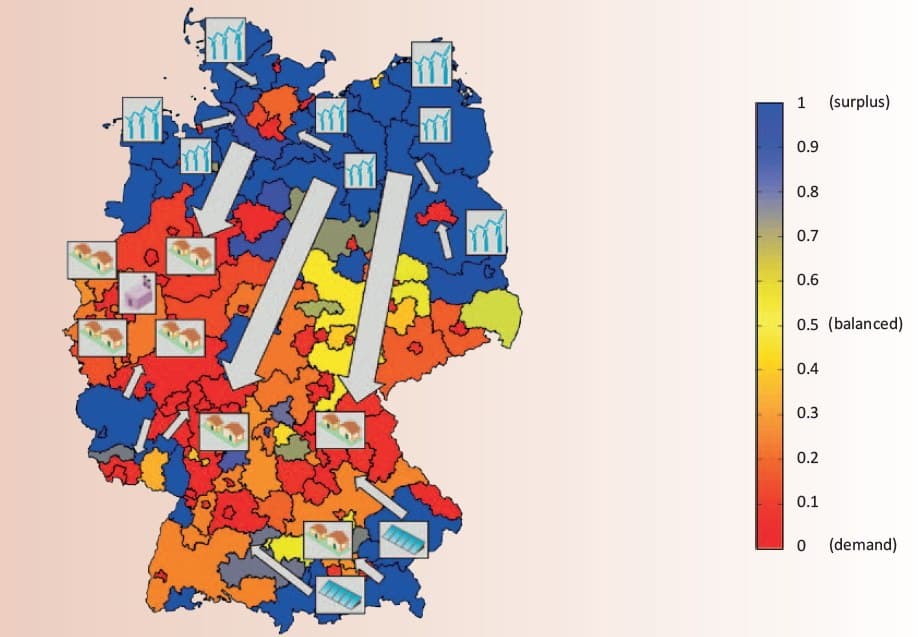
In the second part of the lecture, Radim Černý focused on current and future requirements for flexible power system management, including the issue of storage. Flexibility can be characterised as a controlled change in output, or in the amount of electricity supplied or consumed. The power system must now necessarily undergo transformation, primarily due to technological development (new methods of electricity generation and new technologies, including electromobility) and compliance with the directives of the so-called winter package. In the European context, the Czech system is and will be strongly influenced by developments in Germany. According to Černý, 2022 will be a key year for Germany and consequently for Czechia as well, when important German power plants will cease operations and it is uncertain whether a system capable of efficiently transmitting electricity from the north to the south of the federal republic will have been sufficiently completed and put into operation.
A member of the audience asked, among other things, whether it would be possible after 2022, when Czechia’s western neighbour is expected to generate electricity from renewable sources, to export this commodity from Czechia to Germany. According to Černý, this scenario will inevitably occur – due to the instability and inadequacy of the transmission system. Germany will be forced to reconsider some of its positions regarding generation strictly from renewable energy sources.
Czechia is also beginning to face, and will face more intensively in the future, challenges associated with system changes caused by the decentralisation of electricity sources – a large share of installed capacity will come from decentralised sources (DECE) from 2040. This will also be a financial challenge, as integrating DECE between 2017 and 2040 will require CZK 44.6 billion above natural replacement costs for the transmission and distribution system (PDS).
Czechia is not prepared for growth in electromobility and the need for storage
Another challenge for flexible system management will be electromobility. Charging electric vehicles is demanding for both the transmission and distribution systems, and a rapid increase in the number of charging stations can also be expected from 2020. Czech electromobility has been influenced, among other things, by Germany’s dieselgate scandal, on the basis of which the planned target for electric vehicle production and integration was increased (from the original 400 thousand electric vehicles under ASEK to up to four times that number – the figure will be updated this year by NAP SG). The transmission and distribution system will therefore need to be significantly reinforced, or a suitable timing of charging will need to be found. Under certain conditions, load control will be possible through the mass remote-control system.
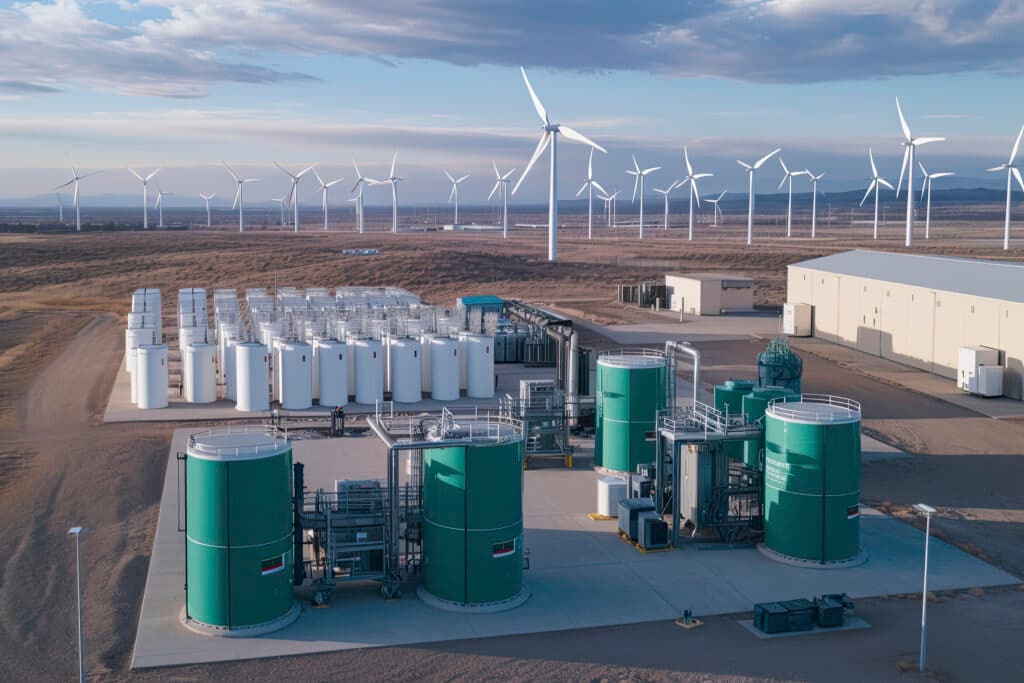
The issue of storage was also mentioned. Battery storage is expected to have primarily a stabilising role. However, current legislation does not recognise the concept of storage at all. The Energy Act works only with the terms “generating facility” and “consumption facility”. As a result, it is currently problematic, for example, to conclude a contract with operators of storage facilities.
In summary, the issue of flexibility will have a very significant impact on the Czech power sector in the future and must be addressed as soon as possible. The main sources of instability will be the integration of large volumes of renewable energy sources and DECE, the phase-out of centralised sources, which will require their role to be replaced by flexible demand management, high electric vehicle consumption and storage.
Translation disclaimer
This article is a machine translation of the Czech original and has not yet been fully reviewed. In case of any doubt, please refer to the Czech version.
Sdílejte článek prostřednictvím:
You might also like
23 October 2026, 11:01
23 October 2026, 06:34