
23 October 2026, 14:38
Loading...
Czech apartment buildings can make easier use of solar power plants from this year, even without all residents’ consent
Ekonews.cz
12 June 2023, 14:35
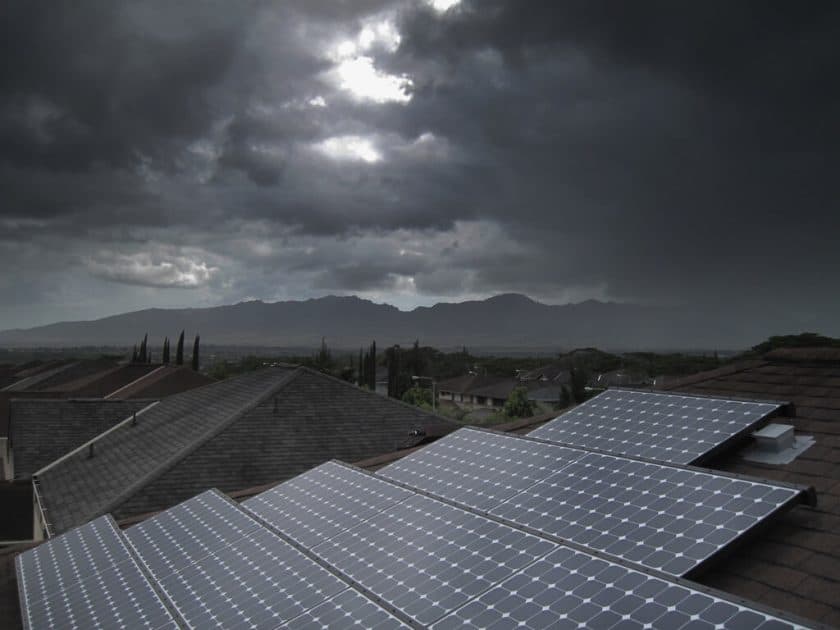
Apartment buildings and prefabricated housing blocks can more easily acquire their own power plant from this year. Those interested have four different models for legally arranging its operation. Photovoltaics can also be operated when a member of a cooperative or unit owners’ association does not agree with the project.
Due to high energy prices, many apartment buildings and prefabricated housing blocks are looking for ways to save as much as possible on electricity. Once a building has been insulated and its windows replaced, it may also be time to build its own energy source.
Slightly different rules apply to housing cooperatives and unit owners’ associations (SVJ) when acquiring a photovoltaic power plant. It also depends on what share of residents participate in sharing. The most advantageous scenario is when the whole building decides to use the jointly generated electricity.
However, one “no” does not mean a complete stop. A power plant can be acquired without everyone’s consent. It depends on the articles of association, which specify what proportion of owners is needed to approve substantial changes. However, the building will face more paperwork.
The solar panels on the roof do not have to belong directly to the building. They may also be owned by a newly established association or company.
Four different sharing models
Apartment buildings and prefabricated housing blocks are to be helped with arranging a power plant by a new manual from the Union of Community Energy (UKEN), entitled How to set up joint photovoltaics in apartment buildings. The union prepared it this April together with the Energy Regulatory Office, the Domy sobě project and others.
In addition to practical advice, the manual also includes guidance on how to legally arrange the sharing of jointly generated electricity. The authors present four possible versions, reflecting varying levels of interest in solar power.
“In the publication, we provide an overview of decision-making, financing, ownership, the right to use electricity and contributions for it, as well as the right to sell surplus electricity and the conditions under which you must pay taxes, says Eliška Beranová, a lawyer at Frank Bold and UKEN who contributed to the manual.
The SVJ is the owner
The first option is for the SVJ to own the photovoltaics. This is similar to how ownership of a lift works within an association, for example. All members must contribute financially to construction, even if they opposed the installation.
In this scenario, a person who rejected joint electricity generation does not use the generated kilowatt-hours, but their contributions to the repair fund are used for the solar installation. If they refuse to pay, a court may compel them to do so.
“But bear in mind that you are creating a joint community project and that it is not worth approving it with only a very small majority. You may create a long-term unpleasant atmosphere in the building, the manual’s authors warn.
The solution is to change the ratio in which owners contribute to the repair fund. People who did not want solar power pay less than the rest. However, this requires changing the owners’ declaration. Unanimous approval at a meeting is needed for this. A similar problem may also arise with the distribution of profits.
Everyone in the building has the right to use the electricity. If someone later decides to use the joint source, the other residents must enable them to do so.
Profit from the sale of surpluses is divided among all unit owners. The amount of profit depends on the owner’s share of the common parts of the building. As a rule, the larger the apartment, the larger the share of profit. If annual profit from the sale of surpluses does not exceed 30 thousand crowns, the building does not have to pay income tax.
The photovoltaics belong to an association
If the entire SVJ does not embark on solar power, those interested in their own electricity source can establish an association. At a meeting, the owners approve, in accordance with the applicable articles of association, leasing the roof to the association and agree to electricity generation on the roof.
They must also approve that the photovoltaics will not become part of the building; otherwise, the SVJ would have to finance them from the repair fund in the same way as if it had acquired them itself. The reservation of ownership must also be entered in the property register.
The solar panels on the building’s roof then belong to the association, which also manages them. Members finance the photovoltaics and the proceeds belong solely to them.
When the solar panels are owned by an association, its members cannot distribute profits from the sale of surpluses among themselves. The association must use them to finance further activities, including the operation and maintenance of the power plant. In addition, a 19% income tax must be paid on the profit.
Profit can be distributed if the power plant is owned by one or more members rather than by the association itself. If they earn no more than 30 thousand a year, they do not have to pay income tax. This model is fairer for those who do not wish to participate in sharing. At the same time, however, it entails more paperwork related to establishing an association.
A company without legal personality is established in the building
Another option for sharing electricity in a building is a so-called contract for a company without legal personality. In this case, the photovoltaics are owned by all partners, with the size of each share depending on the amount of their contribution. The solar panels may alternatively be owned by one of the partners, who allows the others to use the power plant. The photovoltaics do not affect apartment units that are not interested in them.
As with an association, the SVJ must approve at a meeting the lease of the roof and its use. The association has nothing to do with electricity generation; only the new company is involved. The solar panels again do not become part of the building.
In this case, profit from the sale of surpluses can be distributed more easily than in an association. Again, if profit does not exceed the threshold of 30 thousand crowns per year, no income tax has to be paid on it. According to the UKEN manual, the disadvantage is co-ownership by shares.
The situation is simpler in a housing cooperative
The final sharing model is in a housing cooperative. If someone in the building does not want their own electricity source, they do not have to pay for it. At the same time, there is no need to establish an association or company. The cooperative sets rent for those interested, while the rest are unaffected by the photovoltaics.
Approval of the installation usually depends on a simple majority of cooperative members. However, the articles of association may set different voting conditions. In some cooperatives, the figurative “yes” to solar power can be given only by the board of directors, or even the chairperson.
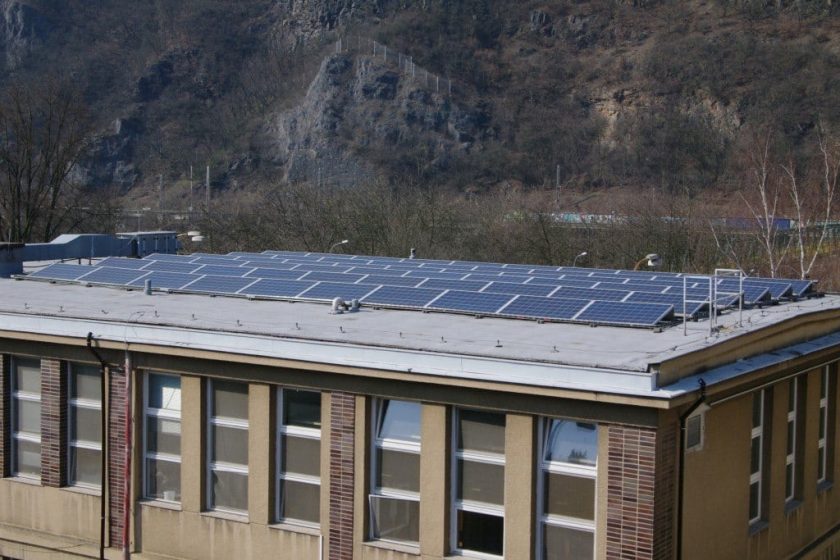
The solar panels on the roof then become part of the apartment building and the property of the cooperative, but they may also be owned exclusively by just one of its members. All cooperative members have the right to draw kilowatt-hours from the solar panels, though they do not have to use it.
The distribution of profit is more complicated. The manual describes the conditions that the cooperative must meet. Among other things, profits from the sale of surpluses must not exceed one-third of the cooperative’s annual profit. The cooperative must also pay 19% income tax on the sale.
Republished from the online portal EkoNews.cz, a website covering business and sustainability.
Translation disclaimer
This article is a machine translation of the Czech original and has not yet been fully reviewed. In case of any doubt, please refer to the Czech version.
Sdílejte článek prostřednictvím:
You might also like
23 October 2026, 11:01
23 October 2026, 06:34