
23 October 2026, 14:38
Loading...
Czech energy law amendments on gas and energy storage to take effect

oEnergetice.cz, ČTK
30 July 2025, 11:12
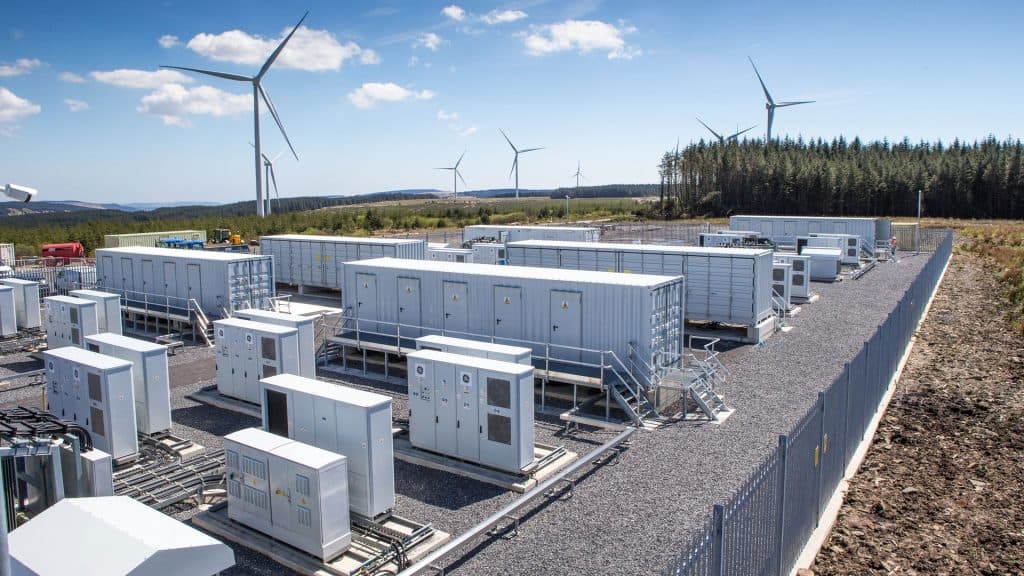
Two amendments to the Energy Act will take effect on Friday, 1 August. The first, nicknamed lex OZE III, mainly regulates electricity storage, which is intended to help stabilise the transmission grid. The second amendment, nicknamed lex plyn, is intended to accelerate the construction of gas-fired power plants and improve Czechia’s energy security. At the Senate’s proposal, it repeals individual reviews of the profitability and adequacy of support for solar power plants built in 2009 and 2010, which the first amendment had introduced. However, a number of measures in the two acts have different effective dates, and will therefore take effect at other times or have already taken effect.
Lex OZE III also regulates related flexibility for generators and consumers: their ability to respond to and adapt to the energy supply situation. Another key topic is aggregation, or the pooling of energy generation and consumption. According to the Ministry of Industry and Trade, for example, provisions regulating flexibility and aggregation will not be fully implemented until July next year, when restrictions on energy-sharing communities will be lifted, including the limits of 1000 consumption points and no more than three municipalities.
An energy storage licence will be required. “Energy storage will make it possible to ‘store’ surplus energy generated from renewable energy sources or defer electricity consumption until a time when market conditions make it most worthwhile. Customers will thus be able to use electricity when it is cheaper,” the Ministry of Industry and Trade said earlier.
Provisions to protect customers are due to take effect in August. Electricity and gas suppliers will have to notify customers not only of price increases but also of price reductions. According to the explanatory memorandum to the law, they previously had to notify customers only of price increases. “Before the amendment took effect, it was not customary for every supplier to inform its customers of a price reduction. Personally, I consider it a major mistake on the part of anyone who failed to do so, because it is a communications and marketing opportunity to earn positive points with customers who find it hard to believe that you are buying energy for them as well as you can,” Ladislav Sladký, a member of the board of epet, told the Czech News Agency.
The law also introduced a rule requiring consumers and self-employed people who decide to leave an electricity or gas supplier early, despite having a fixed-term contract, to pay a contractual penalty. This penalty may amount to up to 40 percent of the sum they would otherwise have paid if the contract had run to its end. “This part of the amendment is intended to eliminate inconsistencies and disproportionate penalties imposed by some suppliers, which until now were not capped by any law,” Sladký said. He considers setting a uniform upper limit on penalties a logical step towards consumer protection.
Among other things, the lex plyn amendment repeals individual reviews of the profitability and adequacy of state support for some solar power plants from the solar boom of 2009 and 2010. These reviews were intended to save the state money from the budget allocated to supporting the plants. The Chamber of Deputies had already added them to the law as part of lex OZE III. The Senate had sought to remove them at the time, but MPs overrode it. It was only on its second attempt, through lex plyn, that the Senate succeeded in pushing through the proposal.
According to the Ministry for Regional Development, this amendment also extends the so-called bypass mechanism in spatial planning. It forms part of a law passed by Parliament in response to last year’s problems with the digitisation of the building permit process. The ministry says the extension is necessary to complete the system’s essential functions, test them properly and train all future users.
The gas-fired power plants that lex plyn primarily concerns are also expected to play a key role as backup capacity capable of stabilising variable renewable generation. The amendment stipulates that an investor in a gas-fired power plant must state in its authorisation application which supplier it expects to select for the plant. During the plant’s construction and maintenance, the applicant will also have to meet the requirements concerning the state’s security interests set by the Ministry of Industry and Trade.
Translation disclaimer
This article is a machine translation of the Czech original and has not yet been fully reviewed. In case of any doubt, please refer to the Czech version.
Sdílejte článek prostřednictvím:
You might also like


23 October 2026, 11:01


23 October 2026, 06:34