
23 October 2026, 14:38
Loading...
Czech government approves zones for easier solar and wind development

oEnergetice.cz, ČTK
13 March 2025, 07:00
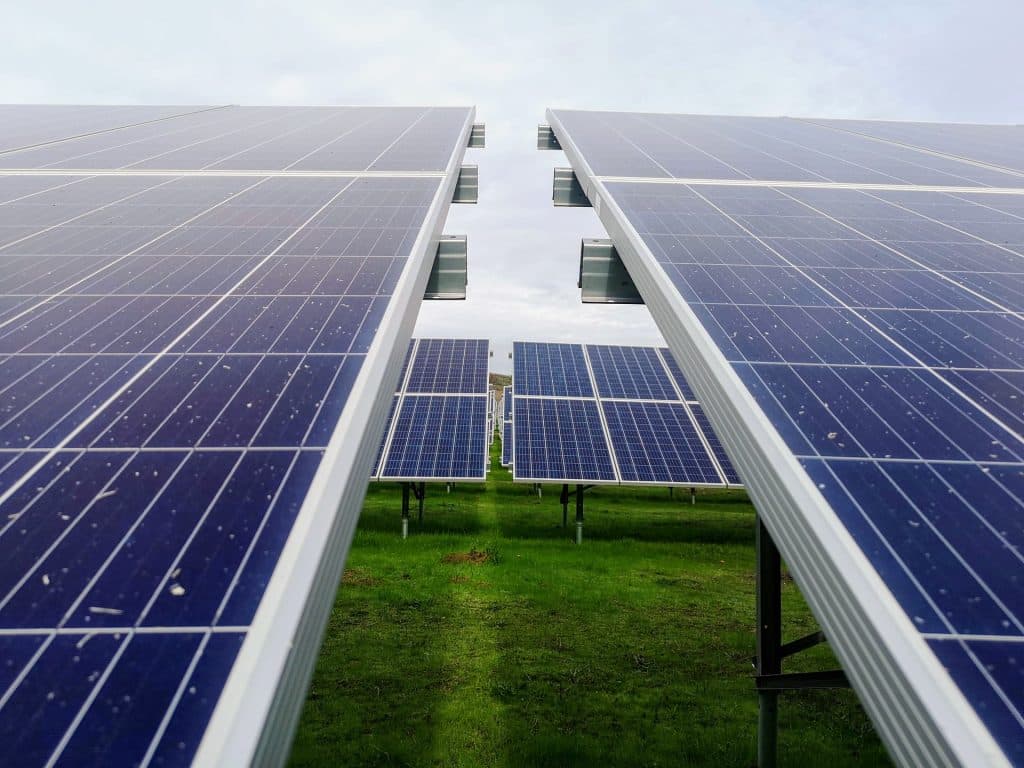
The government yesterday approved the introduction of zones where photovoltaic and wind power plants will be easier to build because they will be subject to a simplified approval process. Environment Minister Petr Hladík (KDU-ČSL) told reporters after a cabinet meeting. He said faster development of renewable energy sources would strengthen Czechia’s energy self-sufficiency and reduce the country’s dependence on fossil fuel imports. So-called acceleration zones for solar power plants should be established mainly on former industrial sites, while the government will still discuss locations for wind power plants with the regions.
“We are in a situation where we import most of our energy into the Czech Republic in the form of oil and natural gas. Our aim is to increase the share of energy produced on our territory,” Hladík said.
He noted that, given the expected rise in electricity consumption in industry, strengthening domestic generation—particularly through the construction of nuclear and renewable energy sources—is in the country’s security interest.
“Obtaining all the permits to build a wind power plant has so far taken ten years, and often 15. If the law can be finalized, it could speed up the entire power plant permitting process, in combination with other measures the state has already adopted. I am cautiously optimistic. The ministries have done a lot of work over the past two years, so we can build on the current version,” said Štěpán Chalupa, chairman of the Czech Renewable Energy Chamber, yesterday.
The approved proposal introduces so-called acceleration zones, where renewable energy sources will be subject to a simplified approval process. According to the ministry, predefined conditions should reduce the administrative burden on investors, and projects that meet the requirements of the European directive will not be subject to an environmental impact assessment (EIA). The simpler approval process will apply not only to the power generation facilities themselves, but also to related infrastructure such as transformers, power lines and batteries.
The acceleration zones will be designated at three levels: in municipal spatial plans, in regional spatial development policies, and at the national level through the National Spatial Development Plan. Hladík stressed yesterday that there could be no conflict between the creation of an acceleration zone and municipalities’ development plans, because areas for renewable energy sources will have to be located at least 500 meters from built-up areas.
Supporters of renewable energy sources have long called for the creation of acceleration zones. They say Czechia has long lagged behind in the construction of large solar parks, which are expected to become an important part of the energy sector in the future.
The state plans to significantly increase the share of renewable energy sources in the future. It currently stands at around 19 percent. Under the National Energy and Climate Plan approved last year, the share of renewables should rise to at least 30 percent by 2030.
Translation disclaimer
This article is a machine translation of the Czech original and has not yet been fully reviewed. In case of any doubt, please refer to the Czech version.
Sdílejte článek prostřednictvím:
You might also like


23 October 2026, 11:01


23 October 2026, 06:34