
23 October 2026, 14:38
Loading...
Czech government submits partial amendment to Energy Act aimed at better consumer protection

Martin Voříšek
1 April 2020, 08:15
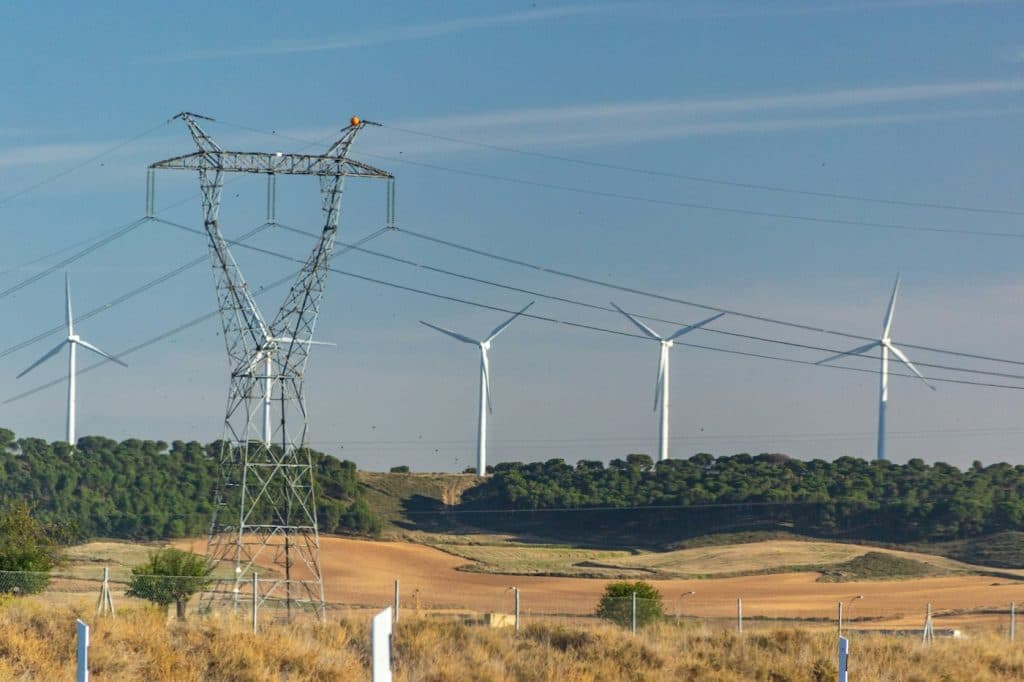
At the start of this week, the government submitted a partial amendment to the Energy Act to the Chamber of Deputies. In addition to implementing certain European regulations, it introduces a new type of energy business activity and terms including designated storage facility and aggregator activity. Independently of this amendment, the Ministry of Industry and Trade (MPO) is separately preparing a draft of an entirely new Energy Act – in the MPO's view, the current one is considerably unclear due to frequent amendments.
On Monday, the Czech government submitted a draft of a more extensive amendment to the Energy Act, which under the current plan is to take effect from 1 January next year. Before that, however, it must pass the standard legislative approval process, which concludes with the signature of the Czech president and publication in the Collection of Laws.
This is a government bill and, thanks to the government's majority in the Chamber of Deputies, its approval can therefore be expected. Moreover, some of the proposals included in the amendment had previously been put forward by opposition MPs. Agreement across the Chamber of Deputies can therefore also be expected. What does the draft amendment contain?
Energy business: intermediary activity
One of the main planned changes is the expansion of energy business activities to include intermediary activity in energy sectors, for which a licence under the Energy Act will not be required. This is only the second expansion of energy business activities – the first was the addition of market operator activity.
Intermediary activity would include, for example, arranging for another party the opportunity to conclude a contract for electricity or gas supplies, whether on behalf of a licence holder or a customer.
Unlike most other types of energy business activity, intermediary activity will not be subject to the obligation to obtain a licence. The draft amendment only provides that an intermediary should obtain authorisation from the Energy Regulatory Office (ERÚ). It will subsequently be entered in the register of intermediaries.
“The need to adopt this legislation was prompted by unfair business practices of certain entities operating on the market, which exploited consumers' vulnerability and trust, as well as their lack of knowledge about how the energy market works. Through their unfair activities, they enriched themselves at the expense of consumers and honest energy suppliers, which lost customers as a result of these practices.”
Explanatory memorandum to the draft amendment to the Energy Act
Although there is to be an entitlement to authorisation to carry out intermediary activity where the conditions in Section 11f of the draft amendment are met, one of those conditions is that the intermediary must be “reliable”. Reliability is demonstrated by a written declaration from the applicant, but the final decision will rest with the ERÚ, as the law, if approved, will only stipulate when a consumer will always be considered unreliable.
Better consumer protection
In addition to restricting intermediary activity, the proposal is also intended to further support consumer protection. Another restriction would be that a fixed-term electricity or gas supply contract is deemed to be an open-ended contract after three years have elapsed. Under such a contract, the customer then has the right to terminate it with three months' notice.
The amendment also provides that supply contracts may only be concluded in written form.
“This represents a strengthening of consumer protection. Given poor practical experience, written form is required for electricity supply contracts and contracts for bundled electricity supply services.”
Explanatory memorandum to the draft amendment to the Energy Act
It should therefore no longer be possible to conclude a contract solely by telephone or via email without a verified signature. Some suppliers used this to acquire new customers.
Aggregator and designated storage facility
Under the new rules, an electricity trader will, among other things, have the right to carry out aggregator activity. Some companies already use this on the day-ahead market, and it is also the focus of the Czech Technology Agency's Théta programme.
It was introduced in October last year and involves ČEPS, Pražská energetika, Digital Energy Services from the Nano Energies group, and the Czech Institute of Informatics, Robotics and Cybernetics (CIIRC) at the Czech Technical University in Prague. The draft law also envisages the possible use of aggregator services to provide ancillary services.
“An electricity trader has the right to carry out the activity of an aggregator, which aggregates grid load or electricity generated by multiple customers or electricity producers for the purpose of participating in the electricity market, the ancillary services market or imbalance management, at the consumption or delivery points of electricity market participants with whom it has concluded a contract for the supply or purchase of electricity.”
Another entirely new term is a “designated storage facility”. The Ministry of Industry and Trade may decide to designate one if this is necessary to ensure the reliable and secure supply of natural gas to Czechia, and if it is requested jointly by the transmission system operator and the operator of the gas storage facility concerned.
The MPO will also determine the price at which the storage facility will be used. The Energy Regulatory Office will have the main say in setting the price, as the MPO is to determine it on the basis of the ERÚ's opinion. Under the draft law, the price should at least cover costs.
Translation disclaimer
This article is a machine translation of the Czech original and has not yet been fully reviewed. In case of any doubt, please refer to the Czech version.
Sdílejte článek prostřednictvím:
You might also like
23 October 2026, 11:01

23 October 2026, 06:34