The South Moravian Region Energy Community is one of the pioneers of community energy in Czechia. Solar panels on twelve ambulance service buildings are already generating electricity.
For a year now, Czech customers have been able to share electricity with one another. So far, community energy has been driven mainly by people in local governments. However, in a highly centralised energy market, developing non-profit alternatives for electricity generation and distribution is not easy.
The situation is complicated by legal, economic and subsidy uncertainty, as well as reluctance from distributors and electricity suppliers. Community energy pioneers therefore know they have to do the hard work of getting things off the ground. Despite all the obstacles, they believe it will be worth it.
Half of the bases generate electricity
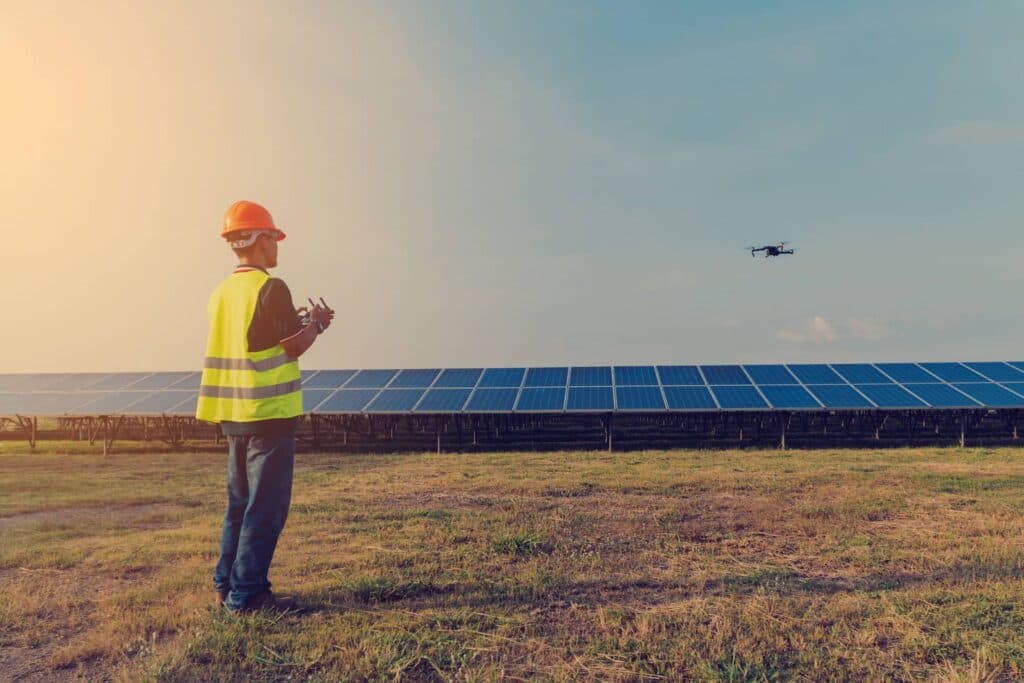
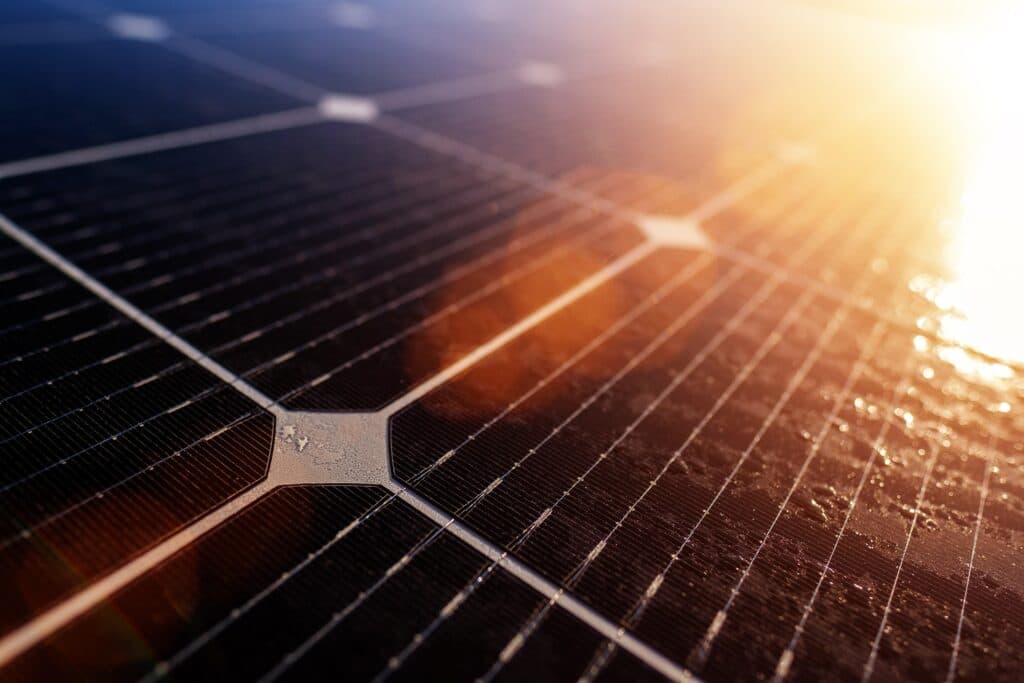
An ambulance parked at the ambulance service depot in Slavkov u Brna is currently drawing power from the grid. At the new low-energy building of the Slavkov ambulance base, electricity for medical equipment and blue flashing lights is generated by rooftop solar panels. On the warm May day when we visit the depot, the panels can produce enough energy for the ambulances and the building’s regular operations, with some left over to send to other stations of the South Moravian Emergency Medical Service.
“Our energy community project got under way in October last year. We calculated that, thanks to sharing electricity from twelve photovoltaic rooftops, we have so far saved CZK 150,000 on electricity,” explains Tomáš Jagoš, who shows me around the depot. He works for Cejiza, a regional contributory organisation, where he coordinates the establishment of an energy community for the South Moravian Region.
Up to 250 members from among regional contributory organisations are expected to gradually join electricity sharing within the community. These include schools, homes for the elderly, education and leisure centres, museums and hospitals. For now, the pilot project involves electricity sharing between the depots of the South Moravian ambulance service. Of the region’s 24 bases, twelve buildings generate electricity and eighteen are involved in sharing.
“This is where our energy is sent into the grid,” says Mr Halamíček, the technician at the Slavkov building, pointing to a switchboard installed in the technical room. Since energy communities can hardly build their own power lines, the South Moravian ambulance service and other participants use the regular distribution grid to distribute energy. At the mandatorily installed smart meters, generators record how much energy they have sent to the grid, while recipients record how much has flowed to them.
Investments on shifting sands
The creation of energy communities and other forms of community energy in Czechia has been permitted since last July by an amendment to the Energy Act known as Lex OZE II. It allows Czech households, businesses, municipalities and associations to generate electricity, primarily from renewable sources, and subsequently share it among themselves. In one year, more than 25,000 consumption points and 17,000 generation sites joined electricity sharing.
The development of community energy in Czechia is intended to support the decentralisation and democratisation of the energy sector, combat energy poverty and climate change, and increase communities’ resilience to global energy price shocks, such as the one caused by Russia’s attack on Ukraine.
“At the moment, we see the greatest interest from municipalities. In that respect, we are somewhat unusual; elsewhere in Europe, it is more often active citizens,” Tomáš Jagoš says of the composition of energy communities. Statistics on recipients of the aforementioned subsidies for establishing energy communities also show that municipalities, associations of municipalities or city districts are among the drivers of community energy in Czechia.
Nevertheless, community energy in the country faces a number of legal, economic and political obstacles.
Setting up sharing so that it pays off is not easy. Payback periods are extended by the fact that shared electricity only supplements power purchased from standard suppliers. Participants reduce their bills by the commodity electricity component covered, according to the meter, by shared energy. However, they still pay distribution and other fees. These make up most of the price and also tend to rise.
The benefits of sharing are also reduced by the necessary initial investments – typically, for example, in rebuilding distribution boards to accommodate the mandatory meters. “If you are a household considering that you could save a few thousand crowns a year through sharing, an investment of CZK 30,000 will put you off,” says Tomáš Jagoš. Old switchboards can also make sharing more expensive for municipalities and other larger organisations that manage multiple distribution boards.
Jagoš also points to the changing legal environment, which complicates the creation of business models that are competitive over the long term. “We can say: we will share at this price and recoup the costs within this period. Then some change comes along. Yet energy investments are made for years ahead,” he explains.
Preventing the provisional regime from dragging on
The Electricity Data Centre, which collects data on energy sharing in Czechia, is currently operating under a provisional regime. This limits the ways in which electricity can be allocated among individual community members, as well as the geographical scope of sharing.
Under Lex OZE II, the provisional regime should remain in force until July 2026, but there are doubts as to whether it may last longer. That could again disrupt communities’ plans. “The timetable is set by legislation, and the institutions involved are working to meet it,” the Ministry of the Environment responded to the concerns.
Electricity suppliers can also create problems for energy communities. “They say, you cost us more money and we have to reflect that in the price, and then offer more expensive electricity,” Jagoš describes the experience of the Cejiza agency, which selects electricity suppliers for the South Moravian Region. Worse still, some suppliers explicitly prohibited energy generators from joining sharing arrangements in their contracts.
Greater protection for energy communities against discrimination is to be provided by a further amendment to the Energy Act, OZE III, approved this spring. It will prevent suppliers from imposing such bans. “If we receive information about continuing problems with discrimination against energy communities and sharing in general, legislative changes may be considered,” the Ministry of the Environment assures.
According to Tomáš Jagoš, we will have to think much more carefully about how we use electricity in the future. In this respect, energy communities also serve an educational role. “I see it as motivation for behavioural change. People then become much more aware of how electricity works, which is something we will not be able to avoid in the future,” he believes. As the path is cleared, sharing will become easier. “This is only the beginning. We are the first, and we have to do the hard work,” Jagoš says.
The article was produced in cooperation with the Centre for Transport and Energy.