
23 October 2026, 14:38
Loading...
Czech association: Changes to solar rules deter investment and threaten power plant operations

oEnergetice.cz, ČTK
24 October 2024, 13:41
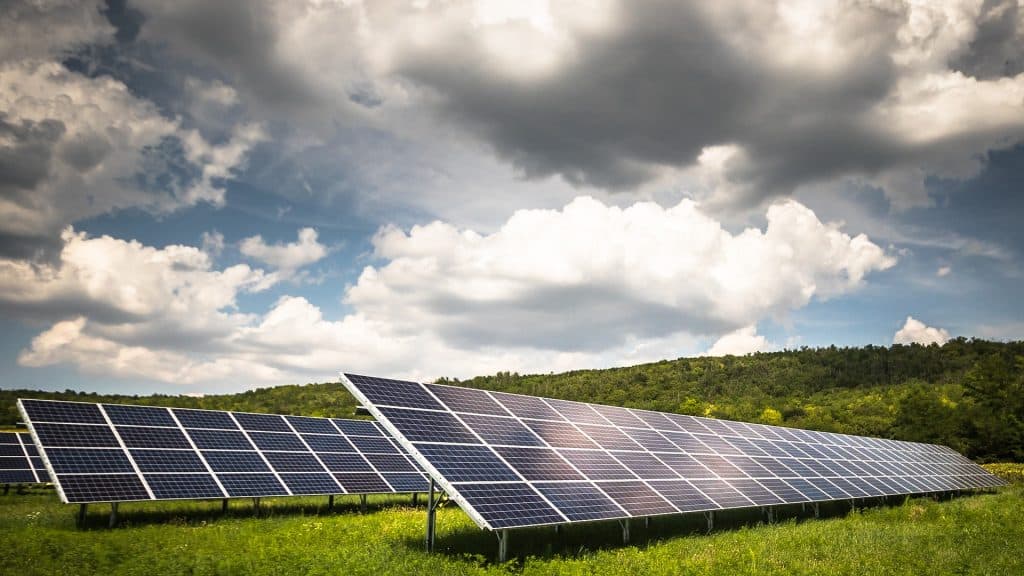
Government proposals to cut spending on support for renewable energy sources (RES) threaten half the capacity of Czech solar power plants and could even lead to some operators going bankrupt, representatives of the solar energy sector say. They argue that the measures contain factual errors and are contrary to the law. They also warn that frequent changes to the rules are holding back further investment and development in the sector. Representatives of the Czech Solar Association said this at a press conference today.
Next year, the government wants to allocate 8.5 billion crowns from the state budget to support renewable energy sources, the same amount as this year. Under the current rules, the Ministry of Industry and Trade (MPO) had originally budgeted 31.2 billion crowns for 2025. The cabinet has proposed, for example, individually assessing the profitability of solar power plant operations, especially those commissioned in 2009 and 2010. The government will also pay support at a lower level than before. The current return rate of 8.4 percent for power plants commissioned between 2006 and 2012 could, according to the Ministry of Finance, be reduced to as low as 6.3 percent in line with European rules.
The Solar Association describes the government’s proposals as unprecedented interference with support guaranteed by law. „Breaking a clearly stated commitment is a very worrying signal not only for current operators of renewable energy sources, but also for investors in every other sector. It damages confidence in the rule of law in the Czech Republic and the stability of the Czech business environment,“ said Jan Krčmář, executive director of the Solar Association. He said the current cabinet approved the existing support system two years ago. He warned that constant changes would weaken investment in the sector and drive investors to other countries.
According to Krčmář, the measures themselves are contrary to both European and national legislation. He said the permitted return threshold was set as an average for the entire sector, not as a maximum for individual projects. Individual facilities may have different economic conditions depending on the technology chosen. The association also argues that individual reviews are contrary to the European Commission’s notification decision, which allows them only for projects receiving both investment and operating support.
„The ministry also wants to try to calculate the return on investment in renewable energy sources beyond 2030. But it can hardly determine what the market price of electricity will be in the next decade,“ Krčmář added.
Critics say the proposed changes also risk exposing Czechia to international arbitration. „The proposal is contrary to European law, which prohibits states from retroactively interfering with guaranteed support. This could lead to international arbitration; there is a precedent, for example, in a dispute that the Czech Republic lost in Switzerland. A ruling that retroactive changes to established rules were unlawful was also handed down in the Czech Republic in September,“ warned Pavel Doucha, a partner at the Doucha Šikola law firm.
According to Petr Bartoň, an economist and data analyst at Datarun, retroactive changes to the rules could also cause damage to Czechia in other sectors. He cited, for example, impacts on regional and municipal budgets, as well as problems for banks, which still have loans worth several tens of billions of crowns tied up in projects. Bartoň said the change in conditions would above all undermine investor confidence across a range of other sectors. „Without them, economic growth will not return to our economy,“ he added.
Government MPs will submit the proposed measures on RES support today as an amendment to another bill being debated in the Chamber of Deputies. The cabinet expects final approval before the third reading of the state budget.
sip snm
Translation disclaimer
This article is a machine translation of the Czech original and has not yet been fully reviewed. In case of any doubt, please refer to the Czech version.
Sdílejte článek prostřednictvím:
You might also like


23 October 2026, 11:01


23 October 2026, 06:34