Czechia burned a record amount of waste: energy generated from it reached an all-time high

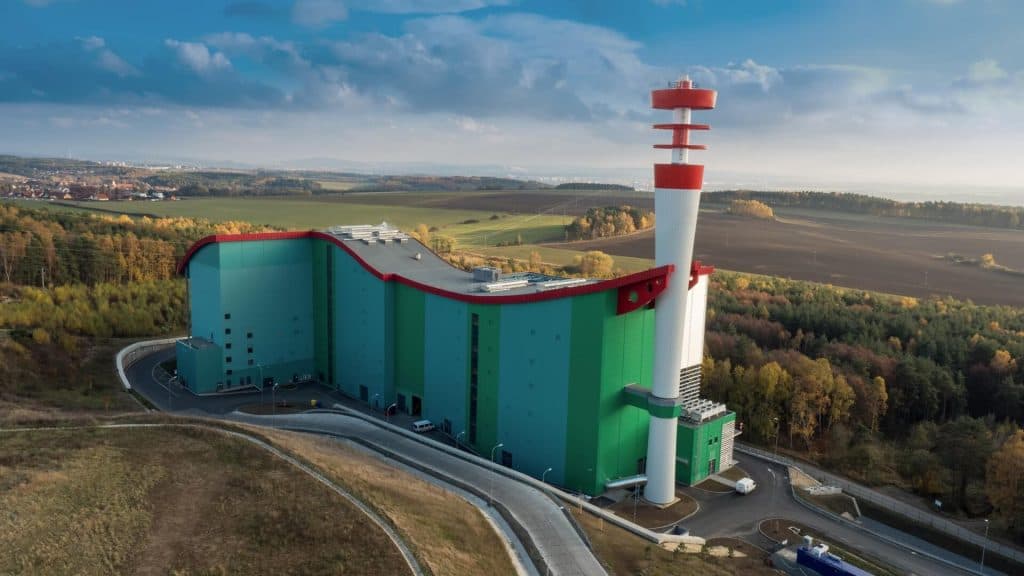
Energy recovery from waste and alternative fuels in the Czech Republic rose again in 2025. According to new data from the Ministry of Industry and Trade, nearly 1.38 million tonnes of waste and alternative fuels were used to generate energy. The amount of waste processed at waste-to-energy (WtE) plants set a record, as did electricity generation from municipal waste. The figures also point to the growing role of alternative fuels in district heating.
The Ministry of Industry and Trade has published new statistics on energy recovery from waste and alternative fuels for 2025. A total of 1,378,620 tonnes of waste and alternative fuels were used to generate energy, according to the ministry, up from 1,359,120 tonnes in 2024. The total therefore increased by approximately 1.4% year on year.
The amount of energy contained in the waste and alternative fuels used rose more significantly. In 2025, it reached 19.82 PJ, approximately 3.7% more than a year earlier. This was also the highest figure in the entire time series published by the ministry, which dates back to 1989. The previous record was set in 2020, when the energy contained in waste and alternative fuels used for energy recovery amounted to 19.44 PJ.
The statistics do not cover all waste incinerated in the Czech Republic. The ministry includes only cases where the energy generated during incineration is actually used and the waste contributes to energy production. The figures are therefore not directly comparable, for example, with overall waste-incineration statistics published as part of waste-management reporting.
WtE plants set another record
The largest individual category remains plants that recover energy from municipal waste, known in Czech as ZEVO. In 2025, they used 840,390 tonnes of municipal solid waste to generate energy, compared with 830,348 tonnes the previous year.
The increase in the amount of waste itself was not dramatic, but it continued the trend of recent years. In 2022, Czech WtE plants used approximately 701,000 tonnes of waste to generate energy; by 2023, the figure was already close to 816,000 tonnes. The amount has therefore risen by nearly a fifth in three years.
Electricity generation increased more sharply. In 2025, WtE plants generated 281 GWh of gross electricity, almost 8% more year on year and the highest figure in the ministry's statistics. By comparison, generation stood at 205 GWh in 2020 and just 148 GWh in 2015.
Heat followed a different trend. Gross heat generation fell from 4.13 PJ in 2024 to 3.94 PJ, while heat supplied to customers declined from 2.77 PJ to 2.72 PJ. The larger amount of waste used for energy recovery in 2025 therefore did not lead to higher heat deliveries.
The increase in waste processed in recent years is also linked to capacity adjustments at existing plants. The permitted capacity of the Malešice WtE plant in Prague was raised from an initial 330,000 tonnes to 394,000 tonnes in 2023, and then to 480,000 tonnes a year. The capacity of the Chotíkov WtE plant was increased from 120,000 to 133,000 tonnes a year in December 2024. The Brno plant has a capacity of 248,000 tonnes, according to the ministry, while the Liberec WtE plant can process 96,000 tonnes.
Cement plants process more than 400,000 tonnes
Cement plants and lime works also account for a significant share of energy recovery from waste. In 2025, they used 405,948 tonnes of alternative fuels and waste, approximately 15,000 tonnes more than a year earlier.
Solid alternative fuels made up the largest share, with consumption reaching nearly 285,000 tonnes. They were followed by tyres, at just under 57,000 tonnes; fuels classified as renewable energy sources in the statistics, at 28,000 tonnes; and industrial or otherwise unclassified waste, at just under 24,000 tonnes.
However, the volume of alternative fuels used by cement plants has yet to reach the highs recorded early in this decade. In 2021, consumption totalled almost 487,000 tonnes, approximately a fifth more than in 2025.
The long-term trend is nevertheless significant. As recently as the late 1990s, Czech cement plants and lime works used only tens of thousands of tonnes of alternative fuels a year. Since then, these fuels have become an important part of their energy mix, primarily replacing some fossil fuels.
Solid alternative fuels gain a foothold in district heating
The trend in the category the ministry calls the use of alternative fuels and waste in the energy sector is particularly noteworthy. Between 2017 and 2022, annual consumption in this category ranged from approximately 2,000 to 5,000 tonnes.
In 2023, however, it rose to more than 30,000 tonnes, and a year later to nearly 72,000 tonnes. In 2025, it stood at 67,425 tonnes.
The ministry attributes this jump primarily to the modernisation of the Přerov heating plant, completed at the end of 2022. Its new multi-fuel steam boilers can burn solid alternative fuels (SAF) made from sorted municipal and other waste, as well as biomass. The plant has a capacity of 114,000 tonnes a year.
Although the amount of alternative fuels used in the energy sector fell year on year in 2025, their use for energy recovery remained high. Gross heat generation rose from 493 TJ to 512 TJ, while heat deliveries increased from 388 TJ to approximately 426 TJ.
Wider use of solid alternative fuels could be one way to replace coal at some existing district heating plants. This is a somewhat different approach from standalone WtE plants, however: the fuel is generally produced only after the waste has been pre-treated, and the plant can use it alongside other fuels.
Industrial and hospital incinerators, by contrast, are in decline
Industrial and hospital waste incinerators show a different trend. In 2025, they used 62,182 tonnes of waste to generate energy, the lowest figure since 2005.
As recently as 2018, the amount exceeded 94,000 tonnes. It has declined gradually since then, falling from nearly 80,000 tonnes to 62,000 tonnes between 2023 and 2025. The energy contained in the incinerated waste also fell to 843 TJ in 2025.
The ministry says that 25 industrial and hospital waste incinerators are currently operating in the Czech Republic. A new facility, for example, began operating at Uherské Hradiště Hospital in 2025.
Future growth will not depend solely on new WtE plants
The new statistics add to the picture we described in June. The Czech Republic faces a gradual reduction in landfill disposal while also being required to increase recycling rates. This creates scope for energy recovery from residual, non-recyclable waste fractions, while also limiting the amount of waste that can be directed to WtE plants over the long term.
The 2025 data show that energy recovery from waste is no longer developing solely through conventional WtE plants. Cement plants remain significant users, while district heating is playing an increasingly visible role through the use of solid alternative fuels.
From an energy perspective, what will matter in the coming years is not only how much new incineration capacity is built in Czechia, but, above all, how the different technologies fit into the future waste-management and district heating systems. The record year of 2025 shows that the volume of waste used for energy recovery continues to grow, while its composition and how it is used are also changing.
Translation disclaimer
This article is a machine translation of the Czech original and has not yet been fully reviewed. In case of any doubt, please refer to the Czech version.