Czechia faces shortage of waste-to-energy capacity
The prospects and future of waste-to-energy facilities (ZEVO) in Czechia were among the topics discussed at the international Waste to Energy conference, held in Prague at the turn of March and April. Participants included representatives of the Ministry of the Environment (MŽP), the District Heating Association, academia and industrial companies. The entire sector is desperately awaiting the approval of the Waste Act, without which tonnes of energy-recoverable waste will continue to end up in landfills or be exported abroad.
How can waste-to-energy capacity be increased?
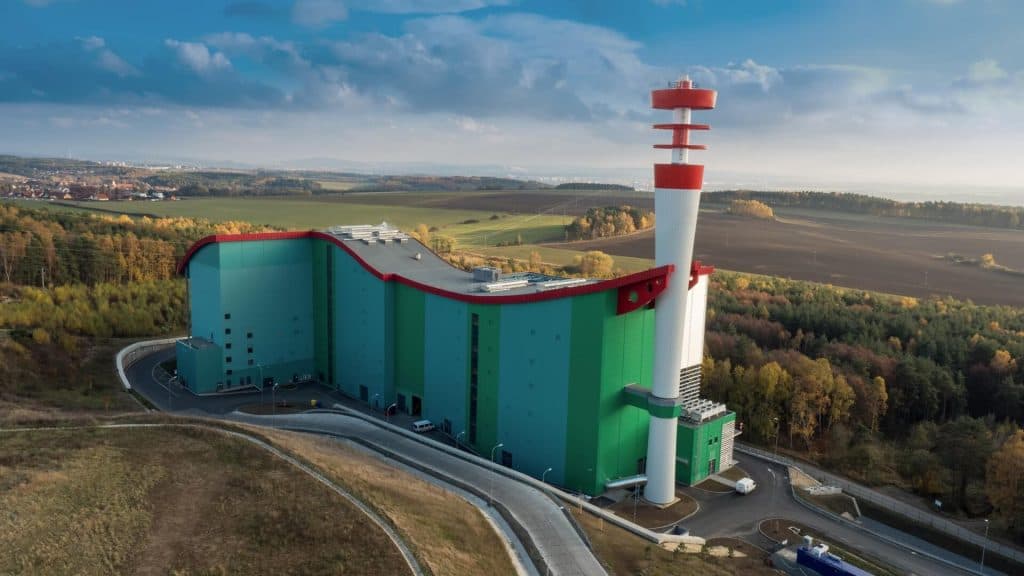
The government-approved Waste Management Plan (POH) is clear – 1.4 million tonnes of municipal waste (MW) per year should be used for energy recovery by 2024. At present, the capacity of Czech waste-to-energy facilities is approximately half of this, even including the Chotíkov waste-to-energy plant in Plzeň, which has been built but cannot operate because it lacks a valid building permit.
There are two ways to increase waste-to-energy capacity under Czech conditions. The first option is to expand existing facilities, an option being pursued in Brno.
Brno and Prague both plan to increase capacity
Representatives of SAKO Brno announced at the conference that preparatory work for the construction of a third boiler is already under way. The new boiler will increase the capacity of Brno's waste-to-energy plant to 330,000 tonnes of municipal waste per year. The environmental impact assessment should be completed later this year.
The Malešice waste-to-energy plant could also be expanded, with plans to eventually commission a fifth line with its own boiler. This option is also included in the Territorial Energy Concept of the Capital City of Prague, which envisages a possible increase in annual capacity of 100,000 tonnes of municipal waste through a fifth line.
An increase in capacity is unlikely at the Termizo waste-to-energy plant in Liberec, which does not have sufficient space for a new processing line.
New facility not in sight
One of the planned Czech waste-to-energy facilities was to be located in Jihlava, an option included in the Integrated Waste Management System for the Vysočina Region. However, according to Zbyněk Bouda, a representative of the Vysočina Energy Agency, the repeated postponement of the new Waste Act means they are seriously considering exporting waste to Austria or Germany. This situation could arise if treated municipal waste in the form of solid alternative fuel can be supplied to neighbouring countries at a price of around €50 per tonne.
Another waste-to-energy facility could be built in north-western Bohemia. The EVO Komořany project is still progressing there; it has passed its environmental impact assessment and is now in the permitting process.
MŽP: Waste Act to take effect from 2018
According to a timetable presented at the conference by Jaromír Manhart, director of the MŽP waste department, the new Waste Act is expected to be adopted in the second quarter of 2017. The Act is currently planned to take effect on 1 January 2018. It is currently undergoing inter-ministerial consultation, while the ministry is addressing 1,500 comments submitted during the public consultation.
One important change proposed in the Act is the gradual increase in the landfill charge for recoverable waste to Kč1,850 in 2023. Another significant change is a ban on landfilling waste with a calorific value higher than 4 MJ/kg and waste that can be recycled. Both changes can still be expected to face intense debate over their final form. A major battle will be fought over the amount of the landfill charge and the schedule for increasing it, as well as over the definition of waste to which the ban will apply.
Lead photo – the Amager Bakke waste-to-energy plant in Copenhagen. Source: dwell.com
Translation disclaimer
This article is a machine translation of the Czech original and has not yet been fully reviewed. In case of any doubt, please refer to the Czech version.