23 October 2026, 14:38
Loading...
Czechia plans to invest in further fossil fuel projects, risking a long-term “carbon lock-in”
Ekonews.cz
16 December 2022, 14:40
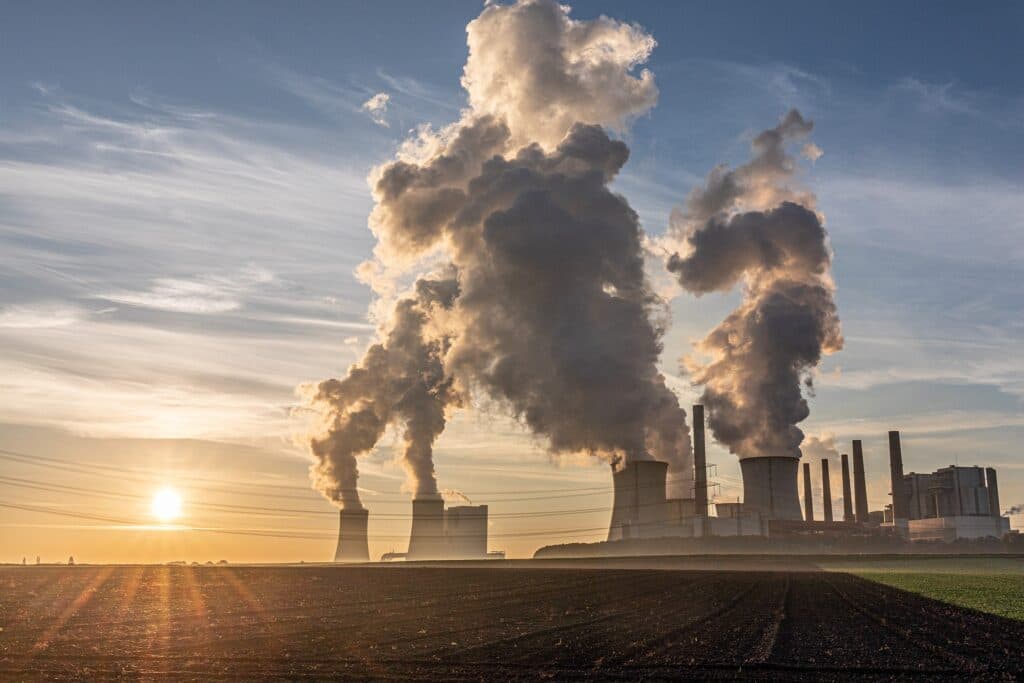
The Czech Republic is likely to have access to additional billions under the increased allocation of the National Recovery Plan and the REPowerEU initiative, which is intended to help countries increase their independence from Russian fossil fuels. However, the current proposal envisages significant investment in fossil fuel projects.
This follows from a Ministry of Industry document seen by Ekonews and approved by the government. During this year, the ministry collected submissions from individual ministries involved in implementing the National Recovery Plan (NPO) for its update, as well as projects for REPowerEU. In total, 86 submissions worth CZK 125 billion were received.
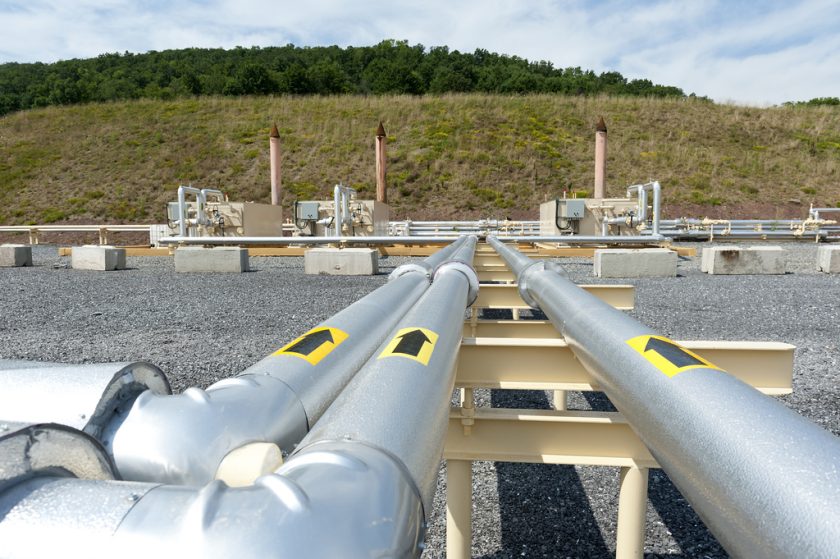
The result is a “shortlist” showing that part of the funding should go to the TAL+ oil pipeline (CZK 1.5 billion) and the STORK 2 gas pipeline (CZK 8 billion). The plan also includes a grant worth CZK 531 million for preparatory work on a district heating pipeline from the Dukovany nuclear power plant to Brno. However, the proposed investments have drawn criticism from organisations that, alongside independence from Russian commodities, also prioritise the climate and the green transition.
According to the Centre for Transport and Energy (CDE), another problem is that the European Parliament (EP) recently adopted a more relaxed approach to the “do no significant harm” principle in its position on the financial aspect of the REPowerEU plan. This is a safeguard intended to ensure that included projects do not cause significant harm to the climate or environment. In effect, the EP has thereby enabled fossil fuel projects to be financed.
“Under the pretext of reducing Czechia’s dependence on Russian fossil fuels, we are preparing to use public funds to finance projects whose contribution to a long-term solution to the current energy crisis is, at best, questionable. Weakening safeguards in national REPower plans will not contribute to the much-needed transformation of the entire sector; on the contrary, it can only worsen Europe’s dependence on fossil fuel imports from other parts of the world,” says Veronika Murzynová, an energy transition specialist at CDE.
The risk of “carbon lock-in”
Her colleague Eva Mariničová, an expert on European funds, believes that the government is preparing merely to shift the problem geographically rather than modernise the Czech energy sector. “It is more of a political vision. Instead of pursuing comprehensive measures and putting more money into developing communities or renewable sources, we can see an effort to lock ourselves into a high-emissions environment,” says Mariničová, adding that according to her information, the list of REPowerEU projects is also disliked by the European Commission.
She sees a number of good ideas in the document, but the main problem is that the planned investments in them are disproportionately lower than those in the fossil fuel plans. She acknowledges that the shrinking amount of time Czechia has for the whole matter is also an issue. Specifically, Czechia is failing to meet the set milestones in time to draw funding from the National Recovery Plan.
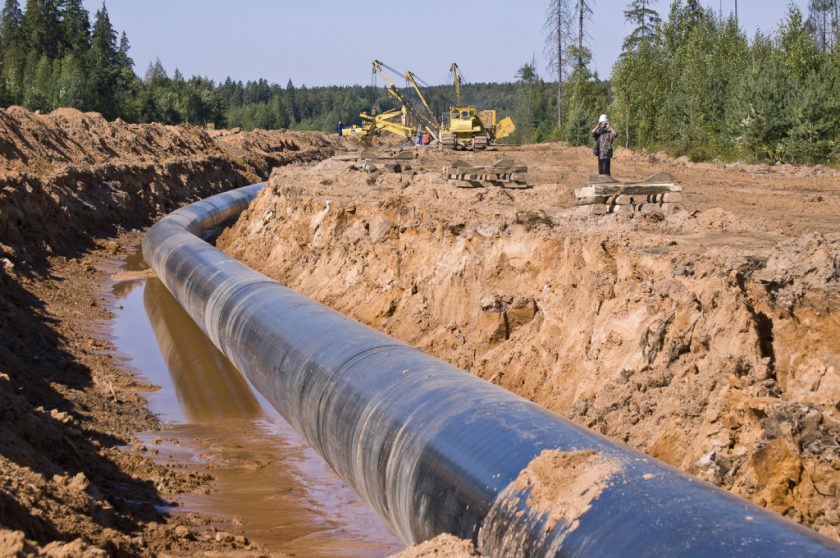
According to Oldřich Sklenář, an analyst at the Research Centre of the Association for International Affairs (AMO), one project that stands out is the district heating pipeline from the Dukovany nuclear power plant, which is intended to supply Brno households with waste heat. Their energy bills have doubled since the energy crisis began because most heat production in the Moravian city depends on imported natural gas. Yet the pipeline has no chance of solving the problem in the foreseeable future.
“The initial preparatory phase alone would cost half a billion crowns. Overall costs, after accounting for inflation, are expected to reach CZK 19 billion. But if we look at similar projects, such as the heating pipeline from Temelín to České Budějovice, there was a three-year delay and costs rose by 100 percent,” the analyst notes, adding that in the case of Dukovany, it would involve a 60-kilometre pipeline crossing around 2,500 plots of land, so nothing easy under Czech conditions.
“Vienna has a similar problem and plans to use heat from its wastewater treatment plant. The entire project will cost the equivalent of CZK 1.7 billion, while serving roughly the same number of households,” Sklenář offers as a solution, adding that Austria will complete the project by 2027, whereas the heating pipeline from Dukovany is a matter of at least a decade.
Czechia and Poland are already lobbying for pipelines
The Ministry of Industry and Trade (MPO) reported in September that Czechia and Poland had resumed cooperation on preparing the Stork II project. The gas pipeline is intended to connect the two countries’ gas systems and link Czechia to Polish terminals for liquefied natural gas. Industry and Trade Minister Jozef Síkela and Polish Climate and Environment Minister Anna Moskwa asked the European Commission in a joint letter to allow the project to be financed through REPowerEU.
“The Stork II gas pipeline project is very important for strengthening the Czech Republic’s energy security in the future. A direct connection to Polish liquefied natural gas terminals will enable us to secure gas supplies to our territory from suppliers other than Russian ones. This interconnection will also reduce gas transport costs and thus the final price for consumers,” Síkela wrote in a press statement, adding that the Ministry of Industry and Trade is taking such steps to ensure Czechia gradually frees itself from dependence on hostile or unstable countries such as Russia.
However, Oldřich Sklenář of AMO warns in the context of the planned gas pipeline that this is not infrastructure that would help resolve a transitional period, but a project with a “carbon lock-in” effect – a fossil fuel project that will tie Czechia’s hands for many years. “Once I put that kind of money into something, I will logically want it back. So in the end, we will be forced to take gas for longer than we now think. And that is not even mentioning the same effect on the countries that will newly supply us with gas and therefore have to build additional capacity,” Sklenář warns.
He also says the issue of “green hydrogen” has been neglected. According to AMO calculations, Czechia will never be able to produce enough of it for the needs of its energy-intensive industry and will have to import it. Yet this aspect is not discussed in the context of the Stork II gas pipeline. “A great deal of hydrogen will be needed. If we are serious about the green transition by 2050, all projects should already be hydrogen-compatible,” the expert concludes.
Petr Holub, director of consultancy Budovy21, adds that greater emphasis should be placed on energy savings. “It is not a matter of doing one thing and being finished in a year. If investment were primarily directed into energy efficiency, by 2030 we could save 1.8 billion cubic metres of gas annually,” he believes.
The Ministry of Industry and Trade did not respond to Ekonews’ follow-up questions. The Ministry of Environment, as the ministry concerned, also did not respond to questions by the article’s deadline. The Ministry of Environment subsequently issued a general response, stating that the possibility of financing the heating pipeline from Dukovany to Brno had been the subject of several meetings between the investor and the ministry this year. “The possibility of financing from the Modernisation Fund was also discussed. Following this, at the beginning of November 2022, we pointed out that in such a case it is necessary to meet the framework and conditions of the Modernisation Fund and the requirements of European legislation, including state aid rules,” said Dominika Pospíšilová from the Ministry of Environment’s press department.
Individual ministries now have time to further develop the proposed projects and determine the precise timetable, objectives and funding costs. The government will then again decide which projects will ultimately be approved and become part of the updated National Recovery Plan.
The REPowerEU plan – was created in response to Russia’s war in Ukraine and the energy crisis. It is intended to free the European Union from dependence on Russian fossil fuels, accelerate the transition to renewable energy sources, support energy savings and increase EU energy security.
National Recovery Plan – a set of documents determining the distribution of more than CZK 190 billion among Czech businesses and institutions. The money is intended to support post-pandemic recovery. The plan was proposed by the government of Andrej Babiš and finally approved by the Council of the EU on 31 August 2021. To draw European funding, Czechia must meet the Council’s milestones and targets by no later than 31 August 2026.
Republished from EkoNews.cz, a website covering business and sustainability.
Translation disclaimer
This article is a machine translation of the Czech original and has not yet been fully reviewed. In case of any doubt, please refer to the Czech version.
Sdílejte článek prostřednictvím:
You might also like
23 October 2026, 11:01
23 October 2026, 06:34