
23 October 2026, 14:38
Loading...
Czechs save less on solar due to outdated consumption metering than their neighbours, but nothing will change
Ekonews.cz
27 March 2023, 13:39
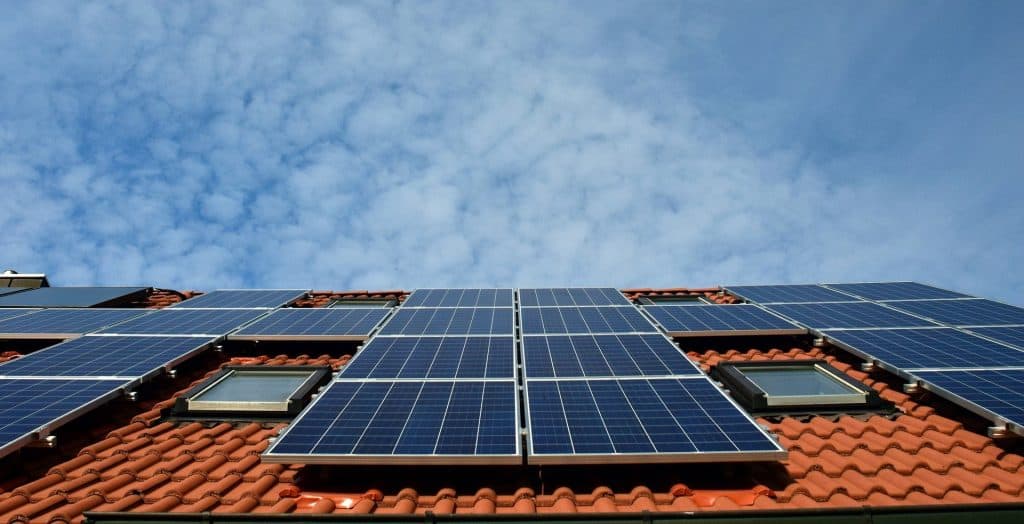
Installing solar panels pays off less in Czechia than in other European countries. According to the Solar Association, the reason is a different method of measuring and billing electricity generated and consumed. The ministry points out that a change would slow the rollout of smart meters and bring higher charges for people without their own generation source.
According to data from the Solar Association, Czech residents installed more than 33,000 photovoltaic power plants on family homes and apartment buildings last year. This was five times more year-on-year than the year before. However, the savings are not as large as they could be. According to the Solar Association, investment in a private power plant pays back somewhat more slowly because electricity in Czechia is measured and billed by phase. This method is declining in Europe.
Aggregate metering, which is used everywhere in the European Union except Portugal and part of Slovakia, works by deducting the amount of electricity generated from the electricity consumed. The household then pays only for electricity drawn from the grid when its own solar panels are insufficient. The more a small power plant owner generates, the more they save.
Confusion over the calculations
In Czechia, however, electricity is measured and billed separately by phase. This means that consumed and generated electricity are split between three phases, and the amount of electricity consumed is calculated separately for each of them. Generated electricity is distributed evenly among the individual phases.
For everything to work properly, a household must buy an asymmetric inverter. It manages consumption itself so that as little electricity as possible is drawn from the grid. If the household did not have an asymmetric inverter, the house could generate enough electricity, but rather than covering consumption, it could flow into the grid.
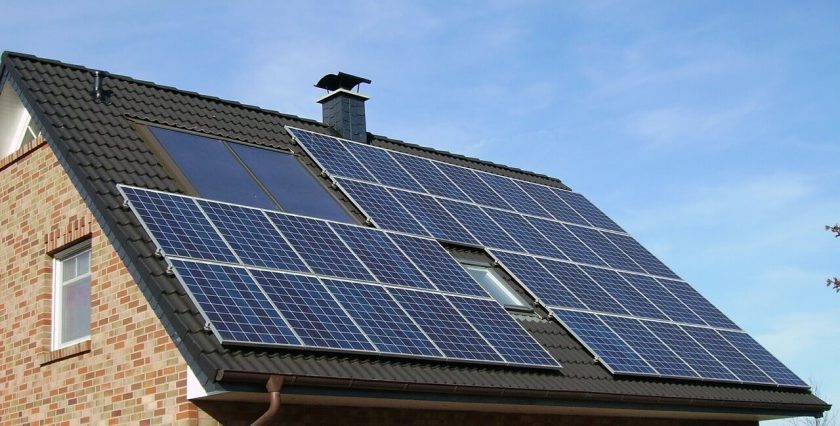
For example, a switched-on microwave oven would draw electricity on one phase, but only one-third of the electricity generated by the rooftop solar panels would be on that phase. The household would sell the remaining two-thirds to the grid at the feed-in price and, paradoxically, would have to buy additional electricity to run the microwave. It would also unnecessarily pay extra distribution charges.
As both the Solar Association and the Frank Bold expert legal group point out, asymmetric inverters used for phase-by-phase electricity metering are more expensive than symmetric ones. They therefore also increase the cost of a small private power plant.
Change would make electricity more expensive for people without solar, ministry says
The method of measuring and billing electricity is governed by a decree of the Ministry of Industry and Trade. Aggregate metering was previously also used in Czechia. However, the ministry changed it in 2011 to stop the then “solar boom”.
The ministry had originally planned to amend the relevant decree together with the planned Lex OZE II amendment to the Energy Act on community energy, which will allow electricity to be shared between several houses across the distribution system. And the ministry is still considering changing the decree.
“Changing the metering method to aggregate metering has not yet been decided, and the Ministry of Industry and Trade considers the distribution system operators’ arguments for retaining phase-by-phase metering to be relevant,” David Hluštík from the ministry’s communications department told Ekonews.cz. “The point is that changing to aggregate metering would lead to network charges being shifted to other customers without their own electricity generation facility (so-called socialisation of costs) and would not reflect actual use of the grids,” he warns. Introducing aggregate metering would also reportedly increase the costs of integrating decentralised sources.
At the same time, the replacement of old meters with smart ones will begin this July. The new digital electricity meters can detect any tampering and combat illegal grid consumption. Hluštík points out that changing the metering method would delay the transition to smart meters. Tenders for the purchase of new meters have already been held under the current decree.
Distributors will adapt regardless of the outcome
Distribution companies say they will adapt to the situation, whatever the ministry decides. “We do not determine legislation and act in accordance with it and the rules in place. Phase-by-phase metering applies in Czechia, so we measure and assess by phase. Should legislation change, we will adapt,” Soňa Holingerová, spokesperson for ČEZ Group, told Ekonews.
Petr Holubec, communications and PR specialist at Prague energy company PRE, speaks similarly. According to him, other European countries also have various differences in electricity metering. “We are convinced that phase-by-phase metering is more accurate and technically correct, because most appliances are single-phase. However, legislation is crucial. If it stipulates that aggregate electricity metering is to be introduced, we will proceed with it once approved,” he told Ekonews. “At the same time, however, we are convinced that the tariff system will also need to be amended so that everything is fair from customers’ perspective,” Holubec added.
Republished from the online portal EkoNews.cz, a website about business and sustainability.
Translation disclaimer
This article is a machine translation of the Czech original and has not yet been fully reviewed. In case of any doubt, please refer to the Czech version.
Sdílejte článek prostřednictvím:
You might also like
23 October 2026, 11:01
23 October 2026, 06:34