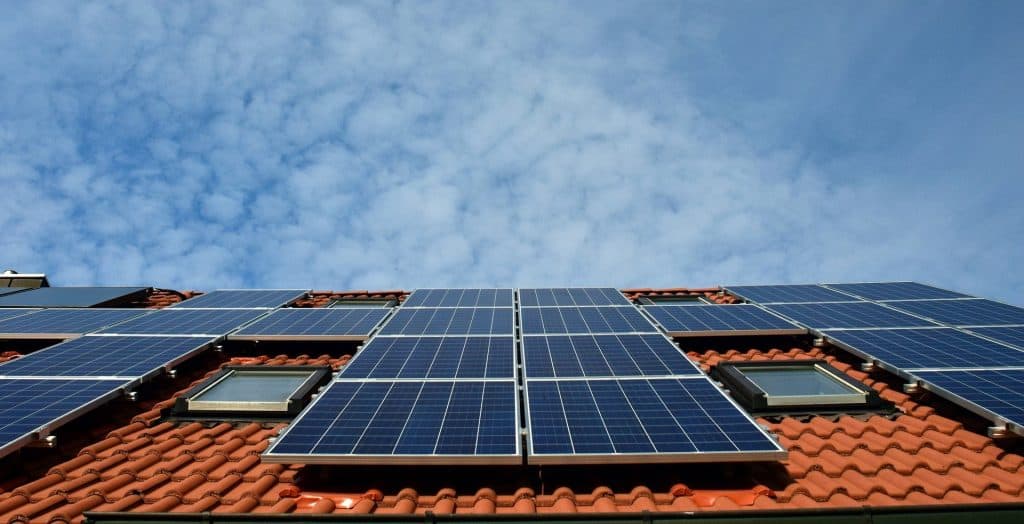
Owners of cabins and country homes want rooftop solar, but most of them do not realise that they must consume the electricity in real time – no later than 15 minutes after it is generated. Energy sharing is therefore worthwhile only with someone who is at home during the day, or with businesses.
Nearly a fifth of Czech country-home owners have some type of solar system on their roofs, whether water-heating collectors or photovoltaic panels. This follows from a May survey by Epet involving more than a thousand respondents.
Nearly 30 percent of respondents are considering acquiring a solar system, while half are thinking about installing one. They are attracted by the opportunity to participate in community energy. However, the survey also showed that most interested parties do not know how joining community energy actually works. Among other things, they are unaware that electricity can only be shared in real time.
“Under the applicable legislation, which is uniform across Europe, generated electricity must be consumed within 15 minutes of being recorded by a smart meter. If the energy is not consumed, it flows back into the grid as a surplus. It is therefore up to each consumer to consider and plan whom to connect to their network and what demand they will have for the electricity generated,” explains Roman Šmíd, commercial director of Epet.
Either consume it or get storage
What does consuming electricity in real time mean? The physical distance of the household with which someone shares electricity does not matter. It always flows into the grid and is drawn from there according to the sharing arrangement. “The important thing is that it is consumed during the so-called trading quarter-hour, meaning within 15 minutes of generation, which is monitored by interval meters,” says Šmíd.
Sharing therefore works in 15-minute blocks. Someone in the sharer’s group consumes electricity in a given block, and the system matches generation and consumption. “The incentive to try to consume electricity when the power plant is generating provides the necessary flexibility for consumers, helping both their wallets and the electricity system. If electricity is not consumed among those sharing it, it normally flows into the grid and the supplier delivers it to other consumers,” adds Štěpán Chalupa, chairman of the Chamber of Renewable Energy Sources.
Consumption can, however, be combined with battery storage. Instead of being consumed, electricity can be stored and used later.
In some countries, distance does play a role in sharing. “Abroad, it is common for lower distribution charges to apply to shared energy when it is shared with people nearby. This is not yet possible in the Czech Republic,” notes Jan Krčmář, executive director of the Solar Association.
Sharing for eleven households
If someone decides to share the electricity they generate, experts recommend first reading the detailed guide on the website of the Electricity Data Centre, which explains how to register and what to do next. There are various types of sharing in groups of different sizes; for example, a small group of active customers can have up to eleven members.
Electricity can be shared among family members, for example from a country home to a flat, or with a group of neighbours. “The best choice for sharing is someone with higher consumption when the photovoltaic system is generating electricity and who does not have their own electricity source. This makes the best use of the energy generated and prevents it from remaining in the grid as a surplus,” Šmíd recommends. In other words, it is ideal to share with someone who is at home during the day, when photovoltaic generation is highest.
Typically, this means shops, bakeries, small workshops or offices. The level of consumption must also be considered. “The partner should have sufficiently high consumption to be able to use most of the shared energy. If their consumption is low, some of the electricity generated will not be useful to them and will flow into the grid without benefit,” Chalupa points out.
It is good to think long term
According to him, sharing is organisationally and administratively simpler when it involves an acquaintance, neighbour, family member or partner with whom the generator has a long-term relationship. “Trust is also important, because you agree the compensation rules between yourselves – for example, if you set the price at 0 crowns. You can agree on non-financial compensation, such as services, reciprocal services or barter,” Chalupa notes.
He recommends having an agreement with someone who has stable operations and will not cease operating overnight. For businesses and households alike, the generator should clarify in advance that they will want to remain involved in sharing over the long term.
Community energy is particularly worthwhile for owners of cabins and country homes. In apartment buildings or densely built-up areas, it is usually not possible to install photovoltaics, due to both legislation and technical conditions. At a cabin or country home, however, it is generally easier. And if no one is there during the week, the owner can send unused electricity to their city flat and consume it there.
Up to five thousand a year
And how much can members of energy communities save through sharing? The exact amount varies case by case, but it is typically thousands of Czech crowns per year. Consider a model example: a country-home owner has a photovoltaic system generating around 4000 kWh annually. They use half at the country home and send the other 2000 kWh to their city flat. This reduces the electricity they draw from their supplier in the flat. “However, because distribution charges also apply to sharing, the saving is approximately 2.40 crowns for every shared kilowatt-hour. In this case, that comes to about 4800 crowns a year,” Roman Šmíd calculates.
The electricity generator will usually not cover all of the recipient’s consumption. Since sharing works in 15-minute intervals, only the part of generation that is actually consumed by the recipient during the same interval is counted. “In reality, you therefore cover part of your partner’s annual consumption; the share depends on the timing overlap between generation and consumption,” Štěpán Chalupa explains.
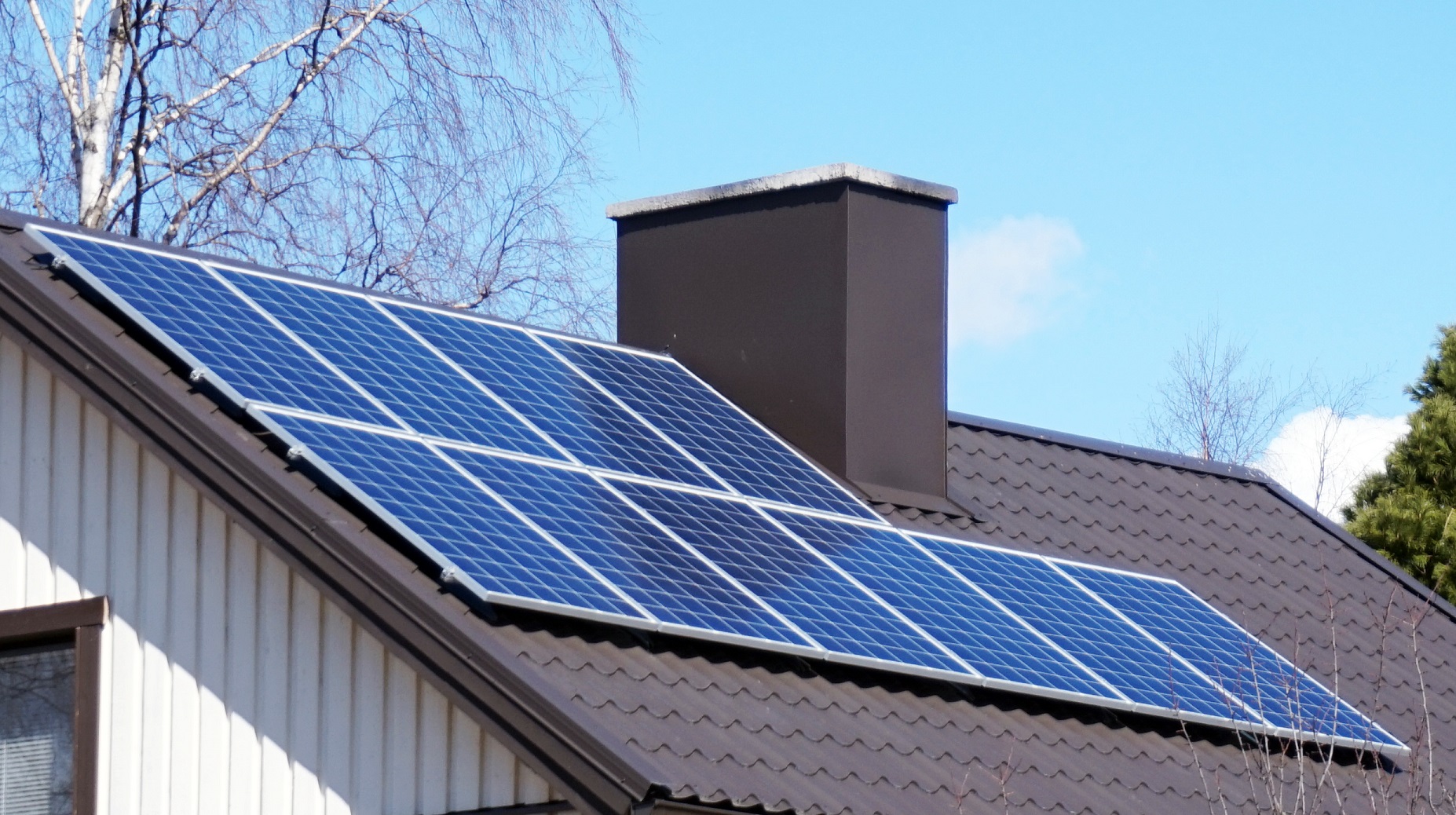
Recipients generally continue to pay regulated components such as distribution, charges and taxes. The saving mainly arises because they obtain electricity at a lower agreed price than from their supplier.
Chalupa also calculated a model example for Ekonews of how much people can save through community energy. It suggests that thanks to sharing, both households – the one supplying electricity and the one receiving it – can each save around 3750 crowns a year.
Smart management will increase savings
Currently, 25 thousand consumption points and almost 17 thousand generation points share electricity in the Czech Republic. They have exchanged electricity totalling more than 33 gigawatt-hours, as August data from the Electricity Data Centre show.
The benefits of sharing can be further improved through smart management, which tracks weather forecasts and household residents’ habits and optimises the use of electricity generated. In the field of smart management of household energy generation and consumption, there is a rapidly growing number of devices that integrate photovoltaics, battery storage, load management, heating technologies and advanced software functions.
Many such systems are available on the market, making them difficult to navigate. The Guild of Energy Storage and Photovoltaics has therefore prepared a clear, expert comparison of the features of individual smart solutions currently available on the Czech market. It also gives people an overview of which systems meet the conditions for receiving a higher subsidy.
“This is not a closed list, but an open platform that we update continuously. If anyone offers another smart management solution that is not yet listed here, we would be glad to hear from them,” says Aleš Hradecký, chairman of the Guild of Energy Storage and Photovoltaics.