
23 October 2026, 14:38
Loading...
Heat from Temelín covered a third of demand in the Czech city of České Budějovice in a year

oEnergetice.cz, ČTK
23 October 2024, 13:17
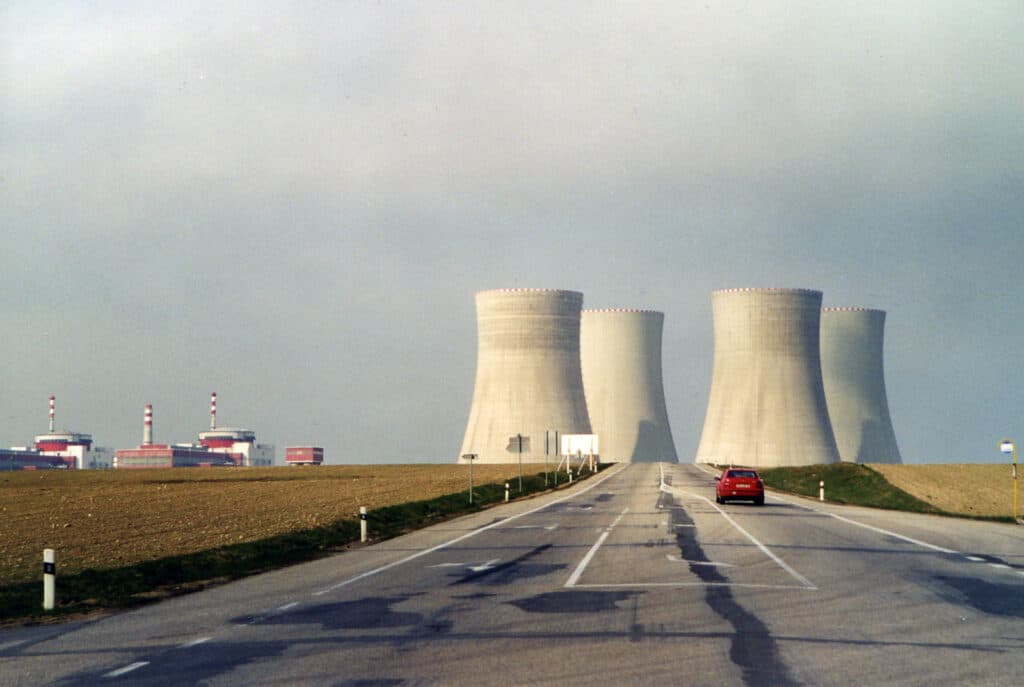
Temelín’s hot-water pipeline supplied around one third of the heat delivered to České Budějovice in its first year of operation. Since it started operating last October, it has delivered 663 terajoules (TJ). Thanks to heat from Temelín, emissions from the České Budějovice heating plant, including greenhouse gases released into the atmosphere, will fall by around a third. The plant will save tens of thousands of tonnes of coal-related carbon dioxide emissions each year by not burning the coal. Water at a temperature of 110 degrees Celsius is currently flowing into the city, with daily deliveries standing at around 2.5 TJ, Temelín spokesperson Marek Sviták said in a press release.
Heat deliveries depend on the outdoor temperature and consumption in České Budějovice. Energy specialists adjust the temperature and volume of water flowing into the city accordingly. „We deliver as much heat as České Budějovice needs. Outside the heating season, deliveries were around one fifth of the seasonal level. We have entered the second main heating season with a modernised heat-exchange station at Unit 1, which is currently supplying heat while Unit 2 is offline for a planned outage,” said Jan Kruml, director of the Temelín Nuclear Power Plant.
Temelín produces heat using steam intended for electricity generation. Even so, the impact on the plant’s output is minimal. „Even at full load, heat production affects the plant’s electrical output by around half a percent. Combined heat and power generation is highly efficient, not only at the existing Temelín units. This applies to every technology, including small modular reactors, which are also expected to serve as a zero-emission source of heat in the future,” said Bohdan Zronek, a member of ČEZ’s board and director of its nuclear energy division.
At Temelín, combined heat and power generation means that, in addition to heating the plant site, Týn nad Vltavou and a third of České Budějovice, one Temelín unit can generate enough electricity in an hour to supply 300 Czech households for a whole year, Sviták added.

Temelín began supplying heat to České Budějovice last October. Two pipelines, each 26 kilometres long and with an outer diameter of 80 centimetres, run to the city. Both are buried at least 1.3 metres underground.
Construction began in spring 2019 and was delayed by around two years. Work came to a halt for about a year from the end of 2020 after construction company Tenza went bankrupt. At the end of 2021, ČEZ selected companies to complete the hot-water pipeline. The project cost CZK 2.4 billion. The pipeline is expected to supply heat for at least 20 years.
Temelín has supplied heat to Týn nad Vltavou since 1998. Over the past quarter-century, it has delivered 4.7 thousand TJ of heat to the town, five kilometres away. Annual deliveries are around 180 TJ; from last October to the present, they amounted to 168 TJ. Switching to heat from the power plant made it possible to shut down 22 medium-sized coal-fired heating plants and three large boiler houses.
Translation disclaimer
This article is a machine translation of the Czech original and has not yet been fully reviewed. In case of any doubt, please refer to the Czech version.
Sdílejte článek prostřednictvím:
You might also like


23 October 2026, 11:01


23 October 2026, 06:34