
23 October 2026, 14:38
Loading...
New Czech renewable energy subsidies are discriminatory, chamber says

oEnergetice.cz, ČTK
16 January 2025, 12:31
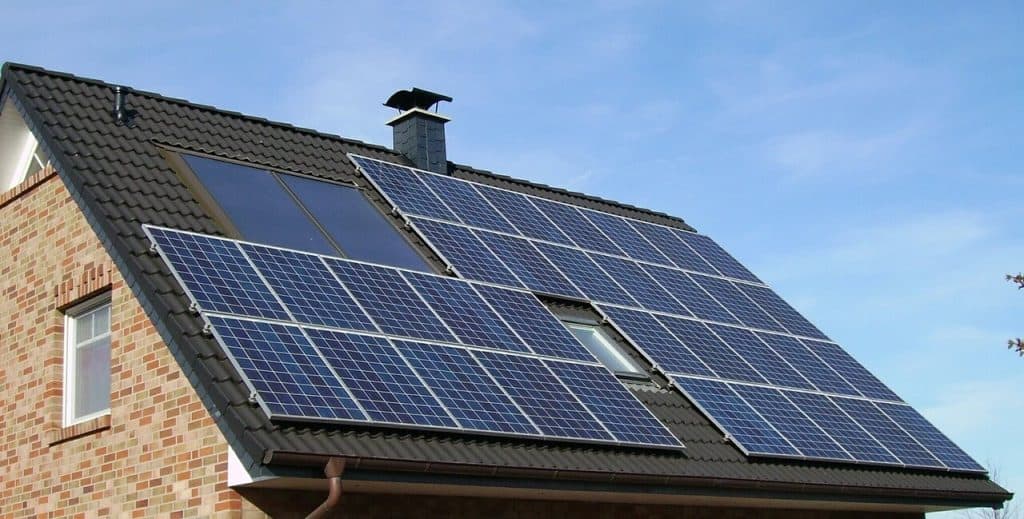
Industry representatives say the new subsidy rules under the New Green Savings (NZÚ) program for households installing renewable energy sources are discriminatory and unbalanced. They object in particular to the lower maximum subsidy and other limits on rooftop solar, as well as the preference given to other energy sources. The Chamber of Renewable Energy Sources today called on the authorities to revise the subsidies. Chamber representatives told reporters today. CTK is seeking comment from the Ministry of the Environment.
This year, the state will reduce support for households installing solar power plants. Subsidies will newly be available for photovoltaic power plants (PV) with a capacity of no more than five kilowatts (kW), half the capacity supported to date. The maximum subsidy will also be reduced. This follows from documents setting out the new terms of the NZÚ subsidy program.
„We consider this discrimination unsustainable and unjustifiable. We consider the minister’s justification that funds are insufficient to be unsubstantiated,“ said Chamber chairman Štěpán Chalupa.
He cited as discriminatory, for example, the subsidy terms for solar parks and the preference for insulation and other energy-saving measures, which the chamber says come at the expense of rooftop solar for households.
He said new funding for households could be found, for example, from the seven billion currently earmarked for commercial projects involving standalone large-scale battery storage. „But these projects do not need subsidies because they offer excellent returns even without them. If the state supports every panel in a field, it must support every panel on a roof, too,“ Chalupa noted.
The chamber has therefore called on the ministry to make a number of changes to the proposed NZÚ system for this year. It proposed, for example, equalizing subsidy terms for all PV installations, removing the five-kilowatt installation limit, keeping the maximum support for renewable energy installations at 50 percent of eligible costs, as is planned for energy-saving measures, and simplifying the conditions for subsidies to purchase a heat pump.
Industry representatives say the ministry’s current proposal will significantly weaken interest in renewable energy sources. „Feedback from guild members on the proposed rules clearly shows that around two in five subsidy applicants will fail the so-called means test,“ said Radek Orság, a member of the executive board of the Czech Guild of Energy Storage and Photovoltaics (CAFT). He said a significant drop in interest could therefore be expected from February, compounded by the planned reduction in subsidies. While around 2,500 subsidy applications were filed per month last autumn, he estimates this year’s figure will be less than half that.
A total of 44,593 new photovoltaic installations were commissioned in the Czech Republic last year, 38,106 fewer than the year before. However, last year’s installed capacity of 967 megawatts (MW) was the same as in the record year of 2023. According to the Czech Solar Association, this trend is due to a decline in the number of installations on family homes, while large-scale and commercial installations are on the rise.
Translation disclaimer
This article is a machine translation of the Czech original and has not yet been fully reviewed. In case of any doubt, please refer to the Czech version.
Sdílejte článek prostřednictvím:
You might also like


23 October 2026, 11:01


23 October 2026, 06:34