9 October 2026, 06:22
Loading...
Niedermayer: Czechia could expand solar capacity at far lower cost
Ekonews.cz
17 July 2023, 10:38
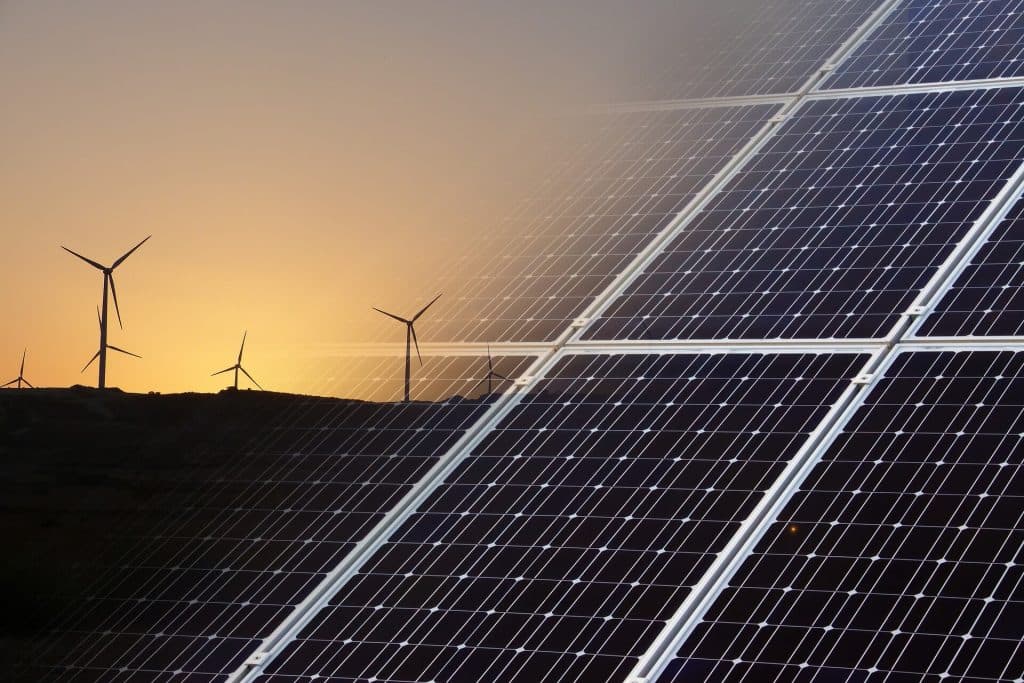
The state provides generous subsidies for the development of small solar PV systems with battery storage, usually amounting to tens of billions of crowns from EU funds. Yet the theoretical payback period for a heavily subsidised solar PV system with a battery is only slightly better than that of a cheaper system without storage but with efficient use of surplus electricity exported to the grid. The state could therefore save billions by setting the rules differently.
In my previous article, I examined how quickly the purchase of a solar PV plant (FVE) pays for itself under different acquisition conditions. In short, under the assumptions set out in the article mentioned above, an installation without a battery has a payback period of between 7,7 years with efficient sharing and 10,3 years with the less advantageous sale of surplus electricity to a trader.
Adding a battery without a subsidy extends the payback period to 10,9 to 12,3 years. In the third case, a generous subsidy improves the payback period to 5,4 to 6,2 years. In other words, under certain assumptions, the payback period of a solar PV plant without a battery and without a subsidy does not differ all that much from that of a subsidised plant with a battery, which is quite costly for the state.
This suggests that the state has, in many respects, “shot itself in the foot” in this area. The result is that it has to pay dearly, from its own and EU funds, for the socially necessary expansion of solar PV – which is politically convenient in the case of small systems – even though support could be much lower under a different setup.
As the calculation shows, a combination of a cheap solar PV system without storage and the possibility of using surplus electricity more efficiently offers a good payback period. A relatively small subsidy would moreover bring it to a similar level as a heavily subsidised solar PV system with a battery.
A rational solution to an irrational situation
However, the assumption that sharing would use all surplus electricity may be too optimistic in practice and therefore unattainable for everyone. That would justify some level of subsidy.
There is also a rational reason why there is no broad market offering of virtual batteries, or rather why this service would carry a significant charge. Electricity prices vary greatly over time, which makes efficient use of surplus electricity more difficult.
It is unclear what all lay behind the state’s decision to generously subsidise costly solar PV systems with batteries. One possible explanation is a “technical” one: namely that the state is compensating for the culpable lag in our energy strategy and fears that solar PV systems will not be able to connect to the grid in a mode allowing exports. Perhaps the state did not require regulated distribution companies to improve the grid in time.
A ban on exports, whose impact is reduced by installing local batteries, however economically destroys solar PV systems without storage. It also negates the social objective of the investment – to produce as much clean electricity as possible. A rational solution to an irrational situation has therefore become a high subsidy for solar PV systems with batteries, which is the state we have arrived at. (Leaving aside the possibility that the state could direct its efforts towards supporting larger, far more efficient renewable energy sources, as you will read below.)
Billions can be saved
If we reached a “more rational situation” – consisting of a properly dimensioned grid and allowing the sharing or other use of surplus electricity, perhaps through the launch of a hydrogen economy – the state would save a large amount of money. This could be as much as tens of billions of crowns. Taking the installation considered above as a variable, support for every 10 thousand installations costs the state two billion.
The state could “invest” this money in developing storage at a “higher level” of the grid. For example, at substations, where it would not be used solely to “catch surplus” electricity from solar PV systems and ensure greater connection capacity, but also for system services. Its utilisation would be higher, making it more efficient financially, climatically and technically (its technical lifespan would be fully used before its service life expired).
There are therefore ways for the state to save funds earmarked for subsidies while also making solar PV systems more affordable as investments for people on lower incomes, by providing favourable loans to cover the required investment. Under the approach described, consumers would also save part of the up to two tens of billions of crowns spent, for example, on system services last year (paid mainly to coal-fired power plants), because batteries would partially take over their role. In addition, restrictions on connecting new solar PV systems – currently significant in many locations – would be reduced.
Small solar PV systems are the most expensive
According to international calculations (Lazzards 2023), 1 kWh generated worldwide by an efficient “large” solar PV plant costs between 0,50 Kč and 2,10 crowns in a commercial investment (financed by debt and equity).
A simplified view of the model plant, which would generate 20 x 5 400 kWh over twenty years (its estimated lifetime), shows that the state subsidy per 1 kWh of electricity from the plant described amounts to 2,60 Kč (when the support is converted into an annuity at an interest rate of 4 percent). It is therefore significantly higher than the total cost of electricity from a large solar PV plant.
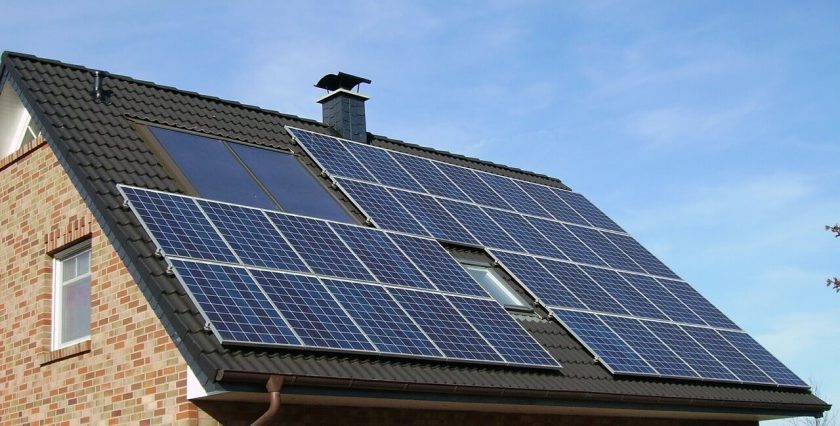
This is due to the generosity of the subsidy, linked to the fact that the Czech state supports one of the most expensive sources of energy – small solar PV systems. According to the same statistics, these generate electricity worldwide at a cost of between 2,60 Kč and 6,20 Kč, including profit.
If the state were looking for a way to increase electricity generation from renewable sources through new solar PV plants at the lowest possible cost, it would not support costly small installations but large ones. These would presumably be on brownfield sites, as installations even on industrial rooftops tend to be more expensive.
A difficult search for a path
According to statistics, the global average cost of installing 1 kWp of capacity stood at around 19 thousand crowns in 2023. Even if, taking into account Czechia’s less than ideal geographical conditions, the price were half as high again in Czechia (which is well above the prices companies are working with today), building a plant of the size used for the calculation would cost slightly less than 160 thousand crowns. That is less than the state subsidy currently offered for small solar PV systems.
This too shows how difficult it is for the state to find a rational path from the old energy system of the end of the last century (which many people here still have not mentally left behind) to a world of competitive, private, partly decentralised energy that is moving towards sustainable electricity generation with low prices and secure supplies. As is clear, we have not found it yet.
Republished from the online portal EkoNews.cz, a website covering business and sustainability.
Translation disclaimer
This article is a machine translation of the Czech original and has not yet been fully reviewed. In case of any doubt, please refer to the Czech version.
Sdílejte článek prostřednictvím:
You might also like
8 October 2026, 10:05