
23 October 2026, 14:38
Loading...
Seven tips to consider before replacing your boiler and applying for Czech subsidies
Ekonews.cz
1 May 2023, 14:21
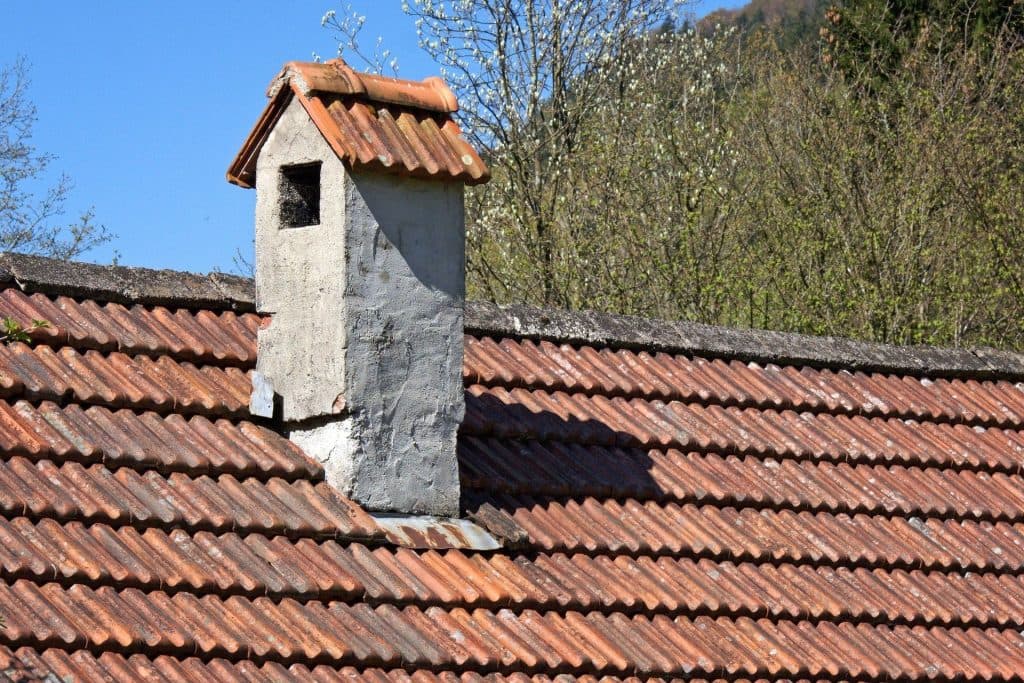
Another round of boiler replacement subsidies, which help people replace old heating appliances with more environmentally friendly ones, is approaching. However, according to the Association for Chimney and Combustion Optimisation, replacing a boiler can also cause considerable harm. Ekonews’ editorial team has therefore prepared several tips together with the association on what to watch out for before installing new heating.
According to the Ministry of the Environment, replacing a single boiler prevents 40 kilograms of dust from being released into the air. In some cases, this can amount to more than 180 kilograms of hazardous particles. According to data from the Czech Hydrometeorological Institute, between 2016 and 2021 – when the previous boiler replacement subsidy schemes were running – the area of the country with excessive concentrations of carcinogenic benzo[a]pyrene, produced mainly by local heating, fell from 25.9% to 6.1%. At the same time, the share of the population affected by excessive pollution dropped from 55.7% to 20%.
However, anxiety over gas shortages and rising energy prices ahead of last winter changed the situation. The Czech Hydrometeorological Institute says air quality deteriorated at the end of last year after a long period. According to energy expert Valtr Sodomka from the Association for Chimney and Combustion Optimisation, 100,000 to 300,000 new polluters – namely solid-fuel appliances that were put back into operation – are to blame.
“Many people gave in to alarmist reports and switched to what they saw as a sustainable source, which in practice means burning anything they can get hold of,” says Sodomka.
The aim is to reduce costs and emissions
Boiler replacement subsidies are one of three ways households can improve their energy management. The others are New Green Savings and New Green Savings Light. The latter programme also targets pensioners and low-income households, funding insulation and, newly, photovoltaics for water heating. Households also do not need to have the full amount needed for renovations available – part of the subsidy is provided as an advance payment.
In terms of pollution, the worst offenders are old boilers that people have put back into operation. However, the Association for Chimney and Combustion Optimisation (APOKS) also warns against hastily replacing old boilers with new ones and rushing into a supposedly greener heating method supported by boiler replacement subsidies.
“In practice, new heating sources are often installed even in cases where it is already entirely clear in advance that the project will lead neither to financial savings nor to lower emissions. The result is sometimes even a completely dysfunctional heating system. The unfortunate outcome is that most applicants return to heating with solid fuels after discovering that installing a new source has not reduced their costs,” Sodomka warns.
What should you watch out for before making a replacement?
1. Consider where you live
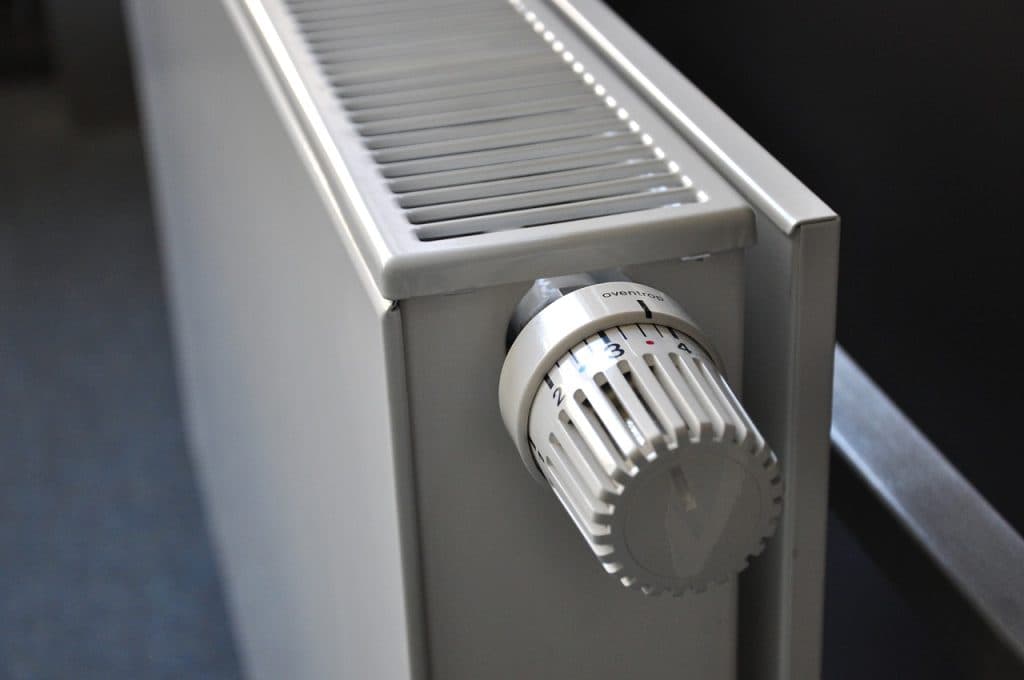
Not everyone lives in a newly built home that can be adapted for modern heating sources from the design stage. A heat pump, for example, needs an adequate heating system. If the entire house has underfloor heating, that is fine. But if you have cast-iron radiators, a standard heat pump costing CZK 300,000 will struggle to heat the building. “When it does not heat, it becomes an electric boiler. Many people have found that they are paying more than before. In practice, applicants who install a heat pump often do not achieve the results they expected after installation,” Sodomka warns.
2. Use government advice
The Energy Consulting and Information Centres (EKIS), a network operated by the Ministry of Industry, can advise you on which appliance is most suitable for your particular project. The subsidised part of the advisory service consists of an in-person visit or an email consultation. If you bring all the documentation for your house, you should at least be able to determine which boiler or heating method is most suitable for your home.
3. Hire your own adviser
If you want your heating system to work as well as possible, you can pay for expert advice. The cost usually ranges from CZK 10,000 to CZK 20,000. “Unlike a boiler or photovoltaic supplier, a designer is responsible for the implementation. It would be best if government support were extended to this area as well. Unfortunately, this is not the case; boiler replacement subsidies primarily subsidise the heat source,” says Sodomka. Ideally, the designer, contractor and construction supervisor should all comment on the project, but in practice only a fraction of applicants seek an independent consultation.
“The applicant must not only learn how to operate a modern heating source, but also fine-tune its interaction with their existing heating system. Unfortunately, this often fails in practice,” Sodomka notes.
4. No verbal contracts, no work without invoices
Remember that the companies selling you an appliance have a strong interest in making the sale. Discuss the matter with them, but also verify the information with an independent expert. Document all work the company carries out in connection with the installation. Keep receipts and invoices. If something is wrong in the future, this may help you defend your position.
“Unfortunately, installation companies usually manage to create a situation in which the homeowner is also partly to blame. An orally concluded contract for work is enough. There are also often financial flows outside invoicing, which likewise puts the customer at a disadvantage,” says Sodomka.
5. Choose reputable companies
It may happen that equipment from local companies is sold out. In that case, proceed cautiously. Buying a foreign boiler can be risky. An appliance imported from the UK or Greece may not be optimal for the Central European way of life and local standards. Chimney dimensions are different in England, for example. In addition, spare parts may be difficult to obtain.
However, you must also be careful with Czech sellers. Many take care to use terms in their technical documentation that cannot be found in the relevant standards. “The appliance parameters are not stated there, or they are on the last pages. When we then carry out verification calculations of the heating system’s functionality, for which we have a European standard and software, the results quite commonly do not work out,” Sodomka adds.
6. Pay attention to operating the appliance
Solid-fuel appliances operate ‘environmentally’ only when they are properly fuelled. The appliance must therefore run at full output to produce minimal emissions, and should then be allowed to cool down. However, people do not want to sweat in their insulated homes, so they often throttle their boilers back. They want to get minimum output from them, but continuously. This generates a great deal of emissions.
“When we inspect a 15-year-old gas appliance and measure its flue gases, efficiency and emissions, we find that its operation remains optimal even after such a long time. But solid-fuel boilers after two years of operation? That is a drastic departure from the values declared by the manufacturer,” says Sodomka.
7. Choose pellets among solid fuels
If you buy quality pellets, all you need to do is pour them into the boiler and press a button. According to APOKS, in this respect their operation most closely resembles that of a gas boiler. If you truly want environmentally friendly operation and do not mind an investment of tens of thousands of crowns, buy a particulate separator as an additional device. In Germany, separators are entirely commonplace, and strict standards mean they are indispensable in many places.
Republished from the online portal EkoNews.cz, a website covering business and sustainability.
Translation disclaimer
This article is a machine translation of the Czech original and has not yet been fully reviewed. In case of any doubt, please refer to the Czech version.
Sdílejte článek prostřednictvím:
You might also like
23 October 2026, 11:01

23 October 2026, 06:34