23 October 2026, 14:38
Loading...
Czechs support nuclear energy; situation beyond the border is diametrically different

Martin Voříšek
21 August 2017, 10:41
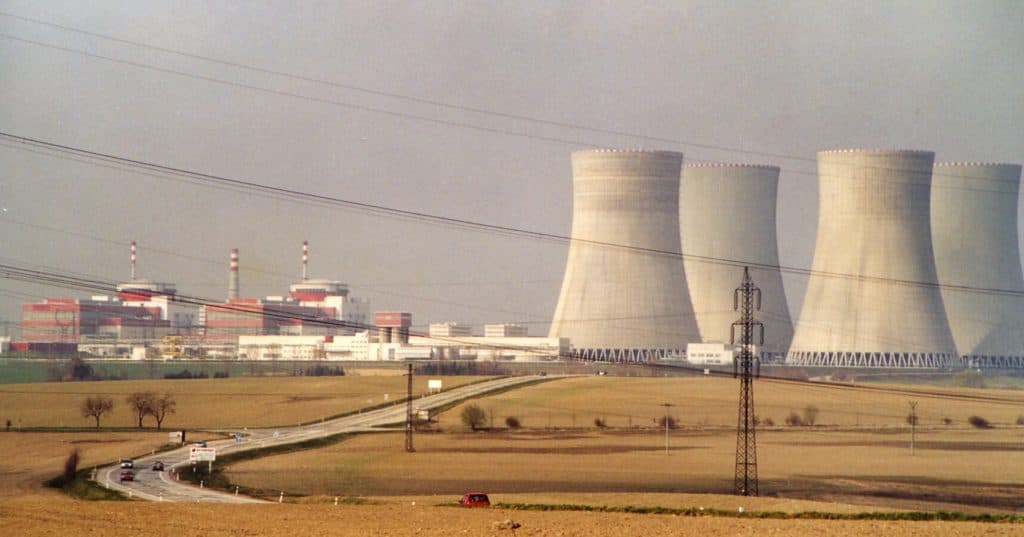
According to a CVVM survey, Czech citizens have a very positive attitude towards nuclear energy. More than half of the population supports the completion of two units at the Temelín nuclear power plant. A completely different view of current and future energy policy can be found in neighbouring Austria and Germany, while Poles, for example, take a similar stance on nuclear energy.
The CVVM survey was conducted in May this year, and respondents commented primarily on nuclear energy. The survey shows that more people would favour increasing nuclear energy's overall share in electricity generation than reducing that share.
The largest group of people, nearly 40%, believe that the share of nuclear energy should remain unchanged. However, for the share of nuclear energy in the Czech Republic to remain unchanged, a decision on completing one of the nuclear power plants would already need to be made now. Given the construction timeline, a new unit could replace the reactors at Dukovany that are due to be retired after 2035.
This is also consistent with another part of the research, which focused on expanding the Temelín nuclear power plant. An expansion by two units is supported by 51% of respondents, despite the problems nuclear energy currently faces, while 32% are opposed.
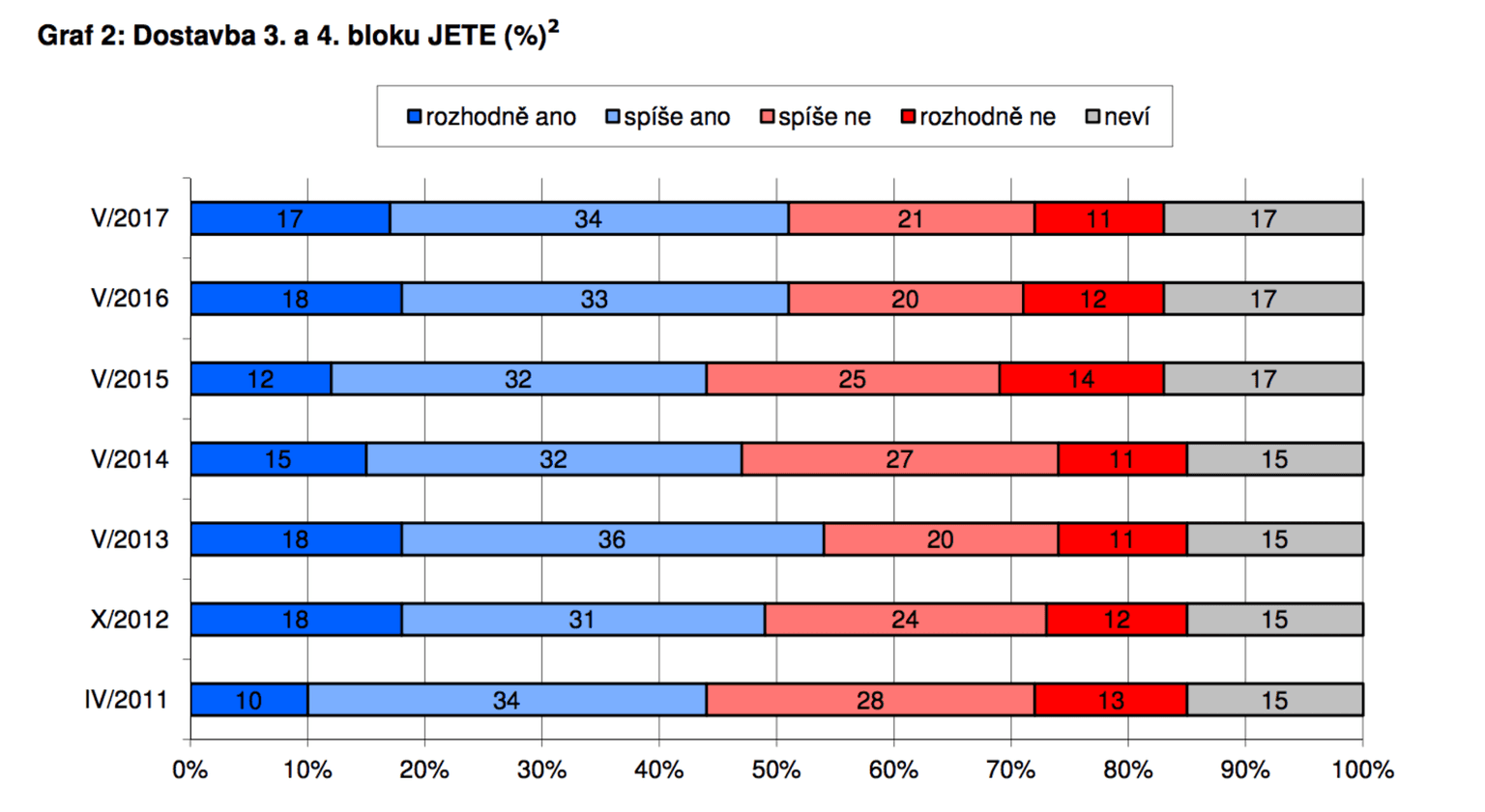
Interestingly, the percentage of Czechs who favour increasing the share of electricity generated from nuclear energy has risen since 2015. However, compared with last year (2016), the same indicator fell by two percentage points.
Compared with last year, public trust in the government in relation to nuclear energy decision-making saw the sharpest decline. Year on year, this was a fall of 11%, which is apparently related to the overall lower level of trust in the Czech government.
The full public opinion survey can be found at this link.
The German and Austrian public hold diametrically opposed views; Poles think similarly to Czechs
As expected, this year's surveys among the Austrian and German public produced markedly different results. Although the surveys are not identical, they clearly show the difference between attitudes to nuclear energy in the Czech Republic and among its western and southern neighbours.
In an Austrian survey from the beginning of this year, as many as 91% of respondents said nuclear energy should not be used to generate electricity. Only 7% agreed with its use, while 2% answered that they did not know. More than 80% of the population also demands a faster move away from conventional fossil-fuel power plants and an accelerated transition to renewable sources.
The situation is similar in Germany, where only 6% of the population accepts nuclear energy.

Interestingly, even people living near a nuclear power plant do not view nuclear energy more positively. Where they have a power plant nearby, acceptance is one percentage point lower. This trend is particularly interesting in comparison with German coal power, where acceptance of coal energy rises by 9% among people who have a coal-fired power plant in their vicinity.
Poles take a similar view to Czechs. According to an earlier survey, more than half of the population supported the construction of a nuclear power plant.
Translation disclaimer
This article is a machine translation of the Czech original and has not yet been fully reviewed. In case of any doubt, please refer to the Czech version.
The article continues for subscribers
Premium content
The rest of this article is available to premium subscribers only. Get access to all premium articles on oEnergetice.cz.
Best value: annual subscription
Monthly option 4 € / month
3.25 €/ month
You might also like
23 October 2026, 11:01
23 October 2026, 06:34