
23 October 2026, 14:38
Loading...
Experts: Gas-fired power plants to play a role in Czech energy security

oEnergetice.cz, ČTK
23 February 2025, 15:35
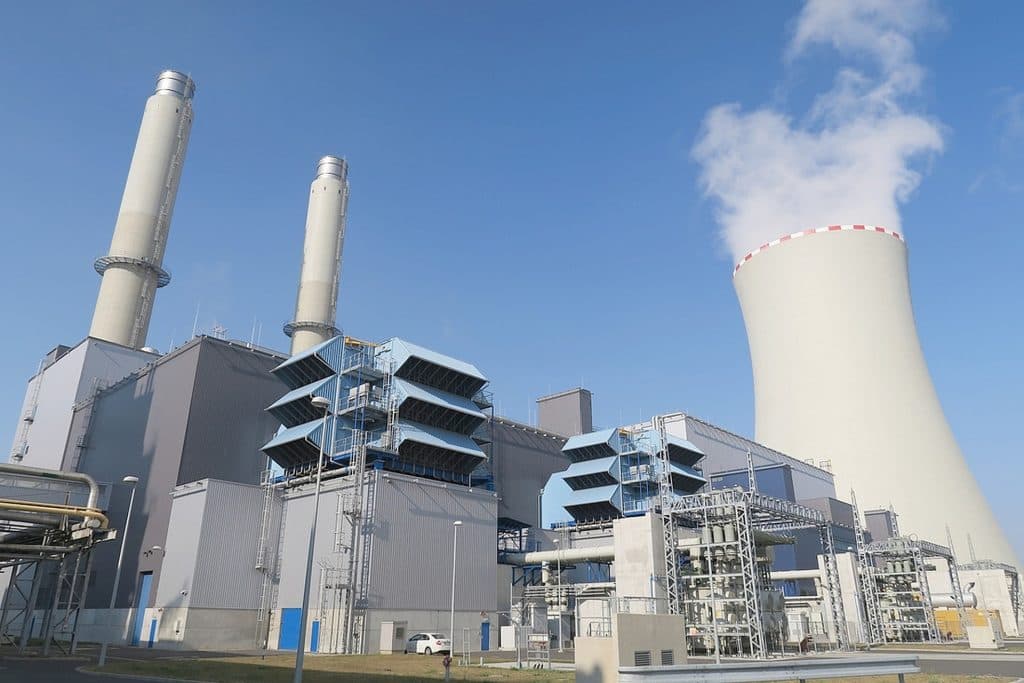
Increasing the use of combined-cycle gas-fired power plants will play a key role while two new nuclear reactors are being built at Dukovany. This will ensure sufficient power generation capacity for Czechia, experts said on Czech Television’s Otázky Václava Moravce programme today. They added, however, that the use and status of these plants could be problematic in terms of permitting, and that the amendment to the Energy Act known as lex plyn should have been introduced much earlier.
According to Dana Drábová, chair of the State Office for Nuclear Safety, the conditions for operating combined-cycle gas-fired power plants are not adequately in place, just as was the case with renewable energy sources in the past. She said the legislation needed to be amended to better align the conditions for these plants with current needs.
Former Environment Minister Ladislav Miko (LES) added that reducing the pressure on combined-cycle gas-fired power plants would make it possible to distribute the burden more effectively and ensure that the transitional solution is consistent with Czechia’s long-term energy plans.
Investments in building additional nuclear units mostly become more expensive, experts said, sometimes dramatically. “If the budget were to increase by just ten per cent, I would consider that a positive outcome,” Miko noted. At current prices, the cost of the currently preferred construction of two reactors at Dukovany is around 400 billion crowns.
Czech companies will play an important role as subcontractors in building the two new nuclear units. “If they can deliver at a reasonable price and to the required quality, it makes no sense not to use their services. The Koreans certainly won’t be bringing their own concrete workers,” he said. Miko added that Czech companies have an opportunity to take part in the Dukovany project if they prove able to deliver high-quality work at a competitive price.
Drábová also highlighted the shortage of qualified staff in the nuclear energy sector. “Despite the government’s efforts to increase staffing levels in state regulatory oversight, finding enough experts is a major problem. We are trying to encourage young people to work in this field, but it is difficult,” she added. Miko said that in the past, the need for so many qualified people in this field had not been anticipated, and young people had chosen to study other subjects.
As part of its transition to a low-carbon energy system, Czechia plans to increase the share of other energy sources in the future, such as nuclear power. “The answer is not a return to coal, but the use of combined-cycle gas-fired power plants as a transitional step, followed by further development of nuclear energy,” Miko said. He also noted that coal has several characteristics that are no longer relevant to the Czech energy sector today. “For example, generating one megawatt-hour of electricity from gas requires only a quarter of the carbon dioxide emissions allowance needed for coal,” he added.
Lex plyn is intended to facilitate the construction of combined-cycle gas-fired power plants as a transitional solution to ensure energy stability. These plants are expected to provide sufficient capacity for electricity generation as coal use is set to decline in the coming years.
Translation disclaimer
This article is a machine translation of the Czech original and has not yet been fully reviewed. In case of any doubt, please refer to the Czech version.
Sdílejte článek prostřednictvím:
You might also like


23 October 2026, 11:01


23 October 2026, 06:34