
25 September 2026, 09:51
Loading...
How do European regulators envisage the electricity market? They oppose support for PPAs and revenue caps after 30 June 2023

Martin Voříšek
23 February 2023, 18:06
Two organisations representing energy regulators in the European Union have published their responses to a questionnaire in which the European Union sought feedback on the future design of the electricity market. In their responses, the organisations warn against the EU proactively supporting power purchase agreements (PPAs). They also recommend the use of smart contracts for difference (smart CfDs), which should improve the functioning of the electricity market.
At the beginning of last week, the European Union concluded a public consultation process in which stakeholders could express their views on the main elements of the planned electricity market reform. A total of 1,350 individuals and organisations took advantage of the opportunity.
We wrote about the EU's vision for the future electricity market here.
The public should learn whether the European Commission will take the comments into account in the reform during March. The first proposals for European rules, which will shape the electricity market in the Czech Republic for years to come, are due to be presented during that month.
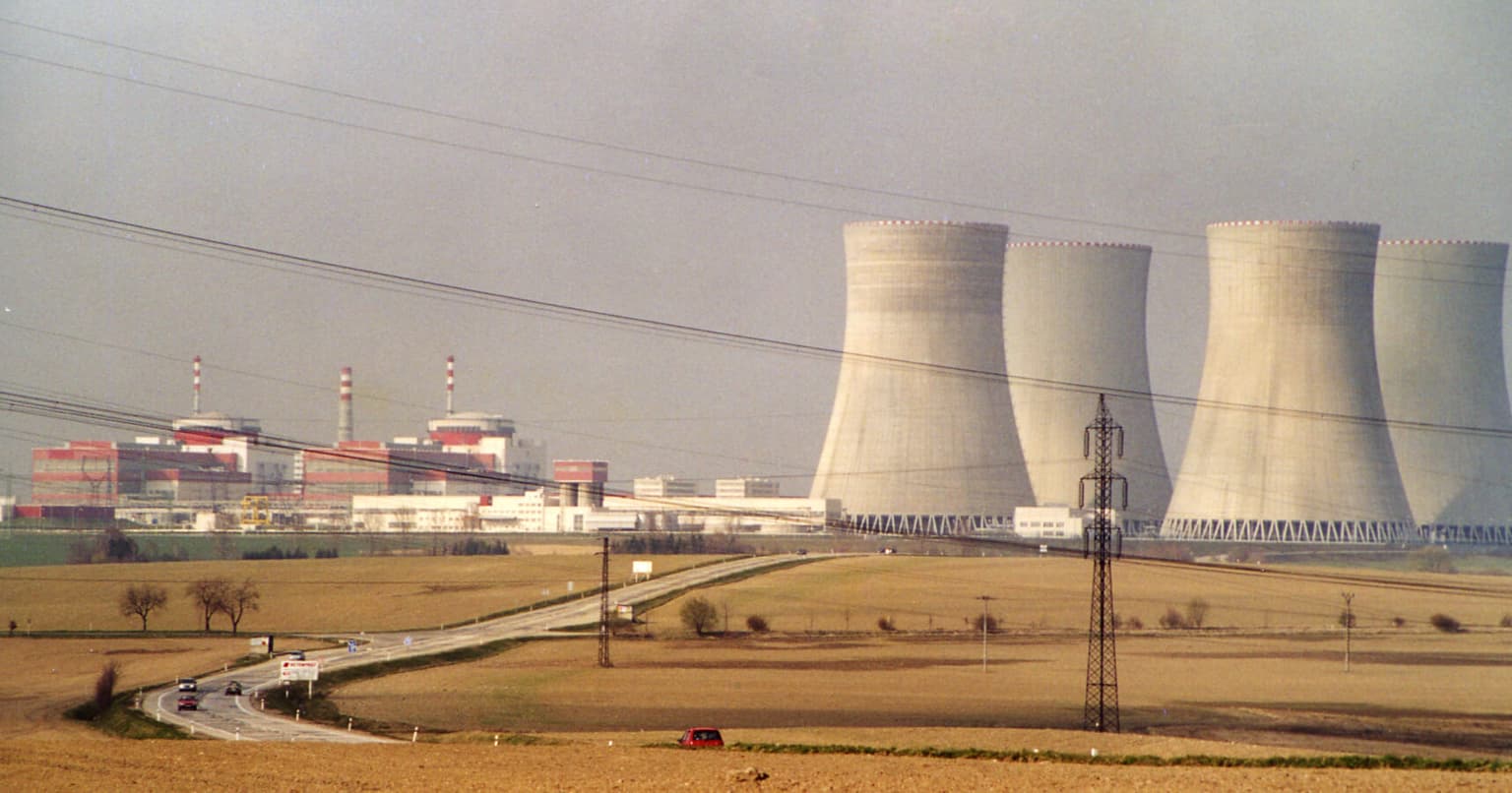
Temelín nuclear power plant, Source: ČEZ
We already know how some major organisations responded during the consultation. The European Union Agency for the Cooperation of Energy Regulators (ACER), together with the Council of European Energy Regulators (CEER), published its responses on its website. The views of these two bodies will undoubtedly be among the most important. WindEurope, the leading European organisation representing wind power generators, also published its responses.
Forward market liquidity is insufficient
Part of the consultation deals directly with liquidity in markets for futures contracts (also referred to as forward markets). Experts across the market agree on the insufficient liquidity of forward markets: not only ACER and CEER, but also WindEurope identified it as a major problem.
On most European markets, only the contract for the following year is liquid at most. Only the German market, which serves as the European benchmark, is more liquid. Even on this market, however, electricity is traded no more than three years ahead. Moreover, according to ACER and CEER data at least, liquidity in forward markets has been declining in recent years.
Investors in power generation assets have the greatest interest in the liquidity of more distant products, i.e. those more than three years ahead, as they use forwards to hedge electricity prices and the return on their investment. Electricity consumers, by contrast, primarily because of uncertainty over future developments, tend to target shorter-duration products, i.e. the following one to two years.
How to increase liquidity in markets for delivery more than three years ahead
ACER and CEER propose two main measures to the European Commission that would help increase liquidity in forward markets for more distant products:
Adjusting collateral requirements in organised markets. ACER and CEER jointly propose that the Commission adjust collateral requirements for contracts with more distant settlement dates (i.e. more than three years ahead).

Source: Pixabay
A possible adjustment would be to reduce the amount of collateral required or allow forms of collateral other than simply posting cash collateral. Since collateral, put simply, must be maintained until electricity delivery begins, this would be a positive change for traders.
The logical consequence of reducing the required amount of collateral, should this actually happen, would be that if one party failed to meet its obligation, the other would be in a worse, or unsecured, position. In the case of bank guarantees, given the cost of issuing them, trading-related costs would increase.
Collateral requirements in energy markets already underwent changes this year as a result of the energy crisis. Based on European legislation, it was temporarily permitted to use bank guarantees instead of collateral in the form of cash collateral (i.e. depositing cash or transferring a certain amount to a special account). ACER and CEER propose a similar approach for trading more distant contracts as part of the consultation.
Organising auctions instead of continuous trading. The organisations representing European regulators describe changing the settlement method for trading on more distant markets as a promising way to strengthen trading in more distant products.
Trading, markets, price Source: Pixabay
They cite a switch from continuous trading, as we know it today, to holding auctions as an example. Auctions are by no means unusual in the energy sector: in addition to support for renewable sources, cross-border transmission and transport capacity for more distant periods is traded in this way. Electricity for more distant periods could therefore be traded only during defined time windows, rather than throughout exchange trading hours as is currently the case.
Liquidity in markets for delivery within three years
Market liquidity is insufficient even over shorter periods. In addition to creating broader regional hubs for trading forward contracts (together with securing the related transmission capacity rights), regulators also propose more carefully designing the form of support for renewable sources.
It is on this point that ACER and CEER appear to disagree most strongly with the direction of the European Commission, which is seeking greater support for corporate power purchase agreements (PPAs). While the Commission has long supported these agreements, ACER and CEER instead see them as a risk to market liquidity.
"Supporting PPAs means supporting bilateral trading, which means that the volume of electricity covered by these PPAs will inevitably disappear from forward and day-ahead market volumes if these PPAs are also physically settled."
Although ACER and CEER acknowledge that PPAs have some positive effects on the market, particularly in hedging against short-term market price fluctuations, they do not recommend actively supporting them due to their lack of transparency compared with exchange trading and their negative impact on efficient market functioning.
The Commission should focus on smart contracts for difference (CfDs)
The European Commission considers the expansion of PPAs and contracts for difference to be particularly beneficial. Although ACER and CEER appear to prefer contracts for difference, they propose several improvements to them as well. They refer to these contracts as smart contracts for difference.
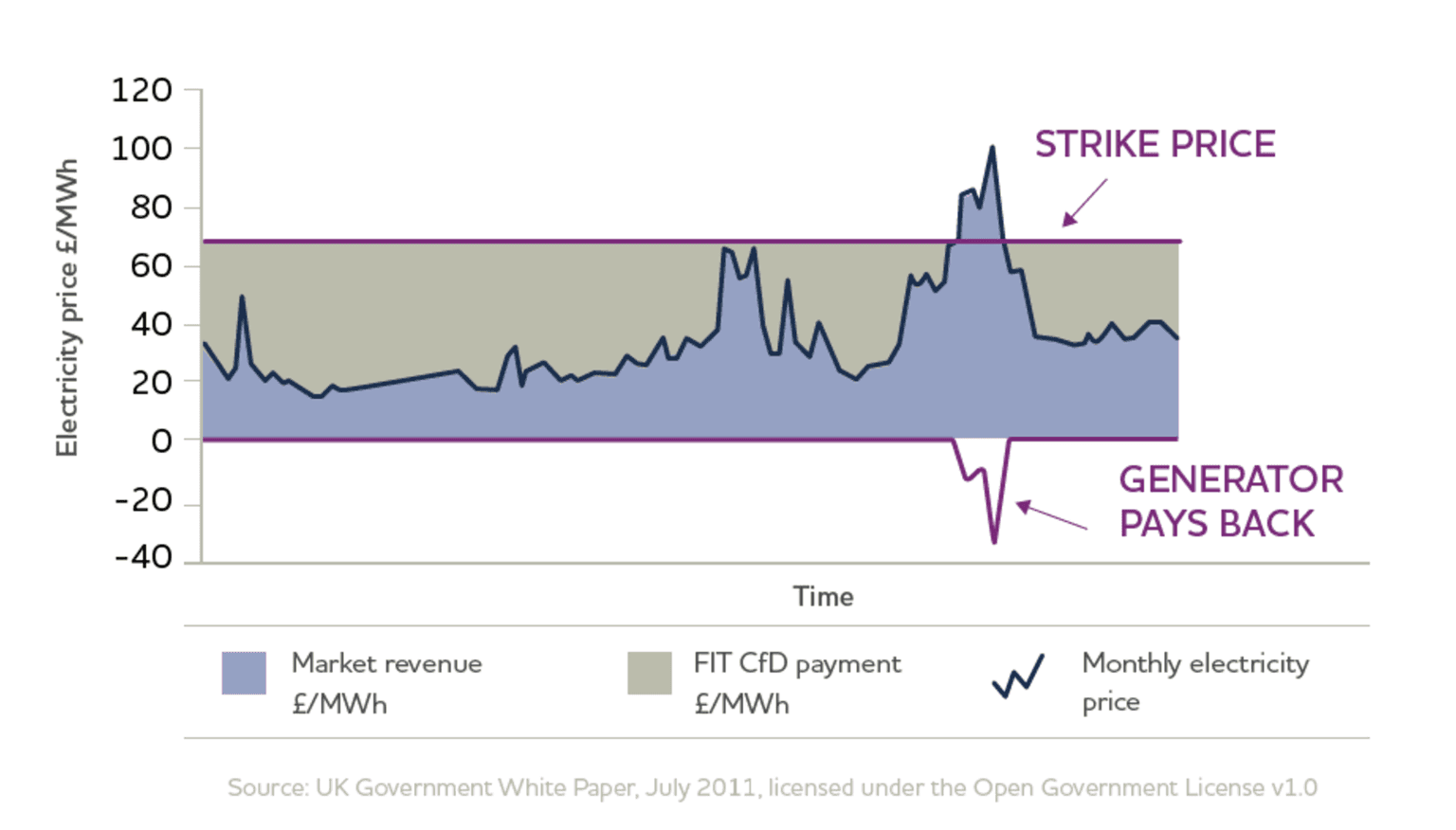
Principle of a contract for difference. Source: UK government official document on contracts for difference
While conventional contracts for difference usually have a single strike price, regulators propose setting two strike prices, with one serving as a cap and the other as a floor. Such a contract would, to some extent, serve both as a revenue cap, introduced at the European level in response to the energy crisis, and as a minimum guaranteed price that would ensure the producer's return on investment.
Smart CfDs would also not necessarily apply automatically to the entire volume of electricity generated. Instead, they could guarantee a specified volume at a time (e.g. the volume generated by a reference generating asset). If limited by volume, this would open up the possibility of trading them between producers. In that case, CfDs would not be tied to a specific producer, but rather to the holder.
Opposition to excessive regulation of generation
As part of the consultations, the European Commission also indicated that one option would be to introduce a support system based on contracts for difference for the entire lifetime of a power plant. However, regulators disagree with such an approach and instead prefer any support to be time-limited.
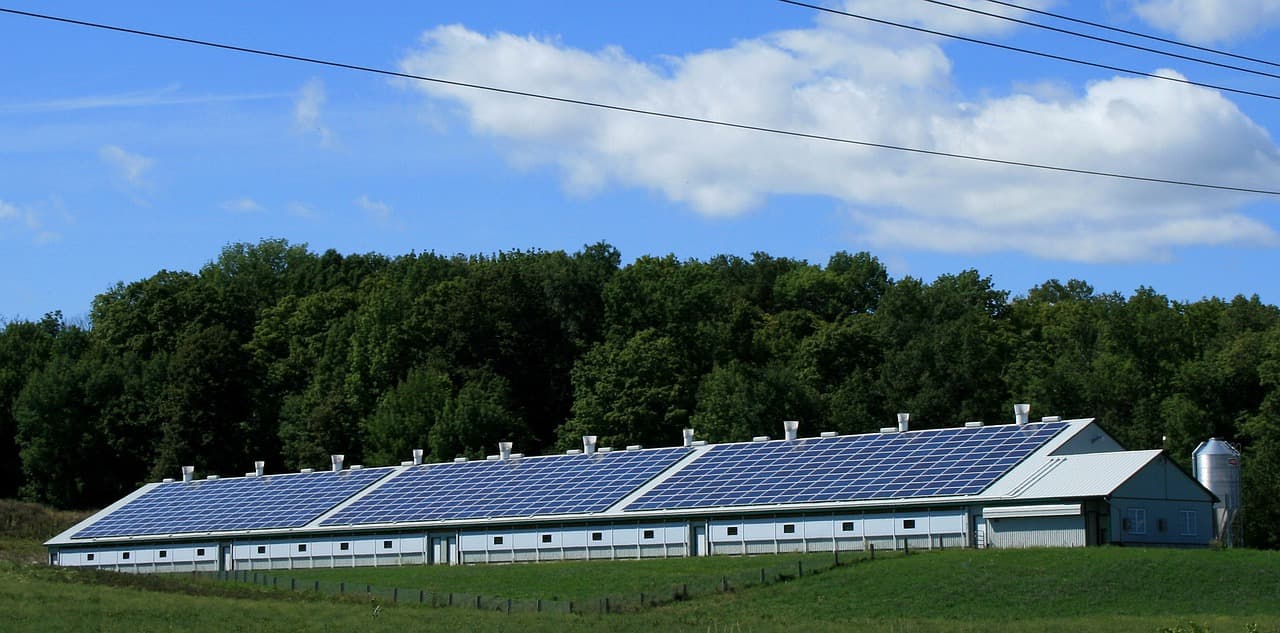
Source: Pixabay
One of the key questions, also relevant to energy producers in the Czech Republic, is the potential retention of revenue caps for a longer period. These were introduced in the Czech Republic at the end of last year. Under the Energy Act, they are to apply, even beyond the scope of European legislation, during the second half of 2023 as well.
European regulators, however, disagree with retaining revenue caps in the new market design beyond the expiry of European legislation, which limits them only until the end of June 2023.
Translation disclaimer
This article is a machine translation of the Czech original and has not yet been fully reviewed. In case of any doubt, please refer to the Czech version.
Sdílejte článek prostřednictvím:
You might also like

24 September 2026, 11:23

24 September 2026, 10:30

24 September 2026, 06:56