
25 September 2026, 09:51
Loading...
How does the EU envision the future electricity market? Price regulation of generation also in play

Martin Voříšek
25 January 2023, 06:47
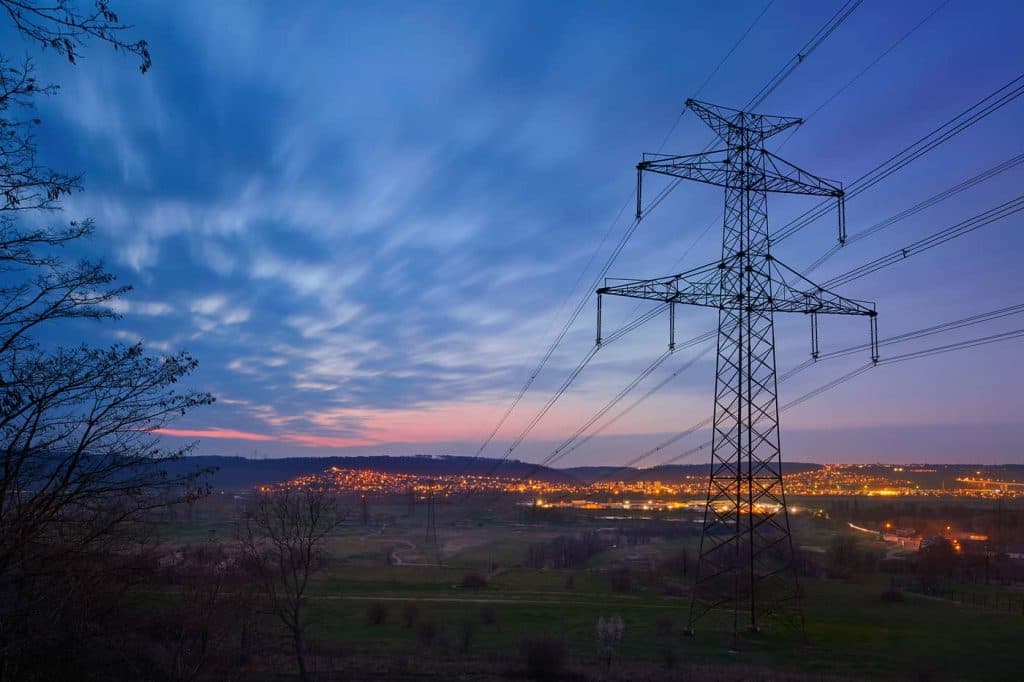
On Tuesday, the European Commission published a call for feedback on selected aspects of its proposed changes to electricity market design. Tighter price regulation of electricity generation or retaining certain measures the EU introduced in response to the energy crisis are under consideration. The first draft regulation is due to be published as early as March this year.
The need to reform the electricity market has been discussed increasingly often as a result of the energy crisis (see the informative interviews on the SeznamZprávy website here or here). Experts have repeatedly criticised the market, arguing that the current electricity market setup is sufficient only in times of abundance, characterised by ample generation capacity and commodities. Now, as the energy crisis is easing again somewhat, the European Commission is considering how to reform the electricity market so that a similar energy crisis does not recur.
It was precisely to reform the electricity market that the European Commission launched a public consultation process. It is collecting feedback from market participants while providing a detailed explanation of the main changes that could be incorporated into the new electricity market design.
As with the earlier response to the energy crisis, the proposal could be approved relatively quickly in this case as well. Responses to the consultation are to be submitted by mid-February at the latest, and the European Commission will publish its first draft changes in March 2023. The standard legislative process will then follow.
PPAs, CfDs and stronger forward trading to protect against market volatility
Protection against electricity market volatility is the main subject of the consultation. This is to be achieved primarily through long-term power purchase agreements (Power Purchase Agreements, or PPAs) and two-way contracts for difference (Contracts for Difference, or CfDs).
The European Commission has long supported PPA contracts. However, they have not yet seen broader development: according to Commission information, only 15-20 % of new renewable capacity construction is secured through PPAs. The European Commission would like to change this low share.
The Commission recognises that current PPA contracts are generally concluded for 5 to 20 years. Unfortunately, this means that only large businesses enter into them. For small businesses, by contrast, a commitment for such a period is usually an obstacle, leading them to opt for another available alternative.
To encourage small businesses to enter into PPAs as well, the European Commission is considering introducing demand pooling (pooling of demand). The principle is that several small businesses would collectively have access to the same PPAs as large businesses. The wording of PPA contracts should also be harmonised, which would again facilitate possible demand aggregation.
On the generation side, the European Commission intends to strengthen the position of so-called two-way CfD contracts. These are already commonly used in Europe to secure stable revenues for renewable energy construction projects. The same support mechanism for renewable sources is also set out in the Czech Act on Supported Energy Sources and for the Hinkley Point C nuclear power plant in the UK.
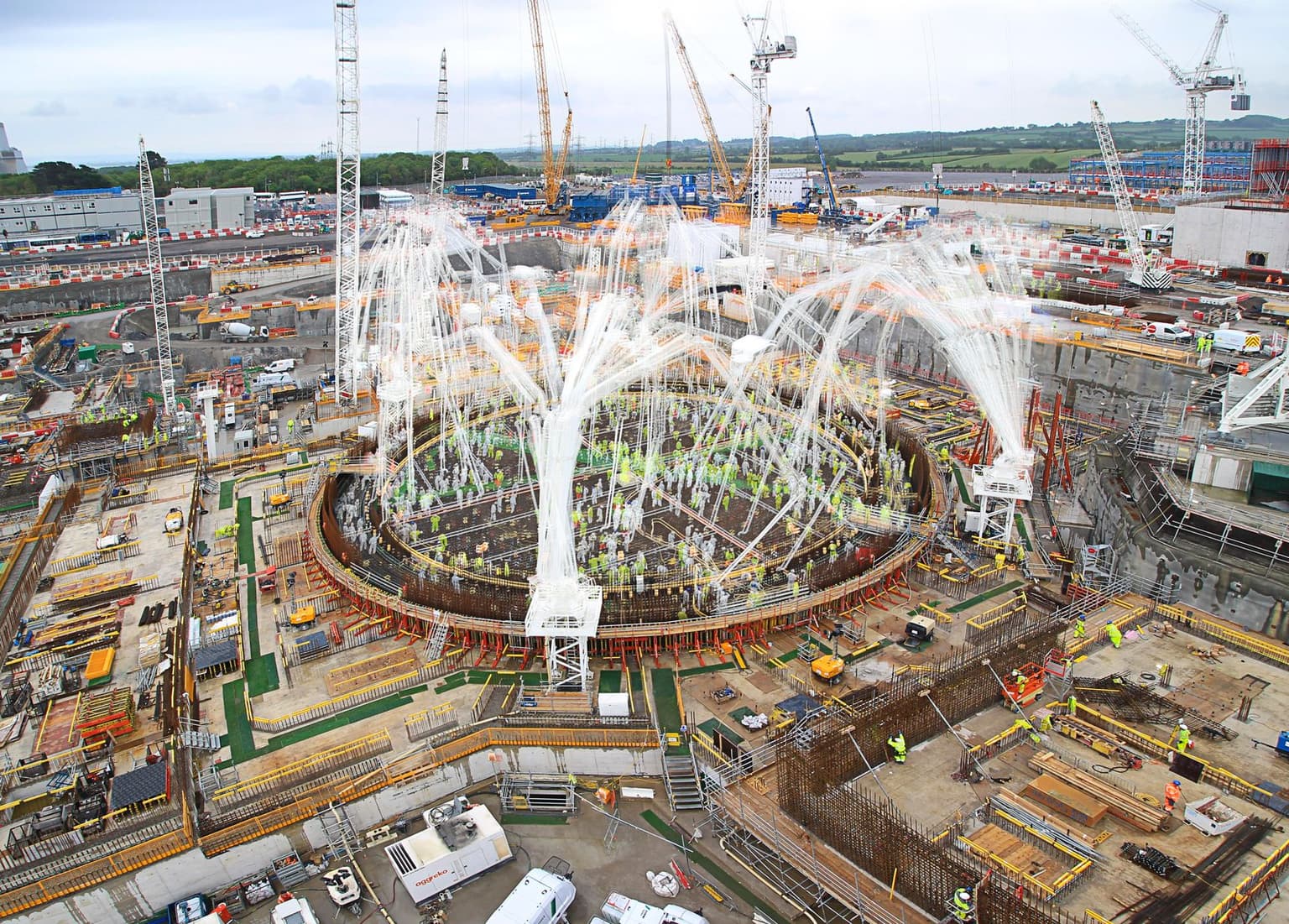
Construction of Hinkley Point C. Source: EDF
While the use of CfDs for new sources is not at all surprising – and is common practice in the energy sector – the European Commission is considering going several steps further. In the future, CfD contracts could also be concluded by operators of existing generation assets. In this respect, it is considering two options:
- Voluntary conclusion of a CfD: A Member State would have the option of offering electricity generators – usually only a particular type of generation – the opportunity to conclude a CfD contract. Interested generators would likely compete for the contract through an auction, with the CfD awarded to the generator submitting the lowest bid.
- Mandatory conclusion of a CfD: One option under consideration is that a Member State itself could compel the conclusion of a CfD contract with a generator operating an existing asset. In such a case – as the consultation document states – this would effectively constitute ex-post (retroactive) price regulation. However, the European Commission acknowledges some disadvantages of this approach and admits that the measure could ultimately be counterproductive.
Last but not least, the Commission is considering ways to strengthen the liquidity of forward trading over longer time horizons. It is thus seeking a solution to the current situation, in which only contracts for up to the next three years are liquid. Such a short period over which electricity can be traded is particularly problematic for securing sales of electricity from long-term investments. Long-term energy investments need certainty of sales for decades ahead.
One proposed solution is the creation of a so-called virtual trading hub, which already operates in some countries (the European Commission refers to Scandinavia). At such a virtual hub, transmission capacity rights to the relevant bidding zone would be traded together with delivery.
Alongside the new measures intended to strengthen the electricity market, retaining certain temporary measures is also under consideration. One example is the somewhat controversial revenue cap for electricity generators.
The European Commission set this cap at a general level of 180 EUR/MWh. However, Member States are entitled – and a number of countries have exercised this right – to set price caps for various generation sources below this level.
The consultation document is available here.
Translation disclaimer
This article is a machine translation of the Czech original and has not yet been fully reviewed. In case of any doubt, please refer to the Czech version.
Sdílejte článek prostřednictvím:
You might also like

24 September 2026, 11:23

24 September 2026, 10:30
24 September 2026, 06:56