
23 October 2026, 14:38
Loading...
Are underground cable lines a solution for the Czech landscape?
Jakub Šmíd
11 May 2018, 11:09
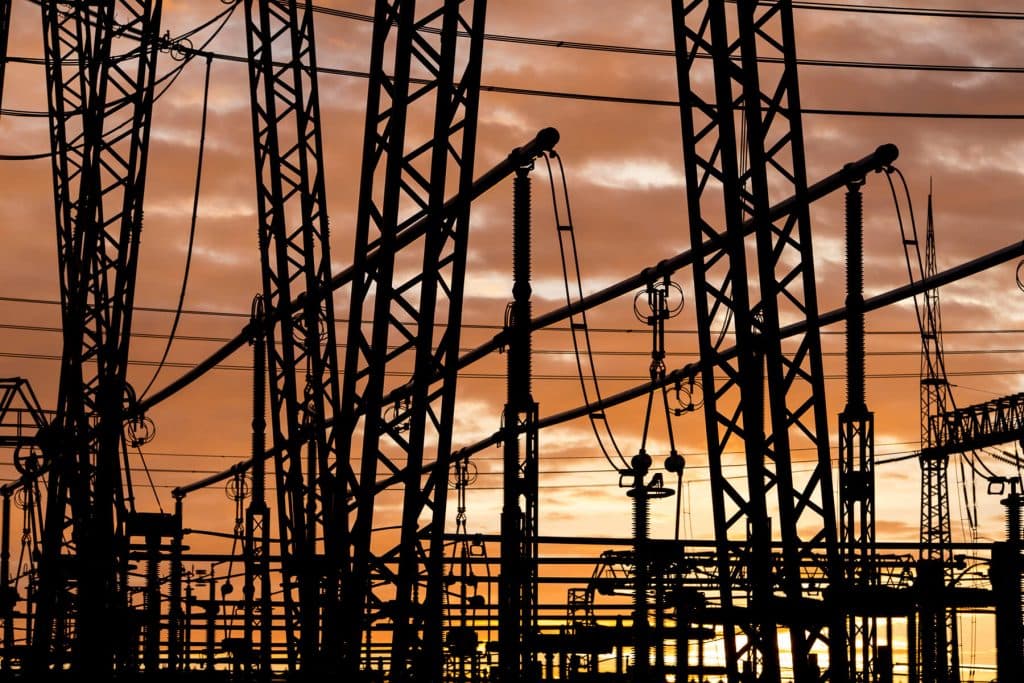
In recent times, the issue of underground (cable) HV and EHV lines has frequently arisen in the construction and renewal of the electricity system. Some members of the public and experts alike demand that all new lines be underground, or that existing lines be cable-converted during modernisation. This demand is made by part of the public not only in relation to distribution system lines, but also transmission system lines. This is mainly because underground lines are alleged to have a significantly smaller impact on the surrounding environment than 110 kV distribution system pylons and transmission system pylons. However, nothing is black and white: underground cable lines also have their disadvantages and affect life in the surrounding area.
Legislation
The public found support for the demand to build underground HV and EHV lines in legislation. It required transmission system operators and distribution system operators to place lines underground in built-up areas, or obtain an exemption. Although operators were generally granted an exemption, this was a decision that took time and could be challenged. As a result, the entire approval process for construction of a new line was prolonged.
This situation was partly changed by an amendment to Act No. 416/2009 Coll., effective from 1 January 2018. Section 2b, paragraph 4 contains the following provision: “Electricity lines with a voltage level of 400 kV and above shall be placed above ground in the built-up areas of municipalities.” Since 2018, the transmission system operator has therefore been permitted to build above-ground EHV lines in built-up areas without having to obtain an exemption. However, this change does not apply to 110 kV distribution system lines. Distribution system operators will have to build underground HV cable lines in built-up areas or continue to apply for an exemption.
Comparison of overhead and underground lines
Each technology has its advantages and disadvantages. It is therefore not possible to say that underground or, conversely, overhead HV or EHV lines are better in every respect.
One of the most fundamental differences between the technologies is cost, not only for construction but subsequently also for operation and maintenance. Capital costs for building underground HV and EHV lines are up to around 10 times higher than for overhead lines, depending on the terrain and obstacles along the route. Operating and maintenance costs are also higher for underground lines. The expected service life of an underground line is 25 to 35 years, compared with 40 to 60 years for an overhead line.
A major disadvantage of underground lines, especially EHV lines, is more difficult construction and its impact on the surrounding area. For example, more than 10,000 m3 of soil must be excavated for every kilometre of underground double-circuit EHV line. This volume is equivalent to a thousand fully loaded TATRA T815 trucks. This is incomparably more soil than is excavated when installing the pylons of an overhead EHV line. It is estimated that one quarter of this volume would have to be taken to landfill and replaced with special backfill to prevent undesirable heating of the soil around the cables.
Repairing potential faults is also more problematic for underground lines, as it is significantly more complicated and therefore takes much longer. A fault on an overhead line can be repaired within days, whereas repair of a fault on an underground line can take weeks. The scale of construction and installation work required to repair or replace cables along the route is comparable to that required to build a new line. Heavy machinery and soil excavation are therefore also needed for repairs.
The total width of the corridor (line protection zone) for an underground 110 kV line is only 3.5 m. An overhead 110 kV line has a corridor around 30 m wide, depending on the pylon type. For 400 kV lines, a standard double-circuit overhead line has a protection zone 69 m wide, while an underground 400 kV line can be expected to require an area up to 40 m wide, including space needed to repeatedly store soil from potential repair excavations.
Although the protection zones of underground lines are narrower than those of overhead lines, restrictions on the subsequent use of these areas must be taken into account. For example, the use of agricultural machinery in the protection zone of an underground line is very limited because, under the Energy Act, cable lines cannot be crossed by machinery weighing more than 6 t. Agricultural activity, which is common in the protection zone of overhead lines, is excluded for underground lines. Permanent vegetation must also not grow in the protection zone of an underground line. For overhead lines, vegetation up to 3 m high is permitted.
Because of the limited manufacturing length of cables, individual sections must be connected every 600–800 m. For an underground 400 kV line, connections would be made in partly underground concrete structures measuring approximately 6 x 6 x 2 m. It would also often be necessary to build structures where an overhead line would connect to a cable line, resulting in further land take. In addition, underground EHV lines would require compensation equipment due to their higher capacitive reactance—essentially a smaller substation with reactors and other ancillary structures.
Compared with overhead lines, crossings of underground lines with roads, motorways, watercourses and utility networks are complicated to address. On the other hand, underground lines are better in terms of the impact of weather on line operation. Underground lines are not affected by wind or ice, for example, and therefore would not suffer faults and subsequent outages caused by weather.
Build only HV and EHV cable lines?
In general, it cannot be stated unequivocally that new HV and EHV lines should be exclusively underground cable lines or overhead lines. The route of the line must be taken into account. In built-up areas, this is a question of the specific situation.
It can be assumed that cases in which an underground EHV line will be more advantageous will be a very small minority. There will be significantly more cases where, in terms of impacts on the surrounding area, it is more appropriate to build a 110 kV cable line than in the case of EHV lines. However, each case must be assessed individually. A decision must then be made as to whether the benefits of a cable line outweigh the negatives associated with its construction and operation.
Translation disclaimer
This article is a machine translation of the Czech original and has not yet been fully reviewed. In case of any doubt, please refer to the Czech version.
Sdílejte článek prostřednictvím:
You might also like
23 October 2026, 11:01

23 October 2026, 06:34