23 October 2026, 06:34
Loading...
ČEPS plans to invest CZK 80 billion in Czech energy grids over the next decade

oEnergetice.cz, ČTK
15 September 2025, 10:30
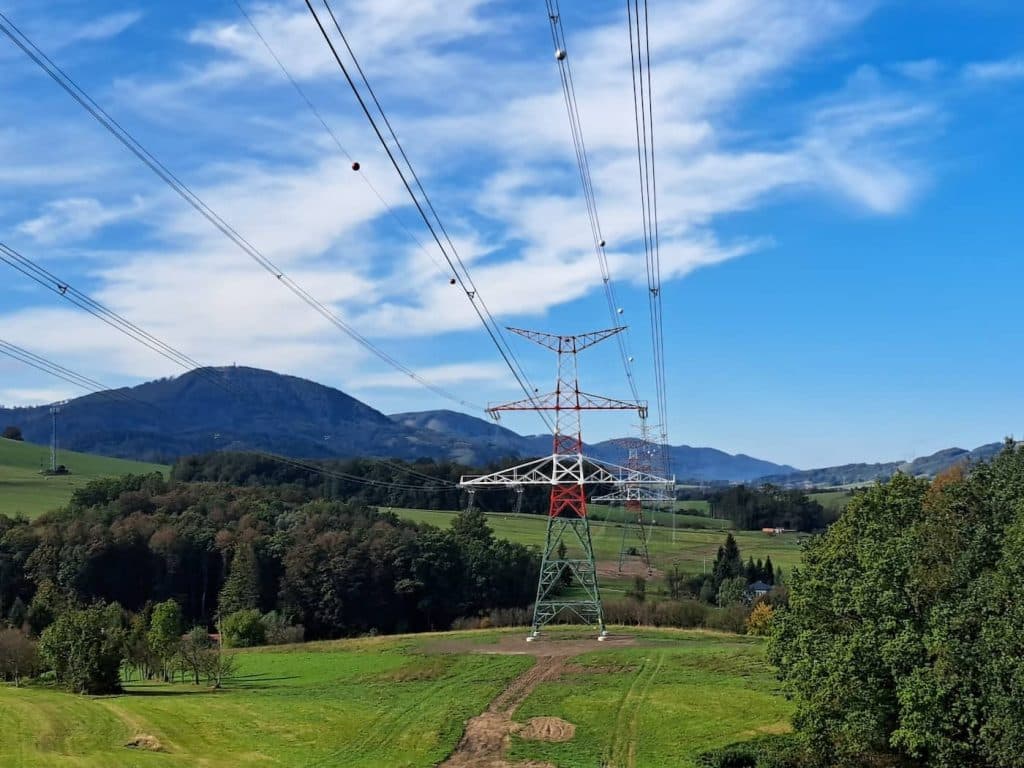
State-owned transmission system operator ČEPS plans to invest more than 80 billion crowns in developing energy grids over the next ten years. It will focus on adding a second circuit to existing lines, building substations and refurbishing older lines. The investments are intended to prepare the Czech grid for a sharp rise in consumption, the expected expansion of renewable energy sources and electric mobility, and the phase-out of coal-fired generation. This is according to the grid development plan for the next ten years, which ČEPS presented to journalists today. Investment over the previous ten years amounted to approximately 60 billion crowns.
With its grid development plan for 2025 to 2034, the company is building on European and national energy strategies. It outlines key steps to prepare the grid for the future development of the energy sector, when consumption and grid loads are expected to increase. The document also addresses trends that will significantly shape the Czech energy sector in the coming years.
"As the energy sector changes, electricity consumption will grow—not only in households, but also in industry and transport, where decarbonisation is under way. Cross-border interconnections will also become more important. The Czech Republic must be able to export and import electricity. The transmission system is already connected to all neighbouring countries, so these links will need to be strengthened further," said ČEPS Vice-Chairman of the Board Svatopluk Vnouček.
ČEPS did not comment on how the increased investment would affect regulated electricity prices. The regulated component of prices is set by the Energy Regulatory Office (ERÚ), which approved the ten-year plan. In recent months, ERÚ has said that under a new methodology, regulated prices are expected to rise by roughly the rate of inflation each year over the next five years, reflecting the need for investment.
The grid operator will focus its investment primarily on adding a second circuit to lines along existing routes, building substations, including transformers, and refurbishing older line routes, particularly those dating from the 1970s. In this context, the document notes that some parts of the grid are already nearing the end of their planned technical lifespan. Without major modernisation, ČEPS says, they would not be able to handle future operations.
Key projects in the plan include building the Praha Sever substation and associated lines, which, together with the addition of a second circuit to the Čechy Střed - Chodov line, is intended to ensure the power supply to Prague. In the Vysočina region, ČEPS is preparing to build the new double-circuit Kočín - Mírovka line and the Leskovice substation to transmit output from the Temelín power plant.
The plans also include voltage compensation equipment to stabilise the grid when renewable energy sources supply electricity intermittently. Another part of the planned investment consists of cross-border projects. These include, for example, a new line between Czechia and Slovakia and strengthening the transmission route between western and southern Bohemia.
ČEPS also highlighted the main barriers to the planned grid development in the document. The biggest is the permitting process, which often takes more than ten years. Construction of a line itself takes one to two years. Another risk, the company says, is instability in European legislation, which complicates project preparation.
Experts have highlighted the need for investment in Czech electricity grids in connection with the expected sharp rise in consumption. Last year, consumption stood at around 58 terawatt-hours, but some forecasts suggest it could gradually grow by as much as tens of percent in the coming years. Domestic distribution companies are also planning increased investment in their grids.
Translation disclaimer
This article is a machine translation of the Czech original and has not yet been fully reviewed. In case of any doubt, please refer to the Czech version.
Sdílejte článek prostřednictvím:
You might also like



22 October 2026, 10:45