23 October 2026, 14:38
Loading...
Energy companies and regulators clash over the impact of grid investment on consumers
Adam Sosna
5 April 2025, 12:28
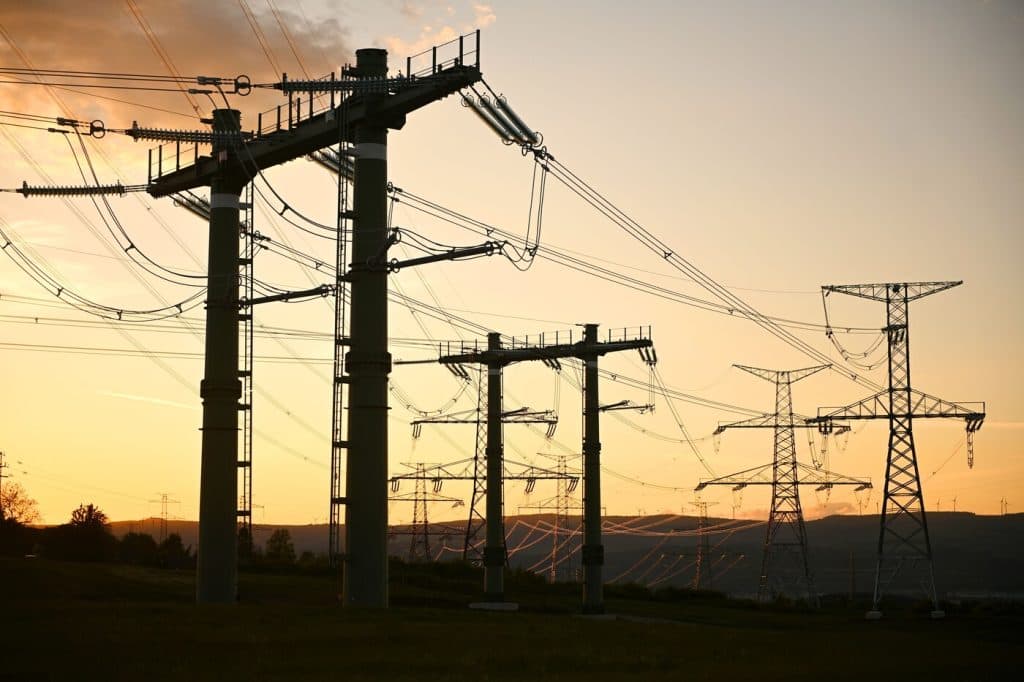
The Agency for the Cooperation of Energy Regulators (ACER) last week published a comprehensive report on the development of grid costs and distribution charges, which make up a substantial part of consumers’ total electricity bills. In its forecast, ACER expects annual costs for maintaining and expanding grids, and therefore distribution charges, to rise by 50% to 100% by 2050.
However, Eurelectric, the association representing Europe’s key energy companies, has responded rather sharply to ACER’s scenario. Industry representatives accuse regulators of alarmism and call on them to reconsider their scenarios. According to Eurelectric, the flawed forecast could have serious implications for both energy security and the EU’s climate targets.
ACER warns: Grid expansion costs will rise sharply
ACER’s report examines the rising costs associated with the expansion of electricity transmission systems. In particular, it warns of a subsequent increase in distribution charges for consumers. It stresses that huge investments will be needed to modernise grids, particularly as a result of the rapid growth of renewables and the EU’s ambitions to electrify a substantial part of industry, transport and heating.
The report predicts that these investments could reach as much as €100 billion per year, representing a doubling compared with the current situation. According to ACER, these costs will be reflected in a significant increase in the regulated component of electricity prices – of up to 100% by 2050. Regulators therefore forecast substantial upward pressure on electricity prices for consumers.
Eurelectric: ACER underestimates demand growth
Eurelectric, whose Czech member is the Czech Energy Employers’ Association (ČSZE), issued a sharp response to ACER’s report. Its key argument is that regulators have significantly underestimated the future increase in electricity demand in the EU. In its report, ACER puts expected total annual electricity demand at 3,345 TWh in 2050.
Energy sector representatives firmly reject such a scenario, instead expecting a much larger increase to 4,428 TWh. They cite their own data, as well as European Commission figures. In its impact assessment concerning the EU’s 2040 and 2050 electrification targets, the Commission also assumes much faster demand growth than ACER, in line with Eurelectric’s data.
The association rejects the sharp rise in costs projected by regulators. It points to the fact that grid investment will increase in proportion to demand growth. Since ACER has, in its view, significantly underestimated the extent of electrification and growth in electricity demand, its forecast of the impact of higher investment on end consumers is also flawed.
Energy companies do not dispute the level of investment costs expected by ACER. However, they argue that the pace of electrification will be much faster, meaning that costs will be spread across a substantially broader consumer base.
Accusations of alarmism and a call to revise the report
According to energy companies, this will make it possible to keep the increase in distribution charges under control by 2050 and prevent a disproportionate impact on consumers. Eurelectric argues that this could be helped by rebalancing taxation, another component of consumer bills. According to the association’s data, taxes on electricity are 1.4 times higher than on natural gas. Aligning this tax policy would represent a relatively simple way for the EU to reduce pressure on consumers’ overall electricity bills.
Another argument is the higher energy efficiency brought by greater electrification compared with burning fossil fuels. Thanks to efficiency gains alone, Eurelectric expects households’ real electricity costs to fall by as much as half by 2050.
In its statement, Eurelectric accuses ACER of alarmism. It sees disproportionately high projections of distribution costs as a threat that could discourage consumers and investors from accelerating electrification. Yet the highest possible level of electrification is essential to continue pursuing the EU’s decarbonisation targets at acceptable financial cost.
Massive investment in the expansion of transmission systems is expected to be spread among far more consumers than regulators assume. More interconnected transmission networks should then facilitate the integration of new renewables, whose costs are also expected to continue falling, further reducing prices for end customers. In conclusion, Eurelectric called on ACER to reassess its forecast based on realistic data and, more broadly, urged it to provide greater support for much-needed electrification rather than take steps that could undermine EU targets in this area.
Translation disclaimer
This article is a machine translation of the Czech original and has not yet been fully reviewed. In case of any doubt, please refer to the Czech version.
Sdílejte článek prostřednictvím:
You might also like
23 October 2026, 11:01

23 October 2026, 06:34