23 October 2026, 06:34
Loading...
Five-kilometre tunnel under the Elbe: SuedLink reaches another key milestone

Eduard Majling
27 August 2026, 06:12
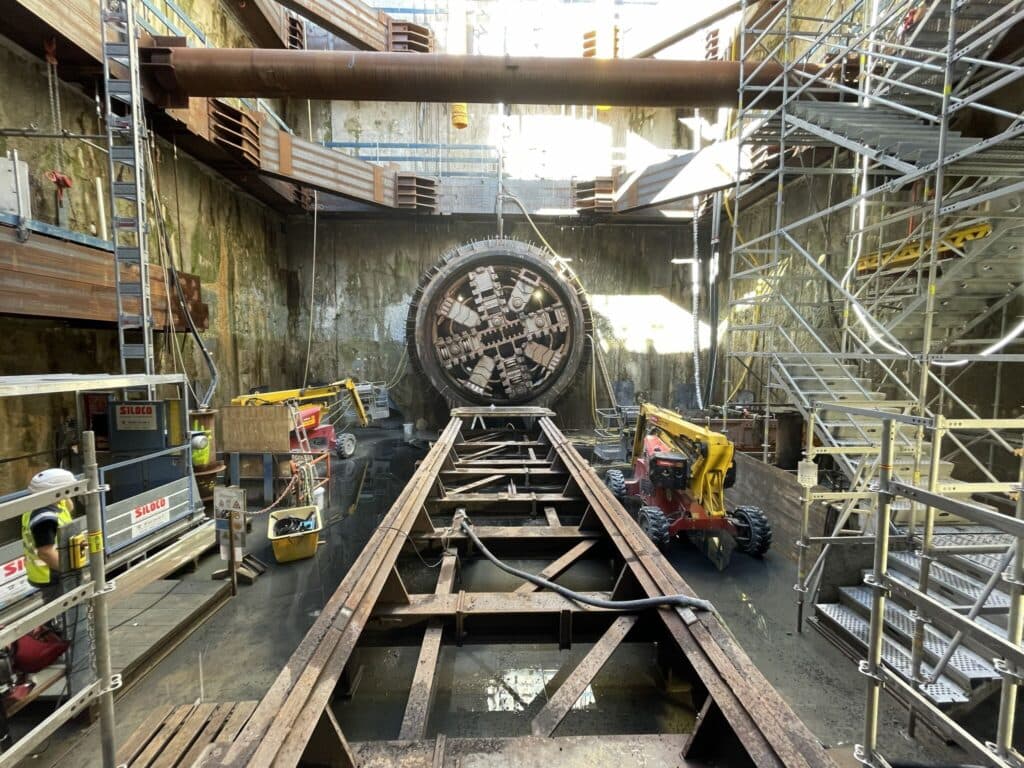
The SuedLink backbone transmission project in Germany has reached another construction milestone with the completion of a more than five-kilometre tunnel beneath the Elbe. The ElbX river crossing project, which connected sections of the route between Schleswig-Holstein and Lower Saxony, is among the technically most complex parts of the 700-kilometre high-voltage direct-current link. From the end of 2028, it is set to strengthen electricity transmission capacity from northern to southern Germany.
TenneT, which operates part of the German transmission system, together with representatives of both federal states, symbolically marked the completion of tunnelling for the ElbX tunnel, which connects Wewelsfleth in Schleswig-Holstein with Wischhafen in Lower Saxony. The tunnel, approximately 5.2 kilometres long, now structurally connects the northern sections of the SuedLink route on both banks of the Elbe.
The tunnel-boring machine reached the receiving shaft in Wischhafen as early as June, meaning the breakthrough has now completed the underground construction phase of this section. The machine was launched from Wewelsfleth on 1 February 2025 and passed through variable sandy and clay sediment layers during excavation.
Translation disclaimer
This article is a machine translation of the Czech original and has not yet been fully reviewed. In case of any doubt, please refer to the Czech version.
The article continues for subscribers
Premium content
The rest of this article is available to premium subscribers only. Get access to all premium articles on oEnergetice.cz.
You have read only 39% of the article — unlock the remaining 61% with a premium subscription.
Best value: annual subscription
Monthly option 4 € / month
3.25 €/ month
You might also like

22 October 2026, 10:45