1 November 2026, 07:59
Loading...
Germany now approves new power lines much faster. But this is causing new problems

David Vobořil
22 November 2023, 06:36
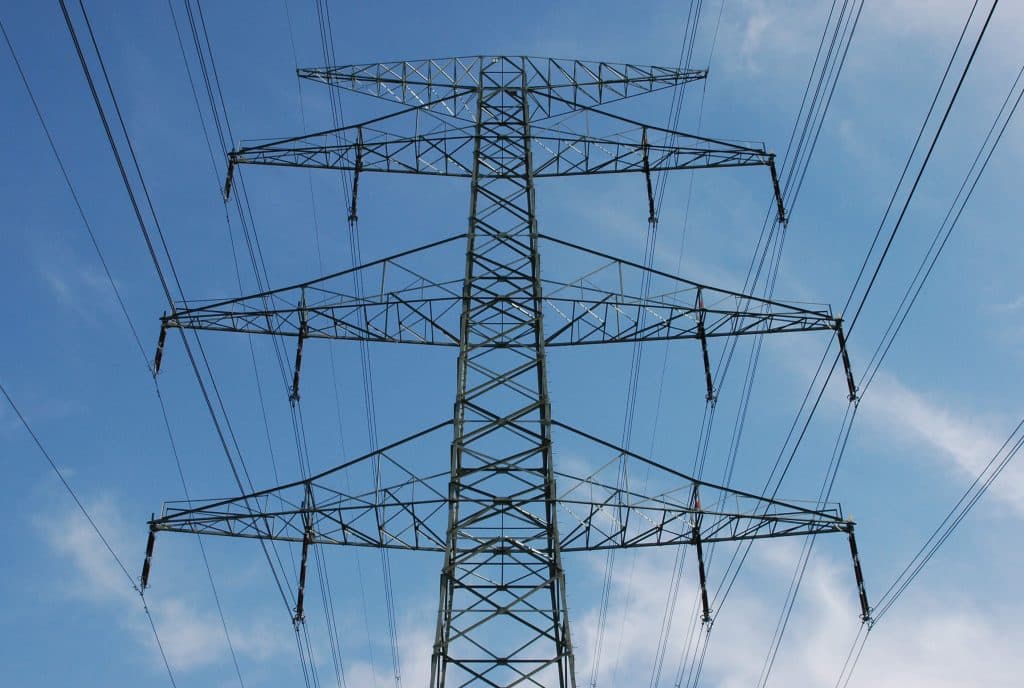
Power lines are now being approved much faster in Germany, infrastructure planning company ILF told Handelsblatt. However, this acceleration is creating new bottlenecks.
Germany urgently needs new transmission lines so it can make full use of its renewable energy sources and prepare for the planned massive increase in their installed capacity. The German government has therefore made several attempts to speed up the approval process. This time, it has succeeded.
"The acceleration is clearly noticeable in new projects," says Fred Wendt, managing director of ILF, an infrastructure planning company involved in planning many power lines in Germany.
Last year, as part of the so-called Easter Package, the German government introduced a law intended to speed up the energy transition. Transmission lines are at the heart of various initiatives to shorten procedures.
"Measured against the targets, expansion has not progressed quickly enough in recent years," said Barbie Haller and Klaus Müller of the German grid regulator (BNetzA).
Procedures are to be shortened by several years. In addition, at the request of transmission system operators, the authority could allow construction to start earlier if it is likely that a construction permit will subsequently be granted.
By the end of June 2023, BNetzA had completed approval procedures for 470 kilometres, thereby authorising construction. By the end of 2024, the total length of approved lines is expected to exceed 2,800 kilometres, and by the end of 2025 to reach approximately 4,400 kilometres.
Earlier this month, the German government also introduced another important measure as part of an amendment to the Renewable Energy Sources Act (EEG). When power lines are laid to connect renewable energy sources to the grid, owners of affected land will be required to allow the lines to cross their properties and will receive compensation. This is intended to prevent legal disputes that slow down the process.
Fast approvals are causing problems
The much faster approval of projects is, however, creating new problems. There is a shortage of qualified workers among all those involved: network operators, authorities and planners. Prices are rising, as are salaries. There are currently sections of the route that nobody is interested in building.
"Acceleration means that everything is being done at once," says Wendt.
That is because even accelerated procedures still have to be completed. The Association of Civil Servants recently warned that the public sector is short hundreds of thousands of employees. The situation is similar among engineers.
ILF and its approximately 1,200 employees in the German-speaking region are involved in around half of all sections of the planned transmission lines in the south, for example by preparing documentation for construction permits.
"We could easily double our workforce too, if only we could find people," says Wendt.
The labour market is, however, completely overheated. The German government needs to draw up realistic grid development plans and then implement them gradually.
ILF is now trying creative solutions
"We now also employ farmers as planners to negotiate land purchases," says co-managing director Tobias Walk.
A completely changed image as an employer is also helping, as the company is now involved in many environmental projects. "Through these projects, our employees have the greatest leverage to reduce CO2 emissions," Walk says, citing one argument that resonates with many Germans.
ILF is one of the most experienced infrastructure planners in Germany and Europe. The group has global revenue of approximately 260 million euros. For a long time, its work focused on major oil and gas pipelines, for example in Iran and Kazakhstan. The company was also responsible for part of the Nord Stream 2 pipeline in Germany and is active in the planned LNG terminals in the North Sea.
Translation disclaimer
This article is a machine translation of the Czech original and has not yet been fully reviewed. In case of any doubt, please refer to the Czech version.
Sdílejte článek prostřednictvím:
You might also like

31 October 2026, 12:55

31 October 2026, 08:21
30 October 2026, 20:16