Sun and wind from Africa: how will the longest subsea cable connect Morocco and Britain?

A subsea cable link from Morocco, which could supply up to 8% of the UK's total electricity consumption thanks to the North African country's enormous renewable energy potential, is not science fiction but a real plan by British company Xlinks. “Almost constant” clean electricity could start supplying the island nation as early as 2030, executive chairman Dave Lewis told The Guardian.
The plan for the longest subsea power link involves a 4000-kilometre line comprising two independent circuits, each with separate positive and negative cables, and a total transmission capacity of 3.6 GW. Electricity will be transmitted using a high-voltage direct current (HVDC) system.
The subsea cable will run along the Moroccan coast, then along Portugal, northern Spain and France, before turning around the Isles of Scilly and ending in Alverdiscott in northern Devon. Although the chosen route is longer than a direct link, it follows relatively shallow waters, where the greatest depth reaches approximately 700 metres, avoiding the deep sections of the Bay of Biscay.
The cable will be buried beneath the seabed along its entire length, reducing the risk of damage from, for example, fishing gear. This design is the technically safest option.

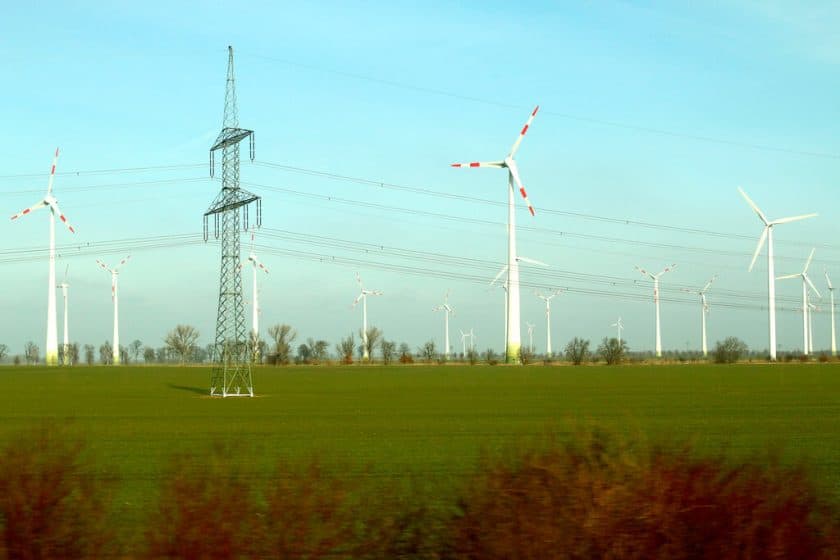
To this end, a huge solar farm and wind farm are planned for the southern Moroccan region of Guelmim Oued Noun, covering an area of approximately 960 km², equivalent to the area of the German capital, Berlin. The site will include 12 million solar panels, 530 wind turbines and battery storage with a capacity of 22.5 GWh and an output of 5 GW. On the British end, the line will terminate in the Devon village of Alverdiscott.
The expected benefits of the project include 11.5 GW of installed renewable capacity, the supply of 3.6 GW of reliable power for an average of more than 19 hours a day, and energy for more than 7 million British households. Xlinks expects some transmission losses, of approximately 13%, but the project is still worthwhile given Morocco's low generation costs, making it economically viable.
However, the project has faced delays, and doubts have been raised about whether it will go ahead. The longest subsea power link completed to date, the North Sea Link between Great Britain and Norway, is 720 km long—approximately one-fifth the length of the planned link from Morocco. On the other hand, the project has been granted “nationally significant” status and has the backing of major investors, including TotalEnergies, Abu Dhabi National Energy Company, General Electric and Octopus Energy. The project is estimated to cost 20 to 22 billion pounds, with commissioning planned for around the turn of the decade.
Translation disclaimer
This article is a machine translation of the Czech original and has not yet been fully reviewed. In case of any doubt, please refer to the Czech version.




