
23 October 2026, 14:38
Loading...
Gas turbine manufacturers expand capacity, but lead times continue to lengthen
Adam Sosna
10 September 2025, 13:35
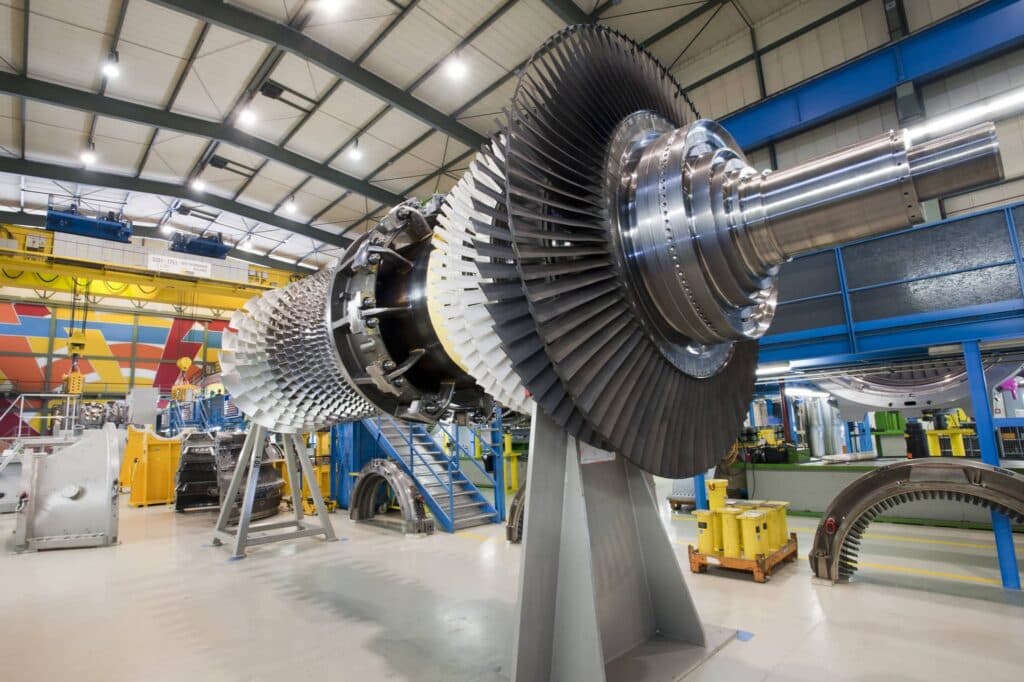
The global gas turbine market is facing unprecedented pressure. Lead times have risen sharply since 2023. Gas turbines, which can flexibly respond to fluctuations in renewable generation, are becoming a relatively scarce commodity. Major manufacturers are racing to expand production capacity, but ever-growing demand exceeds their capabilities. The steep rise in demand is driven primarily by the boom in data centres and artificial intelligence.
Growing demand and limited supply
The world’s three leading manufacturers – Mitsubishi Power, Siemens Energy and General Electric – are facing record order volumes. According to data from the Electric Power Research Institute, lead times for the most powerful turbines were typically up to three years just two years ago. This year, the average waiting period has already reached five years, with buyers having to wait as long as seven years for some equipment.
Analytical firm Wood Mackenzie also reported on the tight situation in the gas turbine market in May. It expects the turbine market to be unable to meet rising demand over the next 15 years. Its estimates indicate that 890 GW of new gas-fired capacity will be added by 2040, with almost half of this in the US and China. Such an outlook is particularly critical for Europe and, by extension, the Czech Republic. Gas-fired generation is expected to play a key role in the energy sector’s transformation in the medium term. The stated pace of its construction now appears to be at risk.
Several factors are behind this development. The generational replacement of ageing capacity cannot be overlooked. At the same time, pressure is growing for the rapid construction of backup capacity to balance fluctuations in output from solar and wind power plants. Particularly in the US, however, demand growth is driven mainly by the boom in data centre construction linked to the rapid development of artificial intelligence. The result is a level of demand that currently exceeds manufacturers’ capabilities in Europe, the US and Asia alike.
Key manufacturers expand production
The problem is not only the growing number of orders, but also constraints in supply chains. Manufacturing gas turbines is technologically demanding and requires sophisticated components made from durable alloys as well as precision engineering. A shortage of skilled labour and bottlenecks among suppliers are causing further delays. Although turbine manufacturing itself has become more expensive in recent years, key producers are investing significant sums in expanding their production plants.
The three largest – Mitsubishi, Siemens and General Electric – together account for around two-thirds of the market. Overwhelmed by orders, these companies are racing to expand their manufacturing facilities.
Under pressure from pending orders worth more than USD 35bn, Mitsubishi Power intends to double its total production capacity over the next two years. Chief executive Eisaku Ito himself abandoned the original plan to increase output by 30%, as he said it would not be enough to meet the flood of orders, especially from the data centre segment. The other two major producers, Siemens and GE, are also investing tens of millions of dollars in their manufacturing plants.
Artificial intelligence drives demand growth
That data centres are behind the sharp increase in demand and lead times is also confirmed by Jake Rubin, head of media relations for Siemens Energy in North America.
"The gas services division has received orders for gas turbines totalling 14 GW in the fiscal year to date, of which 65% are intended for data centres," he said.
Siemens Energy chief executive Christian Bruch also assessed the situation positively.
"I believe the breadth of our portfolio is a major advantage for us. Despite the tariff situation, we are currently seeing an extremely strong and still growing market for energy equipment in the US. Both the replacement of ageing infrastructure and enormous electricity demand from data centres are driving very high demand for our products in the US."
Translation disclaimer
This article is a machine translation of the Czech original and has not yet been fully reviewed. In case of any doubt, please refer to the Czech version.
Sdílejte článek prostřednictvím:
You might also like
23 October 2026, 11:01

23 October 2026, 06:34