
23 October 2026, 14:38
Loading...
IEA: Global electricity demand to grow despite economic slowdown

Jakub Malý
2 September 2025, 06:26
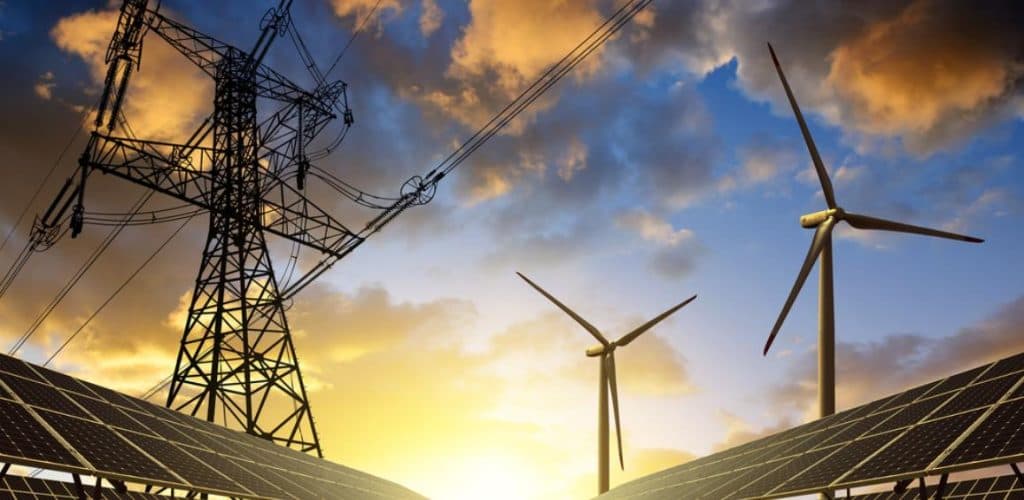
According to the July edition of the IEA's Electricity Mid-Year Update 2025, global electricity demand is expected to grow despite the economic slowdown in the global economy. Growth of 3.3 % is estimated for 2025 and as much as 3.7 % in 2026.
The growth rate is significantly higher than that of primary energy consumption and confirms the accelerating electrification of the economy.
The main drivers include rising industrial consumption, ever-stronger demand for cooling in homes and offices, the development of data centres, the expansion of electric mobility and, more broadly, the ongoing replacement of fossil fuels with electricity across a range of sectors.
A regional view shows that China and India will account for the largest growth, together delivering almost 60 % of the global increase. In China, electricity demand is expected to grow by 5 % in 2025 and 5.7 % in 2026, while India will reach around 6.6 % in 2026.
In the United States, continued above-average growth of around 2.2–2.3 % per year is expected, mainly due to the rapid expansion of data centres. Europe remains behind, with growth of around one percent, although a slight acceleration to 1.5 % is expected in 2026.
This clearly confirms that the centre of growth in global electricity consumption is shifting to Asia, while the old continent is facing rather a stabilisation in demand.
Significant changes are also taking place on the generation side. Renewables should definitively overtake coal in 2025–2026 and become the world's largest source of electricity. Solar and wind power continue to expand at a record pace.
Nuclear power will reach new highs thanks to reactor restarts in Japan, stable generation in the United States and France, and new reactors being built in Asia.
Natural gas is increasingly becoming a transition fuel, replacing both coal and oil in the energy mix. Thanks to the combination of these trends, emissions from the electricity generation sector should stagnate in 2025 and even decline slightly in 2026.
Situation in Czechia
Czechia is also expecting a slight increase in electricity consumption, although this will be conditional on a return to economic growth and lower electricity prices; for example, ČEPS's MAF 2023 takes this scenario into account. It forecasts net annual consumption of 61.6 TWh in 2025 under the Conservative Scenario and consumption of 63.7 TWh under the Progressive Scenario.
It further confirms the gradual phase-out of coal-fired generation and the growing need for electricity imports. Both scenarios confirm that by 2035, supply reliability may come under pressure despite higher imports and investment in renewable sources.
Winter periods with high demand appear critical, when there is a risk of insufficient resources across Europe. The document therefore stresses the need to build flexible sources, particularly gas-fired power plants, as well as wind power plants and to reinforce the transmission system.
The increase in consumption is also confirmed by a report from the ERÚ, according to which electricity consumption rose year on year by 2.6 % in the first half of 2025 and gas consumption by as much as 13.2 %, with the largest increases among households (electricity +9.3 %, gas +15 %). Electricity generation also increased by 7.5 % thanks to gas-fired, photovoltaic, steam and nuclear sources.
A new MAF CZ 2024 report is expected to be published this autumn, updating the input data and potentially providing a more realistic view of developments in the Czech power sector.
Translation disclaimer
This article is a machine translation of the Czech original and has not yet been fully reviewed. In case of any doubt, please refer to the Czech version.
Sdílejte článek prostřednictvím:
You might also like


23 October 2026, 11:01

23 October 2026, 06:34