Message for Czechia too: Britain puts brakes on Chinese nuclear power, partly over espionage
Just a few months ago, it looked as though the Chinese were about to make a major push into the global market with their nuclear reactors in the United Kingdom. Now everything is different. Theresa May’s new government in London has decided to review the project to build new units at Hinkley Point C, in which the Chinese are due to participate as co-investors.
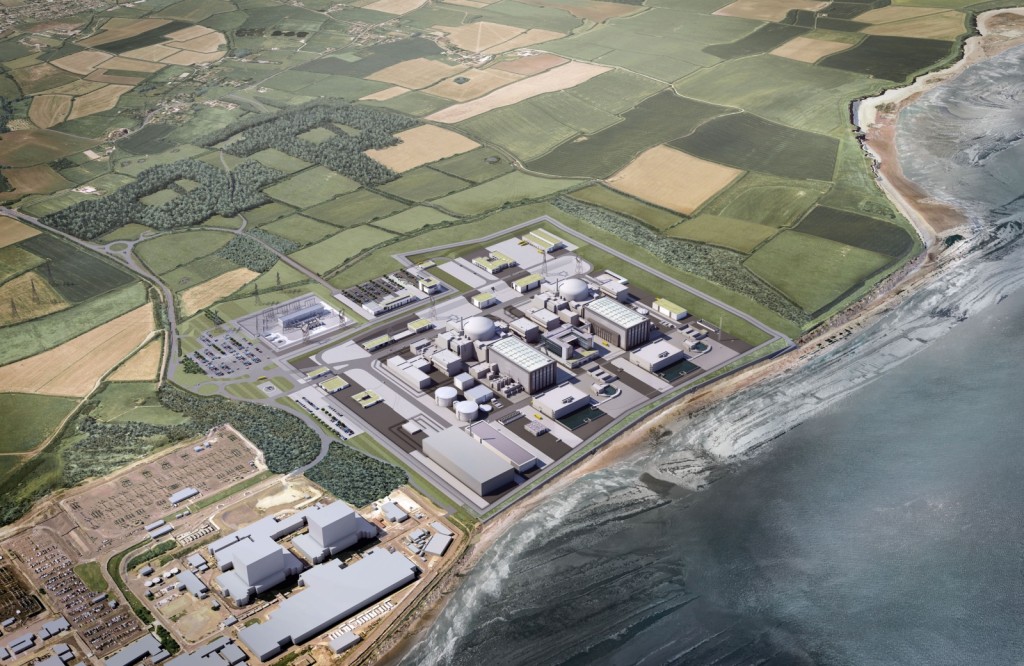
At first glance, this is not particularly surprising, as doubts about the project’s economic rationale are nothing new. Yet many are shocked, as clear indications have emerged that the main reason for Britain’s “brake” is not economics but security concerns. According to Nick Timothy, the prime minister’s highly influential chief of staff, the Chinese could build “weak points” into the computer systems of British power plants and, if “necessary”, halt energy production in the United Kingdom.
Czechs must take note
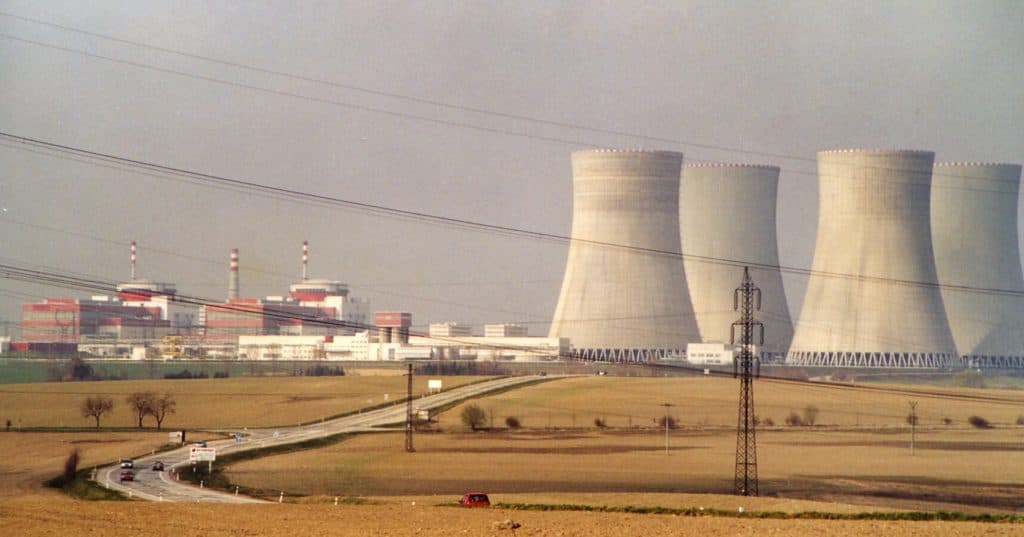
Does this all make sense or not? One thing is clear: the heated debate in Britain should not escape Czech attention. The Czech government is also inviting Chinese state-owned companies to take part in the tender to build new nuclear reactors at Temelín or Dukovany.
This is undoubtedly the right decision. The more bidders there are, the better the competition can be – if Czechia does indeed decide to proceed with it. Signals from Britain rather suggest that security considerations should be among the key criteria. The future tender procedure (unlike the cancelled Temelín tender) will apparently not be conducted strictly under the public procurement law, and the government, alongside ČEZ, should have a stronger say.
Industry Minister Jan Mládek also recently expressed some doubts about the talks with the Chinese so far, but these concerned an entirely different matter – according to him, Beijing envisages being able to deliver the new nuclear units as a complete package, including construction labour. Prague, however, has long sought substantial involvement by domestic industry in building the new units.
An unnecessary Bond-style thriller?
But let us return to the United Kingdom. Some British experts are somewhat mocking the new government in London for unnecessarily creating a kind of “Bond-style thriller” around Chinese ambitions in nuclear energy.
Malcolm Grimston of Imperial College London’s Centre for Environmental Policy, for example, as quoted by Bloomberg, points out that the Chinese are interested in demonstrating that they are trustworthy partners. If Chinese companies want to continue gaining ground in the British and global markets, it would make no sense from the perspective of their interests to cause failures at nuclear power plants.
Tim Yeo, head of New Nuclear Watch Europe, in turn points out that a minority stake in the Hinkley Point C project certainly would not allow the Chinese to carry out any of the alleged threats mentioned. “I welcome the fact that (Chinese company) CGN wants to invest here,” Tim Yeo said.
A change of course
Theresa May’s government, however, sees the Hinkley Point project primarily as a gateway to further nuclear power projects in Britain – at least one of which would be entirely under Chinese control. This is what President Xi Jinping agreed last year with then prime minister David Cameron, who was allegedly far too accommodating towards the “Middle Kingdom” for today’s rulers in Downing Street.
Following a minority Chinese stake in financing the Hinkley Point C and Sizewell C plants, whose construction will primarily be overseen by French company EDF, Bradwell should host the first construction of a Chinese third-generation Hualong One reactor in the developed world. There, the security threat could theoretically be more real.
It must be added, however, that it will still take many years before Hualong receives a licence in Britain.
Theresa May’s intelligence information
Some observers argue that caution is also warranted when assessing China’s future intentions. There is no doubt about Beijing’s current efforts to present itself as a trustworthy partner, but what if relations deteriorate or the two countries come into conflict? This was the argument made, for example, by Conservative MP Bernard Jenkin.
Many also point out that the change in approach towards the Chinese compared with the David Cameron era can be explained by Theresa May’s six years as home secretary, when she effectively oversaw the work of the MI5 intelligence service and should therefore have the best understanding of security threats. In this context, observers often refer to China’s alleged experience with cyberattacks.
Nigel Inkster of the International Institute for Strategic Studies, who previously worked for MI6, argues that the risks related to Chinese involvement in nuclear power plants are “manageable” if the British are aware of them and prepare for them.
Espionage concerns
Weekly magazine The Economist noted that similar reservations to those surrounding nuclear power plants were raised over Chinese company Huawei and its supplies for British telecommunications infrastructure. Rather than fears of possible sabotage (as Nick Timothy spoke of), such cases tend to raise concerns about industrial espionage. These have also been voiced, for example, by the US Congress.
The fact is that the Czech Security Information Service also warns of risks associated with Chinese investment. According to recent reports, Czech intelligence services are dealing with the “Chinese risk” in connection with the planned purchase of mobile radar systems.
When it comes to nuclear energy, however, the Chinese are acquiring knowledge entirely legally – from Americans, French and Russians alike. Leading global companies transfer know-how to the “Middle Kingdom” under contracts that secure them orders in the Chinese market. Often they have little choice – while dozens of new reactors are being built in China today, comparable opportunities are lacking elsewhere in the world.
An attractive Czechia
It is precisely their construction experience in China that is leading Chinese state-owned companies to plan to become major exporters of nuclear power plants. From this perspective, the United Kingdom was an exceptional opportunity – it is an advanced economy and its regulator has a strong reputation. A British licence for the Chinese Hualong reactor could open doors around the world.
In London, on the other hand, it is also claimed that Britain is the only country in the Organisation for Economic Co-operation and Development (OECD) willing to allow the Chinese into such a strategic and sensitive sector as nuclear energy. This is not entirely accurate. The Chinese are planning to build new reactors in another OECD country – Turkey. Romania, which is seeking OECD membership, also has its own plans involving Chinese suppliers. The fact remains, however, that in terms of overall reputation and economic development, none of these countries can compete with the United Kingdom.
Czechia, with its relatively extensive experience in nuclear energy, could also be very attractive to the Chinese. Whatever signals the British now send, we should also assess them in the context of an important difference between the United Kingdom and Czechia: while Czechs are seeking an EPC contractor for their potential new reactors, the British are going substantially further – entrusting foreign companies with the role of lead investor and future plant operator as well.
The author works as a consultant and energy projects specialist for the HATcom agency.
Translation disclaimer
This article is a machine translation of the Czech original and has not yet been fully reviewed. In case of any doubt, please refer to the Czech version.