23 October 2026, 14:38
Loading...
Possible pathways to low-emission energy (part 1)
Vladimír Wagner
26 February 2018, 20:13
Fossil resources will gradually run out, so replacements need to be sought in any case. Although intensive exploration in recent years, and above all advanced extraction methods, increasingly suggest that their reserves will be depleted much more slowly and could last for centuries. However, burning fossil fuels, especially coal and oil, produces pollutant emissions that choke cities and have significant health impacts. Carbon dioxide emissions are another potential risk. They could affect climate development and thus living conditions in different regions.
Is it necessary to dramatically reduce carbon dioxide emissions at any cost?
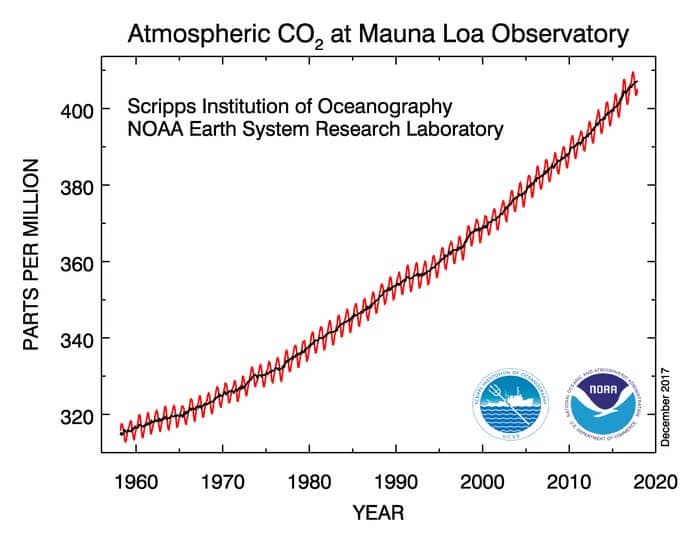
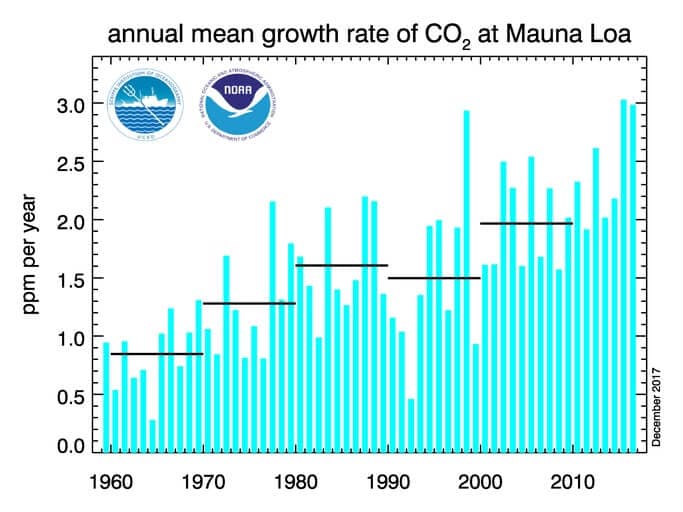
The fact that industrial emissions are increasing the amount of carbon dioxide in the atmosphere quite dramatically has been measured very precisely and reliably demonstrated. The anthropogenic origin of the increase in carbon dioxide is also confirmed by comparing the ratio of radioactive and stable carbon, which makes it possible to study the origin and transport of carbon in the environment. We also know quite a lot about the development of carbon dioxide concentrations throughout history, although naturally with far less precision. The rise in global temperature in the past and current centuries has likewise been well confirmed by increasingly accurate measurements. These measurements are analysed in greater detail in these popular articles (here, here, here and here)
Assessing the scale of natural and anthropogenic influences on the climate and its future development is considerably more difficult. Climate models are continually improving and becoming more accurate thanks to advances in climate monitoring, a better understanding of numerous natural processes and different climate cycles, as well as rapidly growing computing capacity. Nevertheless, they still contain a number of quite substantial systematic uncertainties. Alongside the most likely scenarios for different increases in carbon dioxide concentrations, there are also a number that are less likely but considerably different. It is not entirely ruled out that, over a more distant horizon, anthropogenic emissions will help balance natural cycles and prevent the onset of another ice age. However, if we admit this in view of the uncertainties in our knowledge, then we must also admit that those uncertainties encompass scenarios far more catastrophic than those presented as the most likely. Uncertainties must be handled very carefully in modelling and simulations.
It is necessary to realise that it was the use of fossil resources and the availability of energy that enabled a dramatic improvement in living standards, as well as the capacity to confront different disasters and address their consequences. They likewise gave us the ability to adapt to and deal with changing weather patterns. The development of technology and science, which would have been difficult without them, also makes it possible to study and understand climate development. It also provides us with the means to transition to other resources and to address possible changes in different regions. We can see that social collapses caused, among other things, by a lack of energy resources have impacts orders of magnitude greater than even the largest industrial accidents.
It may therefore prove to have fewer negative impacts to use fossil resources efficiently as well, in order to find and build measures that will enable us to confront the negative effects of climate change. The advantage of this option is that these resources and technologies will be useful even if the climate changes for natural reasons. Therefore, caring for the landscape and strengthening its most natural possible ability to manage water, developing crop varieties with very good performance characteristics that are also resistant to drought, heat, cold and pests, and preparing effective procedures for dealing with the consequences of natural disasters are approaches we should certainly support. And this is certainly a better solution than proposals, which also appear, to return to a pre-industrial way of life. The order-of-magnitude reduction in population that this would require could not truly take place humanely. On the other hand, it is clear that every reduction in dependence on fossil fuels that does not create dramatic risks to social stability is welcome.
Successful pathways to low-emission power generation
Fossil fuels currently account for more than 80 % of humanity's total energy needs and provide more than 65 % of electricity generation. In 2015, 16 % of electricity was generated from hydropower, 11 % from nuclear power and only 7 % from renewable sources other than hydropower (including 3 % from wind and 1 % from photovoltaics). Electrification appears to be the most promising direction for moving transport away from fossil fuels, while one of the most environmentally friendly options for eliminating emissions associated with maintaining thermal comfort is the use of electricity or heat pumps, which require electricity. If low-emission power generation can be achieved, the overall path to low-emission energy and society is open to a considerable extent.
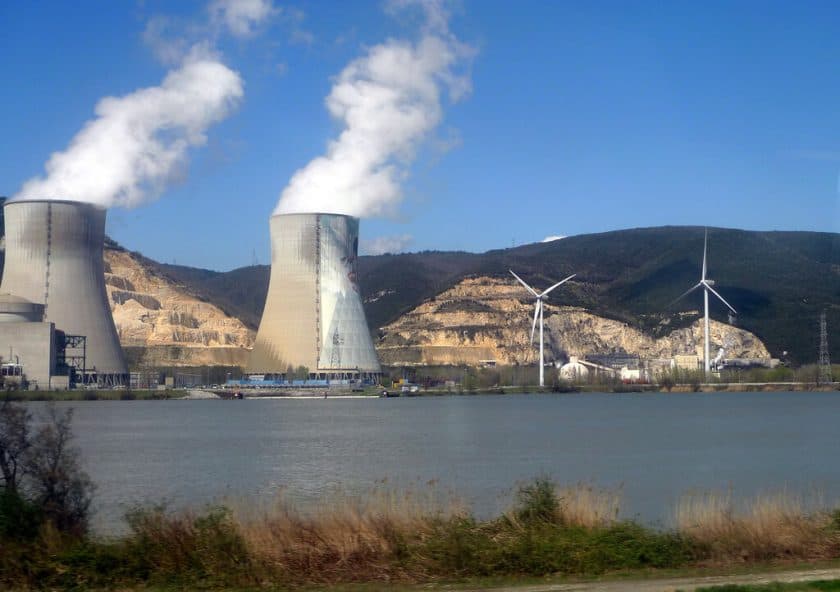
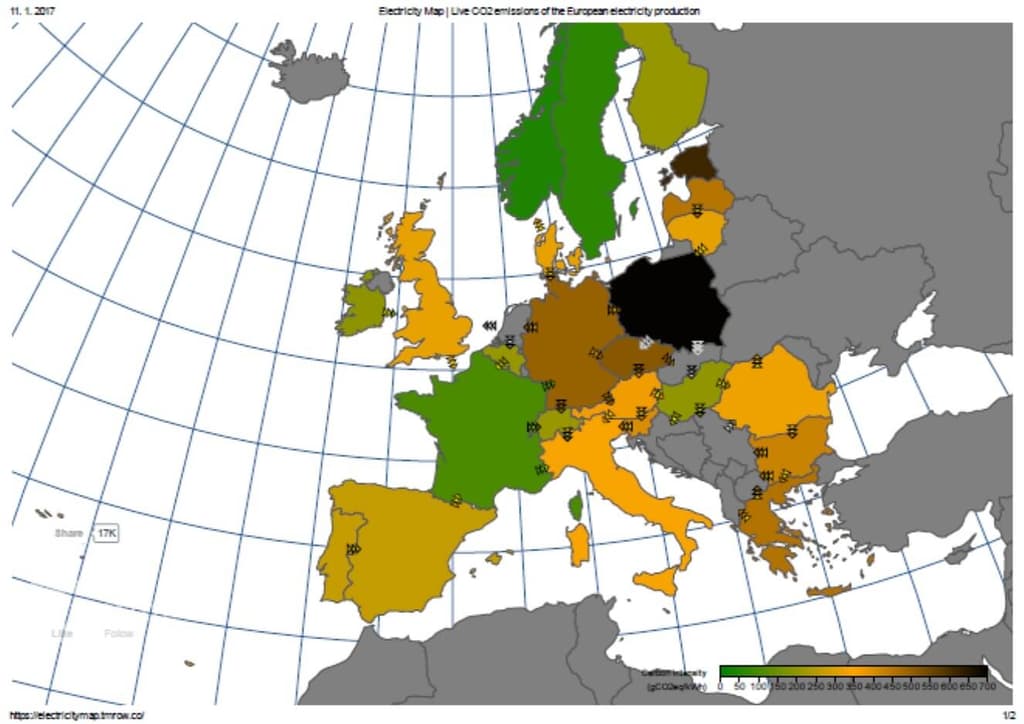
One of Europe's largest countries has succeeded in building a low-emission power system. Over roughly ten years, France built a nuclear power sector that now has 58 reactors with a total capacity of 63 GWe and has generated more than 70 % of the country's electricity since the early 1990s. When these units were being commissioned, total carbon dioxide emissions there fell by an average of 2 % annually. The combination of nuclear and renewable sources has enabled France's power system to operate for more than a quarter of a century with a minimum of fossil generation and therefore minimal carbon dioxide production. The very high share of nuclear units means France has had to use reactors not only in baseload operation but also for load-following. In practice, they have disproved and continue to disprove the myth that nuclear reactors cannot be regulated. In 2022, France intends to dispense entirely with coal-fired power plants.
The Canadian province of Ontario eliminated coal-fired generation entirely in 2014, and the use of gas in electricity generation is also minimal. Yet as recently as 2003, coal accounted for a quarter of its electricity. It has thus become an example of a highly successful path to low-emission power generation. This path was embarked upon in the 1970s and 1980s, when Canada built a nuclear power sector based on domestically developed CANDU heavy-water reactors. It was then completed around the turn of the millennium, when Ontario's representatives decided to ensure the near-complete elimination of emissions from power generation. Their “Energiewende” was predominantly achieved by refurbishing existing CANDU nuclear power plants, which made it possible to increase their electrical output and extend their operation for another quarter-century.
Canada currently has 19 reactors with a total capacity of 13,5 GWe, complemented by efficiently used renewable sources, mainly hydropower and biomass, for which it has very great potential. In 2014, nuclear units generated 62 % of electricity in Ontario, a modern, technologically advanced region with 13,4 million inhabitants. This is equivalent to a country the size of Czechia or other medium-sized European states. It clearly showed that such countries have an effective and relatively rapid path to a power system entirely without coal and with a negligible share of fossil sources.
In Sweden, Switzerland and Slovakia, nuclear and renewable sources complement each other very well. Depending on the specific conditions in a given year, nuclear sources generate between 40 and 50 % of electricity in these countries. All of them use geographical conditions that are ideal for hydropower. In Slovakia, this includes the well-known Váh cascade. Sweden can in turn use extensive forestry as a source of biomass and ideal wind conditions at many locations along its coast. All of this means that the use of fossil sources for electricity generation is negligible or very low. In Slovakia, which currently has 87 % of electricity from low-emission sources (the 2014 result), the situation will improve further after the commissioning of two new reactors at the Mochovce nuclear power plant.
In Sweden, the transition to low-emission energy took place over roughly ten years at the turn of the 1970s and 1980s, and in Switzerland during the 1970s. During that period, carbon dioxide emissions in these countries fell by 3 % annually. A decade was also sufficient for nuclear power in Belgium, built at the turn of the 1970s and 1980s, to generate more than 50 % of electricity from nuclear sources. Sweden, Switzerland and Belgium are also examples of what established priorities lead to. Their main priority is not to increase electricity generation from fossil sources. Thus, although these countries announced nuclear phase-outs at different times, they stepped back from concrete measures in that direction after finding that fossil sources would replace it. Belgium was the most recent case. This was despite the country facing a number of problems with its nuclear units over the past year.
Finland and the United Kingdom have also embarked on a path based on an energy mix of nuclear and renewable sources, although it must be stressed that they have encountered a number of problems along the way. We have already written about those associated with the construction of new nuclear units. The United Kingdom has succeeded in keeping its ageing fleet of gas-cooled units in operation; it currently generates 18 % of the country's electricity. At the same time, numerous wind turbines are being built in coastal waters and onshore, and photovoltaic panels are also being installed. Greater use of gas-fired plants and replacing coal with wood burning have then made it possible to meet very stringent targets for reducing carbon dioxide emissions. The United Kingdom plans to close all coal-fired power plants by 2025. However, it must be stressed that replacing coal with imported wood pellets is not an environmental solution. We will return to this point later.
So far unsuccessful pathways to low-emission power generation
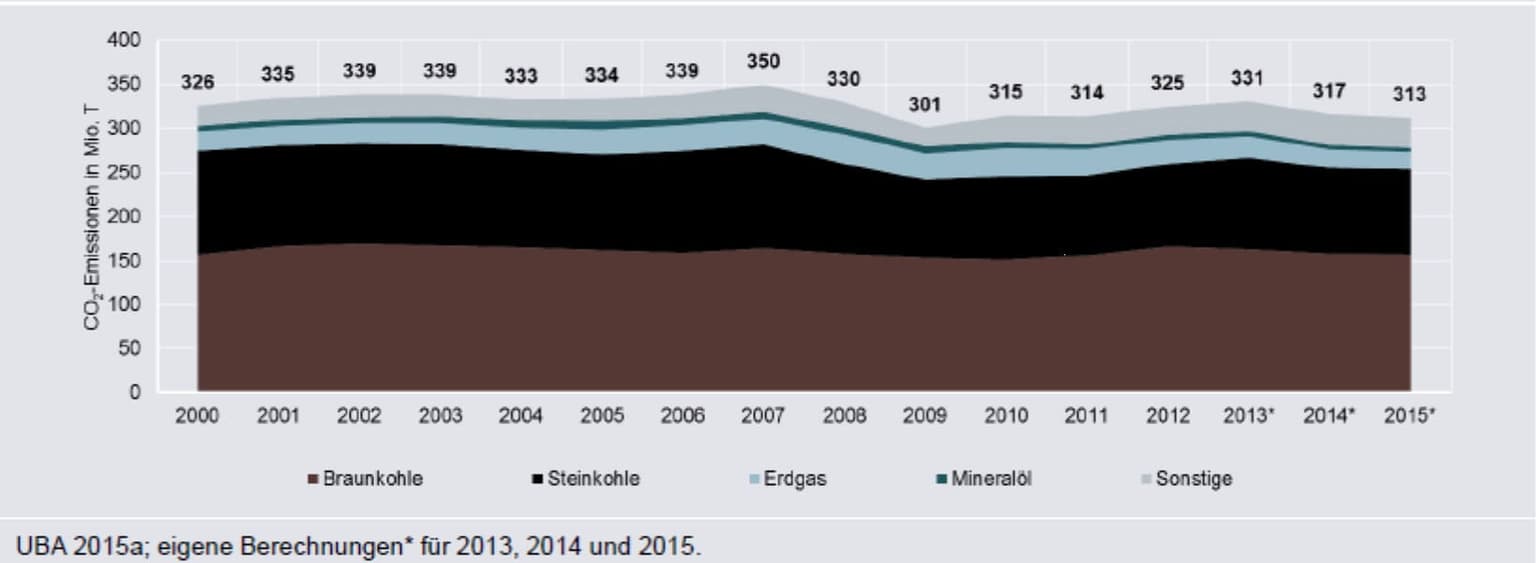
Germany and Denmark can serve as examples of not particularly successful paths to low-emission energy. The German Energiewende has the shutdown of nuclear power plants as its priority objective. In this respect, it is being fulfilled very well. However, it has not yet been successful in terms of reducing emissions. The result is that, despite the intensive build-out of renewable sources, the reduction in fossil-fuelled electricity generation is very slow. While Ontario has ended coal-fired generation and France has a minimum of fossil sources and plans to end coal use completely in a few years, 15 years after the Energiewende began, 43,3 % of Germany's electricity was generated from coal in 2016 (according to Agora). Germany is therefore Europe's largest producer of emissions and also has high per-capita emissions. Low-emission non-fossil sources supplied only 48,2 % in total, while fossil sources supplied 51,8 %. Renewable sources supplied 33,5 % and nuclear power still accounted for 14,8 %. Wind turbines, mainly along the coast, provided the largest share of renewable electricity, at 14,4 %.
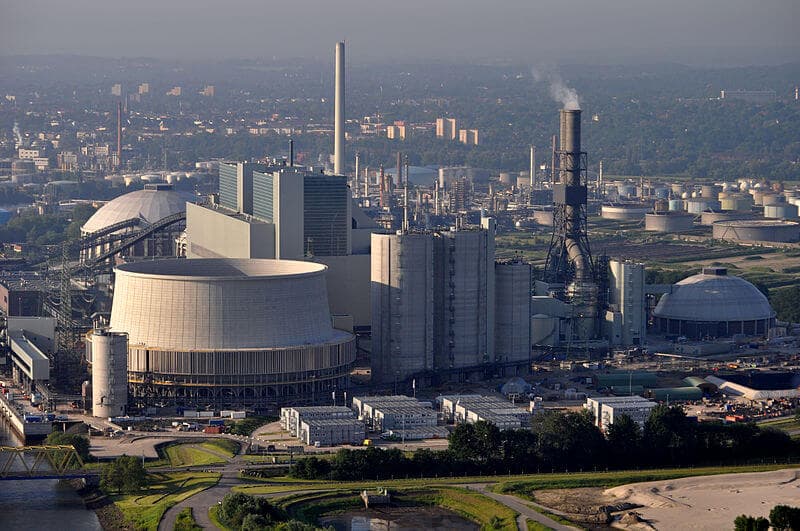
Germany is completing one coal-fired power plant after another. The recent start-up of one of Germany's largest coal-fired power plants in the Hanseatic city of Hamburg illustrates this trend and the environmental problems of the German Energiewende. The first unit at the Moorburg power plant was connected to the grid in February 2015, when Moorburg B began operating. The other unit, Moorburg A, started up in August 2015. The plant's total electrical output is 1650 MWe, and each of its two chimneys rises to a height of 102 m. The decision to build this power plant was made in 2006, when the Energiewende had already been under way in Germany for six years. It was therefore clear that the generation of decommissioned nuclear units would need to be replaced. Northern Germany, including Hamburg, is suitable for intensive and efficient use of wind power, and transporting this electricity does not pose as great a problem as it does in Bavaria, for example.
However, since wind intensity also varies very significantly over time here and periods with very little wind are not rare, sources are needed that can step in for wind turbines when necessary. And this is required quite often and, above all, quickly. This main task also influenced the design of the new coal-fired plant. The power plant can change output by up to 600 MWe in a quarter of an hour. Its main feature is its ability to change output very rapidly in response to changing wind conditions. Rapid changes in combustion, heat production and turbine operation place enormous demands on its design. Efforts to achieve the highest possible efficiency and combined heat and power generation have therefore been sacrificed to flexibility to a considerable extent. Even so, efficiency is a high 46 %, and under ideal conditions the plant can supply around 650 MWt to district heating distribution systems. Meeting top technical parameters and demanding emissions-reduction requirements (flue-gas cleaning takes place in three stages) led to a two-year construction delay and pushed the plant's cost to roughly 3 billion EUR (roughly 80 billion Czech crowns).
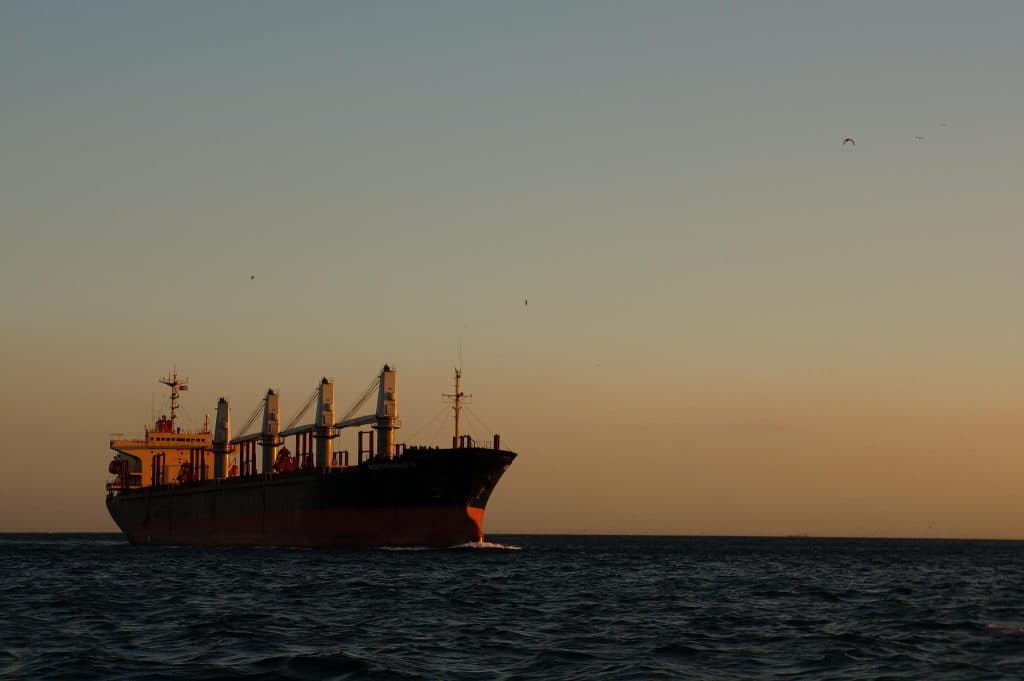
It should also be noted that coal-fired units must operate partly even when wind conditions are good. These stable and reliable sources must maintain grid stability, or be kept in hot standby. They must therefore be operated, even if at lower output. At full utilisation, the power plant would supply 11 TWh of electricity annually and produce 8,7 million tonnes of carbon dioxide. However, because it will be used for balancing, its utilisation factor is expected to be roughly half that. It will thus supply just over 5 TWh and carbon dioxide emissions will be 4 million tonnes. The plant will use hard coal imported by sea. At full operation, its consumption will be roughly 4,2 million tonnes of coal, or more than 450 tonnes of coal per hour.
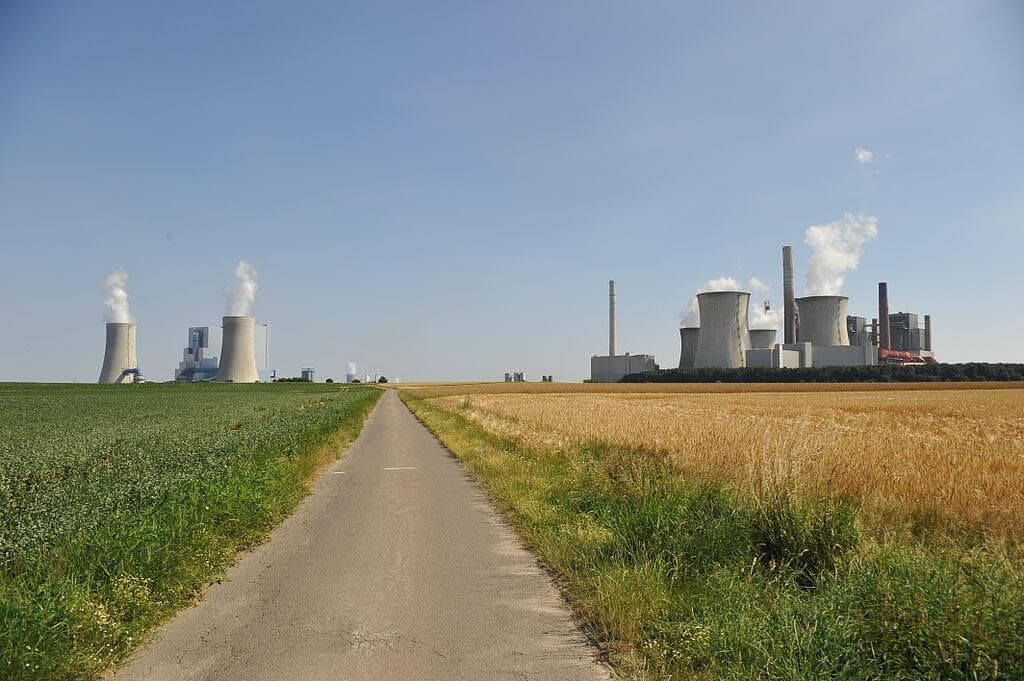
The project is another in a series of coal-fired plants under construction as part of the ongoing German Energiewende. Its most visible example is the construction of two 1100 MWe coal-fired units at the Neurath power plant, which now has seven units in total and, with overall capacity of 4400 MWe, has become Europe's second-largest coal-fired power plant, naturally with corresponding emissions. A 731 MWe unit at the Wilhelmshaven plant has also been completed, as has a 1055 MWe unit at the Datteln plant.
It was originally assumed that, in addition to renewable sources, nuclear power plants and old coal-fired plants would be replaced mainly by gas-fired plants. However, the closure of old coal-fired units has been delayed in recent years for financial reasons. New gas-fired units are not operating either, and the share of coal-fired power plants in Germany's electricity generation has been rising again for more than five years. Coal-fired units help keep electricity prices on the exchange low and slow the rise in electricity prices for consumers caused by growing subsidies for renewable sources and other Energiewende costs. New coal-fired units mostly use imported hard coal, but older plants whose operation is being extended use lignite, and Germany is thus destroying further villages even as Czech mining limits protect them here. Germany mines almost 200 million tonnes of lignite annually, and a number of municipalities, including Lakona, Horno and others, have fallen victim to mining since 1990. And several more will most likely fall because of the Energiewende.
The main shutdown of nuclear units, which will predominantly affect Bavaria, is only just beginning. The first indication was the closure of the 1345 MWe Grafenrheinfeld nuclear power plant in 2015; Gundremmingen B was shut down in 2017. Until now, nuclear power supplied around 50 % of electricity in one of Germany's most industrialised federal states. That electricity will have to be generated elsewhere. It was assumed that it would be replaced by imports of wind power from the north and gas-fired sources in Bavaria. However, the high-voltage lines intended to transport wind power from northern Germany to Bavaria have not yet even reached the planning stage. Once a more precise route for the first of them was mapped out, a huge wave of opposition arose among thousands of owners of affected land, especially in Bavaria. Bavarian politicians are therefore putting considerable resistance to the construction of the lines. This eased only after a promise that most of the lines would be underground. However, it is questionable how public attitudes will change once landowners find out what locating the lines really means for the use of their land. At the same time, project costs could rise by an order of magnitude and construction times will lengthen considerably. The price, which will naturally be reflected in consumer electricity prices, and the date when the lines will be available are therefore highly uncertain. It is quite likely that, in order to keep consumer electricity prices reasonable, Bavaria will also have to rely more on coal than on gas.
The situation has gone so far that even proponents of the Energiewende realise that Germany will not meet its commitment to cut carbon dioxide emissions by 40 % from 1990 levels by 2020 without radical measures in the power sector. The difficulty of the task is also apparent from the fact that, owing to the very limited emissions reductions in recent years, carbon dioxide production must fall by three percent annually in this and subsequent years to meet it. In 2015, however, the reduction was only 1,5 %, and emissions even rose in 2016.
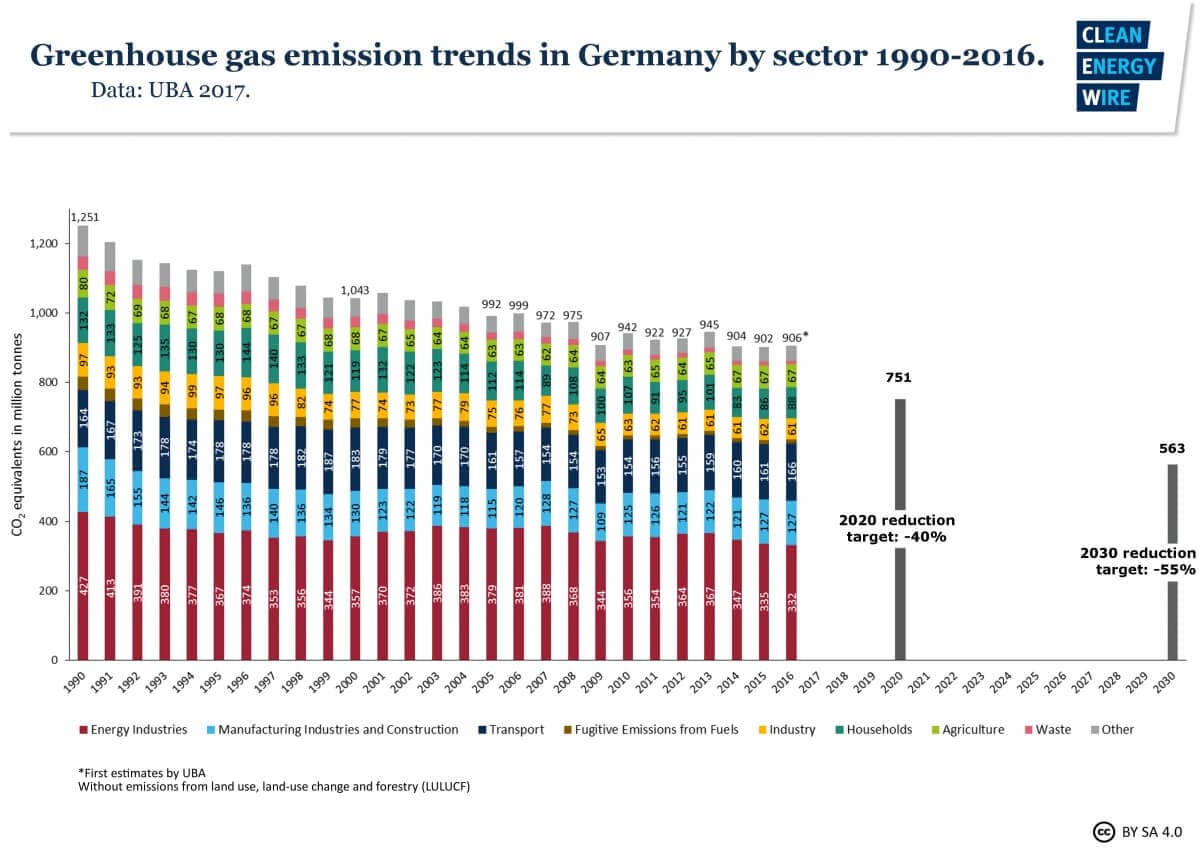
Green expectations regarding the potential for savings through insulation or increased efficiency are failing to materialise despite considerable support and subsidies. How carbon dioxide production in the power sector can be reduced by 22 million tonnes remains a complete mystery. To meet this target, the economy minister ordered the closure of eight of the oldest lignite-fired power plants with a total capacity of 3 GWe. However, the corresponding reduction in carbon dioxide will certainly not be sufficient, and the emissions from the described new units entering operation must also be taken into account.
Germany has seen a large surplus of capacity and pressure to export electricity in recent years. It should be recalled that this is an inherent manifestation of the Energiewende. If wind and solar electricity generation is to be maximised, the total capacity of each source must be able to cover all required capacity under conditions favourable to it. At the same time, fossil-fuelled capacity must also cover all required output when the sun is not shining and the wind is not blowing. Thus, three power plants—solar, wind and fossil-fuelled—are needed for every megawatt of required capacity. At the same time, some stable fossil units must operate at least partially even under good conditions for solar and wind sources, in order to maintain grid stability and allow it to be balanced. Therefore, a large surplus of capacity and efforts to export surplus electricity, both renewable and fossil-fuelled, are a necessity for such a system. This can be seen very clearly in Denmark: in order for wind to account for more than 40 % of its electricity, it sometimes generates 135 % of its needs from wind alone. At that time, many of its fossil-fuelled power plants are idle or operating at minimum output. It therefore necessarily has a large capacity surplus and must be able to export surplus electricity during windy periods somewhere. Conversely, it needs to import electricity from somewhere during windless periods. Denmark's energy concept is based on a large surplus of capacity and intensive use of its neighbours. Moreover, Denmark has become a net importer of electricity in recent years, with net annual imports amounting to tens of percent of demand.
Let us recall Germany's stated targets for the share of low-emission electricity generation. Increasing the share of electricity from renewable sources in total gross electricity consumption to 35 percent by 2020, 50 percent by 2030, 65 percent by 2040 and 80 percent by 2050. The question is whether these targets are realistic. Even if Germany were able to achieve them, it would not reach even in 2050 the share of low-emission sources that the countries mentioned in the previous section had already achieved thirty years ago. Germany will not meet, even after half a century of intensive Energiewende, the targets for reducing power-sector emissions that France achieved in one decade.
The article will continue in part two…
Note
This article is the fourth in a series that will examine the potential of individual energy sources in Czechia, with the aim of initiating a discussion about the future development of Czech power generation and its pitfalls and opportunities. This is especially relevant because several years have passed since the last update to the energy strategy and, in reality, not much has been done in the energy sector here. At the same time, a number of risks are emerging, so it is very important to gain an overview of energy-sector developments and conditions both globally and in Czechia. The first three parts were devoted to nuclear sources, wind energy and photovoltaic power plants.
The article was originally published on OSEL.CZ
Translation disclaimer
This article is a machine translation of the Czech original and has not yet been fully reviewed. In case of any doubt, please refer to the Czech version.
Sdílejte článek prostřednictvím:
You might also like
23 October 2026, 11:01
23 October 2026, 06:34