
23 October 2026, 14:38
Loading...
Spanish blackout 2025: How a lack of inertia led to a widespread outage

Jakub Malý
2 October 2025, 10:49
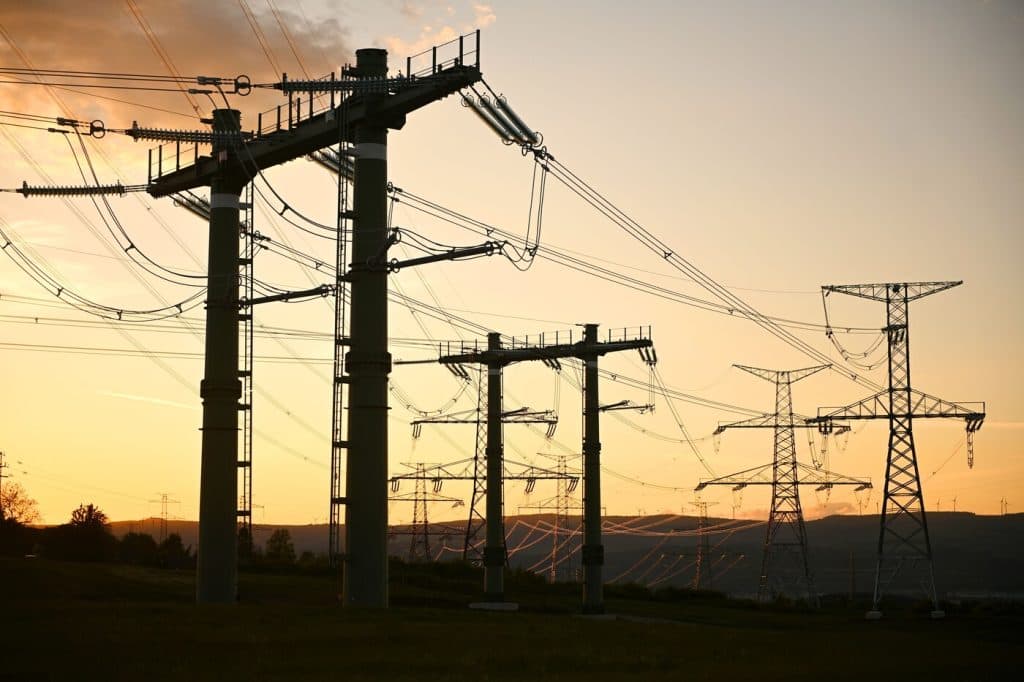
The April blackout in southern Spain, which also affected Portugal, was caused by a low level of synchronous generation capacity and insufficient system inertia, according to the latest study by Professor Luis Rouco Rodríguez of Universidad Pontificia Comillas. The report shows that the level of inertial support was approximately 35% lower than recommended by ENTSO-E, which, combined with the disconnection of part of the transmission system, led to frequency oscillations, cascading failures and ultimately a complete collapse.
According to the published findings, only one gas-fired power plant was operating in southern Spain at the critical moment, whereas five would normally be in operation under the "reinforced operating mode". This mode was adopted following experience from previous incidents specifically to increase the stability of the Iberian system when there is a high share of non-synchronous sources. The absence of sufficient gas-fired or other synchronous sources meant that the system lacked the inertia required to dampen fluctuations.
The situation was further exacerbated by the disconnection of around 35% of the transmission system in the affected regions, leading to the further spread of failures. The resulting frequency oscillations caused generation to be progressively disconnected, while overvoltages also developed that could no longer be controlled. This chain of events resulted in a complete supply outage. Transmission system operator Red Eléctrica (REE) subsequently argued that voltage conditions remained within the permissible range, but according to the Aelec association and Professor Rouco, the normal operating range should be limited to 420 kV, lower than the emergency threshold of 435 kV.
REE's official report, published following the incident under procedure P.O.9, ruled out the possibility of a cyberattack and described the event as a chain of technical failures linked to a lack of synchronous support and errors in voltage management. In July 2025, ENTSO-E confirmed the Spanish side's conclusions and highlighted the structural vulnerability of the Iberian system, which has long been undersized in terms of cross-border interconnections. Interconnection capacity with France amounts to only around 3% of installed capacity, compared with the European target of 15%.
The study and expert analyses show that rapid decarbonisation without parallel "electrotechnical" modernisation of grid stability can be risky because of the demands placed on the power system. From a European energy perspective, the April blackout has several important implications.
First, it confirms the value of ensuring a minimum level of synchronous generation in every operating hour, through large rotating sources or synchronous condensers. Second, it demonstrates the need for the rapid deployment of "grid-forming" technologies in batteries and renewable sources that can actively stabilise frequency and voltage. Finally, a strategic priority is strengthening cross-border interconnections, such as the planned line across the Bay of Biscay, which could significantly increase the stability of the entire Iberian grid.
Translation disclaimer
This article is a machine translation of the Czech original and has not yet been fully reviewed. In case of any doubt, please refer to the Czech version.
Sdílejte článek prostřednictvím:
You might also like
23 October 2026, 11:01
23 October 2026, 06:34