
23 October 2026, 14:38
Loading...
Study: Developing and modernizing electricity grids will require huge investment

Eduard Majling
22 November 2024, 06:38
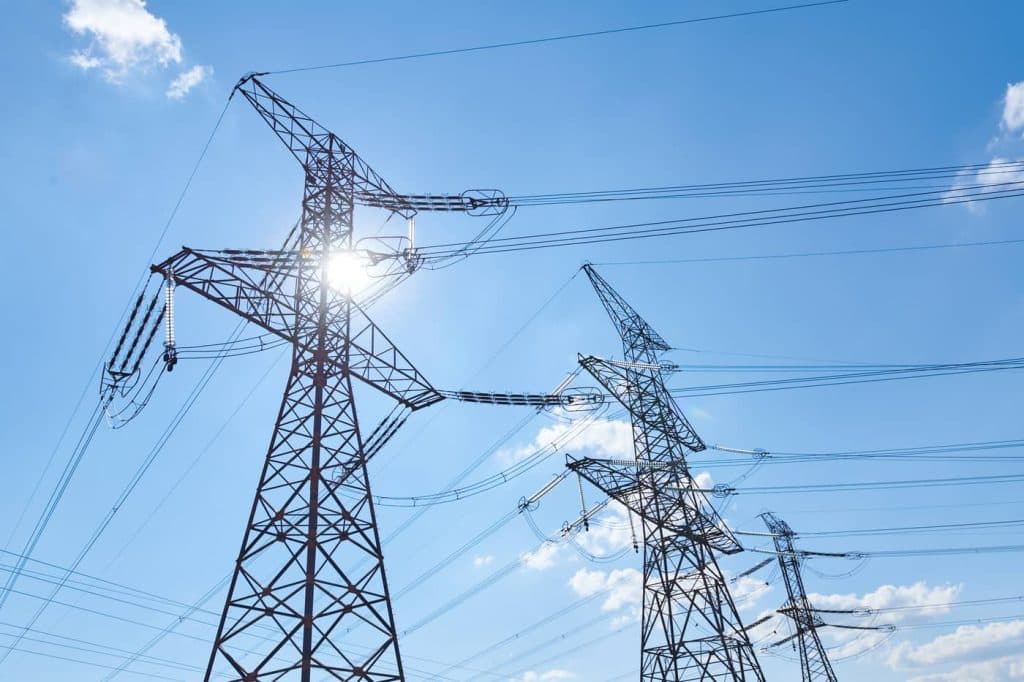
As the transition to renewable energy continues and ambitious plans take shape to electrify transport, industry and other sectors, electricity demand is expected to grow significantly in the future. As consumption—and therefore generation—increases, and its nature changes, so too do the demands on grids to transport larger volumes of electricity through transmission and distribution networks. Bloomberg New Energy Finance expects global investment in grids to reach hundreds of billions of dollars a year by the end of the decade.
A robust transmission and distribution system is the backbone of every reliable power system. But maintaining, modernizing and further developing it does not come for free.
Alongside growing demands for high-capacity transmission during periods when conditions are favorable for generating electricity from solar and wind power plants, significant investment is also needed at lower voltage levels. Small-scale generators have also become increasingly prominent in recent years. Yet distribution networks, some of them decades old, were not designed to operate in this way.
Bloomberg New Energy Finance (BNEF) also expects huge investment in power infrastructure. This will be driven primarily by the aforementioned growth of renewables, electromobility and other low-carbon technologies.
Large solar and wind farms require a robust grid
Although wind and solar power plants can enable decentralization, photovoltaic panels and wind turbines are often grouped into larger farms. Economies of scale matter when it comes to large industrial installations. It is also important for investors to secure suitable sites with good conditions for generation, which can also lead to clustering of power sources, particularly wind farms.
These sources can therefore commonly be located tens or hundreds of kilometers from the areas they supply with the required power. Given the intermittent nature of their output, transmission lines and other grid components also often need to be sized for higher capacities than these sources deliver most of the time.
In its latest projections, BNEF considers two scenarios: the Economic Transition Scenario (ETS) and the Net Zero Scenario (NZS). Both scenarios anticipate a significant need for investment in grid infrastructure, differing mainly in its scale.

The energy transition, whether gradual or accelerated, will require significant investment in transmission and distribution systems. Source: Bloomberg New Energy Finance
In the Net Zero Scenario, BNEF expects global investment in electricity grids to rise to more than $800 billion a year by the end of the decade. According to the company, that is almost three times the amount invested in this area last year. The need for increased grid investment will also be felt in the Economic Transition Scenario, where BNEF expects nearly $500 billion a year over the same period. That is more than half above the average for the past four years.
The significant increase in transmission system investment under the ETS scenario is also linked to expectations for renewable power generation. As renewable energy continues to grow and is expected to account for more than three-quarters of electricity generation in this scenario by the middle of the decade, new transmission lines will need to be built. In this case, BNEF expects the length of transmission lines to double.

Under the Net Zero Scenario, investment is expected to shift increasingly from generation to transmission and distribution over the coming decades. Source: Bloomberg New Energy Finance
Not just new kilometers, but also modernization and replacement
Investment will also be needed in distribution, but for different reasons. BNEF does not expect the total length of distribution networks to grow as dramatically, but modernization and digitalization will require substantial investment. BNEF predicts that the introduction of digital technologies will account for an average of 12% of annual distribution investment between 2040 and 2050. Further digitalization-related spending will also come in the form of operating costs.

By the middle of this century, investment in distribution systems is expected to exceed investment in transmission. Digitalization will require substantial funding. Source: Bloomberg New Energy Finance
Higher costs are also likely to be reflected in customer bills, often through the regulated component. BNEF expects investment in transmission and distribution networks per unit of energy to double by the end of this decade under the Net Zero Scenario.
This is not a global average, but a forecast for Europe and the United States. However, doubling investment per unit of electricity transmitted or distributed does not necessarily mean regulated charges will immediately double. That is because investment cycles are long and these assets are depreciated over periods of up to several decades.
In the coming years, however, investment volumes are expected to fall again relative to the volumes of electricity flowing through grids. One reason is the expected increase in electricity consumption. In its more moderate Economic Transition Scenario, BNEF projects global electricity demand to rise by 70% to a total of 43 thousand TWh a year in 2050.

Investment in transmission and distribution networks is expected to grow faster than electricity consumption in the coming years. Source: Bloomberg New Energy Finance
Despite the expected significant investment in electricity grids, systems with a large share of renewables will still be hard pressed to do without flexibility resources. BNEF also does not see this coming down to just one or two technologies or approaches, but the company sees the greatest potential in battery storage and smart charging of electric vehicles. By the middle of this century, these could help shift up to 3000 TWh of electricity a year over time,
Storage technologies in particular have the potential to help make more efficient use of systems with variable generation or demand, much as underground gas storage facilities do, for example.
Translation disclaimer
This article is a machine translation of the Czech original and has not yet been fully reviewed. In case of any doubt, please refer to the Czech version.
Sdílejte článek prostřednictvím:
You might also like


23 October 2026, 11:01


23 October 2026, 06:34