23 October 2026, 14:38
Loading...
The current state and future of nuclear energy in Czechia (part 1)
Vladimír Wagner
3 January 2018, 18:32
Nuclear power plants are among the low-emission sources with perhaps the greatest potential in Czechia. It is therefore useful to look at the state of nuclear power both globally and in Czechia, as well as the prospects that can be expected in this field.
At present, three key issues are shaping nuclear power and determining its future.
The first and crucial issue is the commissioning of the first Generation III reactors, and whether the transition to these reactor types can be achieved and whether they will also be economically successful. The first units of three types have already entered operation: the Japanese ABWR boiling water reactor, the South Korean APR1400 pressurised water reactor, and the Russian VVER1200 pressurised water reactor, which is the first Generation III+ reactor in operation. Others are close to start-up.
The second major issue is the development of competitive small modular reactors. So far, the furthest progress has been made towards floating nuclear power plants, the first of which is already under construction in Russia. There are a number of other concepts under development that could see their first deployments over the next ten years.
The third issue is the transition to Generation IV reactors. Here, the development of fast sodium reactors is the most advanced; prototype reactors that serve as their precursors already operate as commercial power plants in Russia and are being started up in India.
The following sections first provide an overview of nuclear technologies and their principles. We will then examine the current state of nuclear power and its expected development, and also look at the potential role of nuclear sources in Czechia.
Nuclear reactors and their various types
Nuclear reactors use a fission chain reaction to release energy. This is made possible by the fact that heavy nuclei have a greater excess of neutrons over protons than medium-heavy nuclei. Their fission therefore releases several neutrons in addition to energy. At the same time, the capture of a neutron by such a heavy nucleus releases binding energy. Because protons and neutrons tend to pair up in the nucleus, the energy released when an even neutron is captured is much higher than when an odd neutron is captured. In a heavy nucleus with an odd number of neutrons, the energy released by neutron capture is sufficient to split it. Uranium has 92 protons, an even number, so its odd isotopes, such as uranium 235 or 233, can undergo fission through neutron capture. Such uranium isotopes are described as fissile. By contrast, an even uranium isotope such as uranium 238 cannot undergo fission through simple neutron capture. This is possible only when the neutron has sufficient energy to bring into the nucleus.
Nuclei heavier than lead are unstable and decay through radioactive decay. However, some have very long half-lives. These include uranium 238, with a half-life of 4.5 billion years; uranium 235, with a half-life of 0.7 billion years; and thorium 232, with a half-life of 14 billion years. These nuclei were formed in supernova explosions, the final stages of very massive stars, and have been present in the Solar System since its beginning. They have gradually decayed throughout its existence. Uranium 235 has a shorter half-life and therefore decays more quickly. This is why natural uranium ore contains only 0.7 % of this fissile isotope.
Not all neutrons produced during fission lead to further fission. They can be captured by nuclei that do not undergo fission. The task of a nuclear reactor is to ensure that roughly one neutron released during fission causes another fission event. In that case, the fission chain reaction is stable, controlled and sustainable. Neutrons with very low energies and velocities have a very high probability of being captured by fissile nuclei and causing fission. However, neutrons produced by fission have relatively high energy. It is therefore advantageous to slow them down – moderate them. Neutrons lose the most energy when scattering off nuclei of similar mass, i.e. the lightest nuclei. Water or graphite can be used, for example, as these materials contain very light elements.
There are therefore two basic types of reactor. Thermal reactors use moderated neutrons with very low velocities close to their thermal motion, while fast reactors do not moderate the neutrons.
Individual reactor types differ according to the materials they use as fuel, moderator and coolant. Most combinations were tested in the 1950s and 1960s, and configurations that proved advantageous for power generation were gradually selected to form today’s global nuclear fleet. The most commonly used are pressurised water reactors and boiling water reactors, which are moderated and cooled by water. Examples of pressurised water reactors include the units at Dukovany and Temelín in Czechia.
Another type in use is the reactor moderated and cooled by heavy water, which contains heavy hydrogen – deuterium. Its advantage is that deuterium absorbs neutrons with a lower probability than light hydrogen. With a suitable configuration, the reactor therefore requires much less enrichment with the fissile uranium 235 isotope and can use natural uranium. Examples include Canadian CANDU reactors.
Graphite-moderated reactors can be cooled by water, as in the RBMK design known from Chernobyl, or by gas. The United Kingdom developed and uses graphite-moderated, gas-cooled Magnox and AGR reactors.
The first nuclear reactor was started in 1942 under the leadership of Enrico Fermi. The first reactor to supply electricity began operating in June 1954 in Obninsk, Russia. Its capacity was 5 MWe. The first commercial nuclear power plant, Calder Hall 1, began operating in the United Kingdom on 27 August 1957, with a capacity of 50 MWe.
A number of first-generation reactors were built in the 1960s, testing individual options and demonstrating that nuclear power could be used for electricity generation on a large scale. Several reactor types gradually proved successful and began to be built and used in larger numbers. The 1970s and 1980s saw the transition to Generation II reactors, which gradually replaced Generation I reactors. These were designs developed from successful models of the preceding generation. The main objectives were to improve safety and economic parameters. The last Generation I reactor ceased operation in the United Kingdom at the end of 2015. It was a graphite-moderated, gas-cooled Magnox reactor that had supplied electricity for 45 years.
Generation III and III+ reactors
The first Generation III reactors are now beginning to enter service and are expected to be the main drivers of conventional nuclear power. They were developed by evaluating the most successful Generation II reactor models and have much better safety, operational and economic characteristics.
Key safety improvements include double containment capable of withstanding an aircraft crash; widespread use of inherent and passive systems, including for cooling, enabling the reactor to withstand 72 hours of a complete power outage without any intervention; and a core catcher in the event of a core melt. Further safety features were strengthened in response to the Fukushima power plant accident.
Efficient operation is enabled by making output as controllable as possible, the importance of which is growing with the ever-higher share of fluctuating renewable sources connected to the grid. Modern pressurised water reactors can load-follow between 30 % and 100 % of nominal output at a rate of 1 – 3 % of nominal output per minute. Changes can take place even faster over a smaller output range. An example of current parameters is the EPR reactor, which, at a nominal output of almost 1500 MWe, can change output between 60 and 100 % of nominal output at a rate of 5 % of nominal output per minute while maintaining a constant temperature and without reducing the service life of reactor components. If some thermal stress and a risk of reduced service life for certain components are accepted, this rate can reach 10 % per minute. The EPR reactor should be able to change output between 25 % and 100 % within 30 minutes.
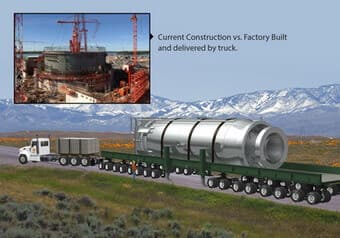
Construction uses modularity, with a number of larger assemblies manufactured at production plants and delivered to the construction site already assembled. Standardisation is widely applied and should enable mass production of most components and lower costs.
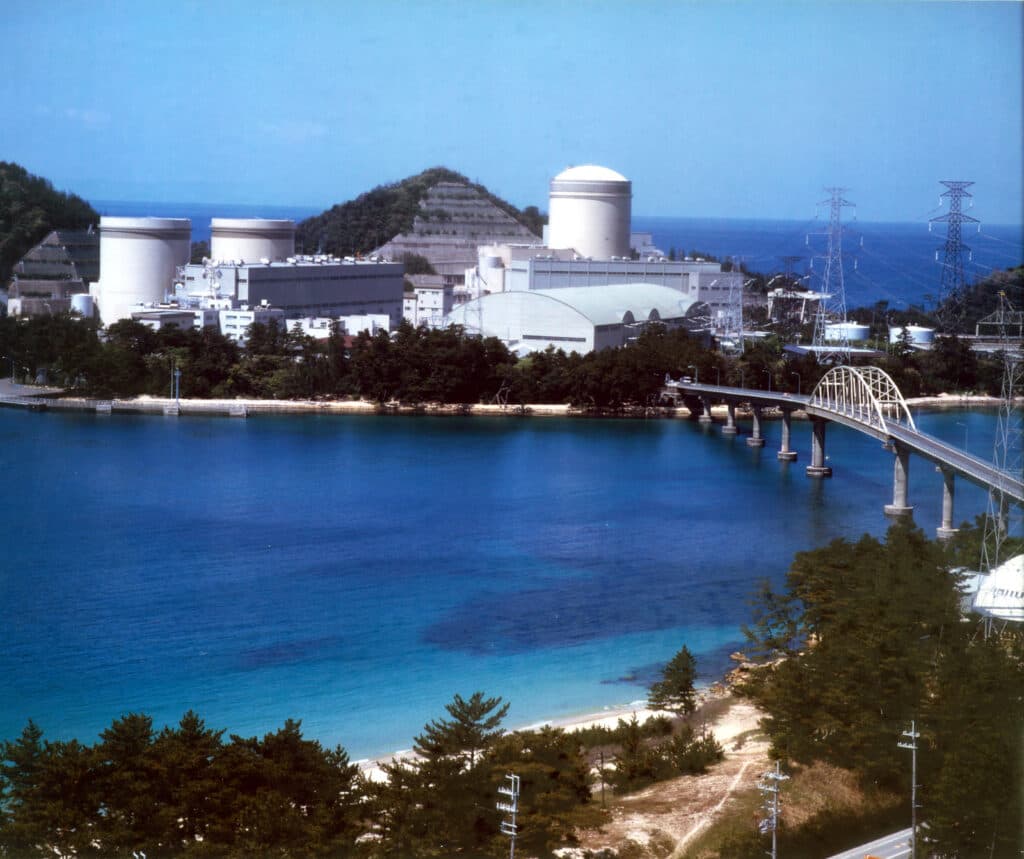
The first reactor type of this generation started up in Japan in 1996. It was the 1300 MWe ABWR (Advanced Boiling Water Reactor), currently offered by GEH (General Electric Hitachi Nuclear Energy) and Toshiba. Two such reactors were completed in 1996 and 1997 as Units 6 and 7 at the Kashiwazaki-Kariwa plant. These two units successfully withstood the second-largest earthquake ever to affect a nuclear facility in June 2007. After almost two years of inspections, analyses and modifications that further enhanced their seismic resistance, they were restarted in 2009. Other reactors of this type are Hamaoka 5, which started in 2004, and Shika 2, commissioned in 2006. All these units have been shut down since 2011 as a consequence of the Fukushima I nuclear power plant accident. They are currently not in operation and are undergoing modifications to comply with new safety rules. They will resume generation only after approval by Japan’s Nuclear Regulation Authority (NRA) and subsequent acceptance of their operation by local communities.
Two units of this type are under construction in Japan, namely Ohma and Shimane 3, while another two are at the Lungmen plant in Taiwan. Whether and when these units will be completed remains an open question and depends mainly on public attitudes.
During their operating period, the reactors proved fully successful and withstood an extremely strong earthquake. However, their operating history was too short for a serious assessment of whether they could truly meet the safety and economic expectations placed on Generation III reactors. Construction of ABWR reactors is also being prepared in the United Kingdom, with two units each planned at Wylfa Newydd and Oldbury B. Assessment of the design by the UK nuclear safety regulator, ONR, was expected to be completed by the end of 2017, with all required documentation and construction permits expected in 2018 and construction of the first unit anticipated to begin in 2019.
The second Generation III reactor to enter operation was the South Korean APR-1400 pressurised water reactor. It was developed by KEPCO (Korea Electric Power Corporation), and the first has operated as Unit 3 at the Sin Kori (Shin Kori) plant since 2016. Start-up of the same-type Sin Kori 4 unit was delayed and was expected in 2018. Another pair of APR-1400 reactors is being built at the Sin Hanul (Shin Hanul) plant. Construction of Sin Kori 5 and 6 and Sin Hanul 3 and 4 was expected to begin in 2017 and 2018. However, the deployment of new reactors in South Korea depends heavily on the attitude of politicians and the public. KEPCO is also building four such units at the Barakah plant in the United Arab Emirates (UAE). So far, work has proceeded to schedule. The first unit was completed at the beginning of 2017, and its start-up was expected during 2017 and 2018.
The last Generation III reactor type already in operation is the Russian VVER1200 pressurised water reactor, developed from units also operated at Temelín. It is the Novovoronezh II-1 unit, the sixth at the Novovoronezh nuclear power plant. Two VVER1200/V392M reactors have been under construction at this plant since 2007. Fuel was loaded into the first in March 2016, and a fission chain reaction began there on 20 May. Commercial operation began at the end of February 2017. The second unit was expected to start in 2017. The outer containment shell was installed in mid-2016 and work on its completion continues. The new units are replacing the oldest VVER440 reactors at the plant. Novovoronezh Unit 3 was the first facility of this type and was shut down on 28 December 2016 after 45 years of operation. During that time, it generated 118.7 TWh of electricity. Novovoronezh Unit 4 was expected to be shut down in 2018.
Pressure tests of the first VVER1200 unit at the second phase of the Leningrad plant began in May 2017, and it could begin operating by the end of the year. The second was expected only after 2018, when the first RBMK unit in the plant’s first phase would be permanently shut down after almost 45 years of operation. Start-up of the third and fourth units of Leningrad II was planned for 2020 and 2021, but was likely to be postponed.
Site preparation for the second phase of the Kursk nuclear power plant began in 2016. The project received a construction permit in June, after which excavation work began. Four 1255 MWe VVER-TOI (Typical Optimized, with enhanced Information) units are being built there to replace RBMK reactors in the plant’s first phase. Concrete pouring for the nuclear island of the first unit was expected to begin in 2018, with completion planned for 2022. It will be the reference project for this improved VVER1200 Generation III+ reactor design.
Nuclear reactors and nuclear technologies overall are becoming one of Russia’s strongest and most effective export products. Two VVER1200 units are being built at Belarus’s first nuclear power plant, Ostrovets. If the first reactor begins operation as planned in November 2018, Russia will have an operating unit not only at home but also abroad. This will be a major advantage when offering projects to foreign customers.
One VVER1200 unit is planned at the Hanhikivi nuclear power plant in Finland, two at Hungary’s Paks plant, and four reactors at Turkey’s Akkuyu plant (these will be VVER-TOI units). Construction of these reactors is being prepared in Bangladesh, where two units are to be built at the Rooppur plant. In this case, Russia is financing up to 90 % of the project. The project received permission to begin preparatory work, meaning geological surveys and site preparation. Work on the project, including the first concrete pours, was expected to begin in 2017. Completion of all the reactors mentioned is expected in the first half of the 2020s. A foundation stone was also laid in March 2017 for construction of two VVER1000 units with Generation III+ parameters at Iran’s Bushehr plant.
Three other Generation III reactor types are also under construction. AREVA’s EPR pressurised water reactor, with a capacity of roughly 1700 MWe, is being built at the Finnish Olkiluoto plant. Cold functional tests began there in mid-2017. A second is being completed at the French Flamanville plant, where the issue concerning reactor vessel quality was hopefully resolved in 2017. Completion of these units was expected in 2018. Another two at China’s Taishan plant are in the testing phase, with commissioning expected in 2017 and 2018. Construction of EPR units is also being prepared at Hinkley Point C.
Two pairs of AP1000 pressurised water reactors are being completed at the Sanmen and Haiyang plants. Their completion was expected in 2017 and 2018. In the United States, there are two pairs at the VC Summer and Vogtle plants. Their completion has been affected by the financial problems of Westinghouse and its then owner Toshiba. It is highly likely that construction of the VC Summer units will stop. By contrast, the investor decided to continue construction at Vogtle.
China’s Generation III+ Hualong One reactors are also under construction. The first pair of units began construction in 2015 as Units 5 and 6 at the Fuqing plant. They are also being built abroad, with construction of two at Pakistan’s Karachi plant starting in 2015 and 2016.
Several further Generation III reactor models exist at the design stage, but have not yet reached implementation. A roughly 1500 MWe variant of the AP1000 design was developed under the CAP1400 designation jointly by Westinghouse and Chinese company SNPTC (State Nuclear Power Technology Corporation). The first demonstration unit was expected to begin construction in 2017 at Shidaowan in Shandong province. It was intended to become one of China’s principal designs for both domestic deployment and exports.
A model of interest to Czechia could be the ATMEA 1 pressurised water reactor, developed by Areva and Mitsubishi. With its 1150 MWe capacity, it would be better suited to Czech plans at Temelín and Dukovany. In addition to light-water reactors, there are also successors to Canada’s CANDU heavy-water reactors. The proposed EC6 reactor has a capacity of 750 MWe.
It is clear that there is a considerable number of Generation III reactor models. To demonstrate the economic parameters of each and the advantages of standardisation and mass production, they must be built in sufficient numbers. This also depends heavily on whether they are supported by a nuclear power development base in their country of origin. In this respect, China and Russia have a major advantage. Until recently, Japan and South Korea had this advantage as well. The development of nuclear power in the coming years depends very strongly on the success of these reactors. The models for Temelín, Dukovany and potentially another large nuclear power plant in Czechia will be selected from among them.
Small modular reactors
To date, power reactors have been built predominantly at large capacities exceeding 500 MWe and reaching almost 2000 MWe. This means they can be used only as large generation sources and require very high initial investment. Small power reactors are therefore usually designed only for specific applications, such as sources for specialised ships or submarines. Russian icebreakers intended for the Arctic are an example. This considerably limits the possibilities for using nuclear power. Significant effort has therefore recently been devoted to developing small modular reactors.
These should have electrical capacities of less than 300 MWe and be built modularly. Most design work would take place at a manufacturing plant, while installation on site would be simple. The size of nuclear units and power plants has increased partly because the costs of operating and ensuring the protection and safety of a nuclear facility grow relatively slowly with its size. These costs must therefore be reduced for small modular reactors. This could be achieved by designing them as a sealed, highly compact battery. Fuel replacement cycles would be extended to several years or decades. For replacement, the module would be transported to a specialised plant and exchanged for a module with fresh fuel. Another important element should be passive cooling and the potential placement of containment underground.
There are a number of projects at very different stages of development. Some are close to conventional concepts, with a large nuclear unit progressively assembled from smaller modules, reducing initial investment and financial risks. Others are highly innovative and approach the concept of the compact nuclear battery described above. They could serve as local sources of electricity and heat. Nuclear power could thus be used in an area that has so far been inaccessible to it.
Only the specific case of a floating nuclear power plant being built in Russia has so far reached implementation. The Akademik Lomonosov floating power plant has two KLT-40S reactors, which together provide 70 MWe and 300 MWt. A different variant of this reactor type is used on nuclear icebreakers and ships. The first unit produced will be located in the town of Pevek, where onshore infrastructure to connect the plant began construction in 2016. Not only electricity but also heat for heating will be used. The floating nuclear power plant will replace the capacity of the decommissioned units at the Bilibino nuclear power plant and the Chaun thermal power plant, and will cover the entire demand of the Chaun-Bilibino energy hub. Tests of the floating power plant were expected towards the end of 2017, after which it was to be moved to Pevek. It was expected to enter commercial operation in 2019 following thorough tests. China has also launched a similar floating nuclear power plant project for development of its offshore areas.
Small modular reactor projects have strong support in the United Kingdom, which adopted very stringent laws to rapidly reduce carbon dioxide emissions. Achieving its targets will not be possible without relatively intensive use of nuclear sources. Considerable funding of around £250 million was therefore allocated for their development through to 2020. This funding will be used in a competition for a small modular reactor design for the United Kingdom. One of the largest pioneers in this field is Fluor Corp. The company developed the NuScale reactor, whose design was accepted for assessment by the US nuclear safety regulator, the NRC, at the beginning of 2017. According to Fluor Corp estimates, the reactor could enter commercial operation in the United Kingdom by 2025. However, in my view, the feasibility of this forecast remains an open question. In the United Kingdom, the company will cooperate with Sheffield Forgemasters International Ltd (SFIL).
Another candidate is Westinghouse’s small modular reactor, a compact 225 MWe pressurised water reactor whose safety features were developed for the aforementioned AP1000 reactor. According to a completed study, the United Kingdom has capabilities for all components of the entire required manufacturing cycle for these reactors, and Westinghouse also offers fuel production at UK facilities.
A consortium of EDF and CGN, as well as a consortium formed around Rolls-Royce, also plan to enter the competition to develop such a reactor. The Trawsfynydd power plant in Wales could be a possible candidate site for the first small modular reactor. Rolls-Royce is also developing a pressurised water reactor. This is therefore again a traditional concept, with output likely to be towards the upper end of the range considered for small modular reactors.
A far more innovative project is being presented by StarCore Nuclear, which is developing a helium-cooled, graphite-moderated high-temperature reactor. It plans a highly compact small reactor with an output of 20 to 100 MWe that could be transported by truck. A preliminary study of this Generation IV reactor was submitted for assessment to the Canadian nuclear safety regulator.
There are a number of even more innovative projects. One is the “Energy well” project being considered by the Research Centre Řež, a subsidiary of ÚJV. Around the world, even “micromodules” with capacities in the order of single megawatts are being considered. One of the most exotic examples is the IMSR (Integral Molt Salt Reactor) by Canadian company Terrestial Energy. In this reactor, fuel is dissolved in molten salts, which serve both as the fuel carrier and coolant. The resulting fission products and transuranics are continuously removed, preventing their accumulation and the problems observed at Fukushima. In the event of coolant loss, the fuel also disappears from the core, bringing the reactor to a halt.
However, almost all small modular reactor proposals remain at a stage where it is impossible to estimate whether, or when, they may be implemented. It should nevertheless be expected that they will be unlikely to enter commercial use before 2030.
Generation IV reactors
If humanity decides to use nuclear energy in the long term, it will be necessary to gradually develop and begin operating fourth-generation reactors. These should contribute to more efficient use of uranium and thorium reserves, reduce the volume of nuclear waste stored underground per unit of electricity generated, and achieve highly efficient electricity production.
There are six main concepts, mostly fast reactors that also enable operation in breeder mode. They can therefore efficiently convert uranium 238, which accounts for 99.3 %, into fissile plutonium 239, or thorium 232 into uranium 233. Another advantage is their more efficient ability to burn various transuranics, which are the most problematic component of spent nuclear fuel in terms of half-life and radiotoxicity. The remaining concepts are highly efficient thermal reactors that should improve the economics of nuclear electricity generation.
Fast reactors cooled by sodium and liquid lead are closest to deployment. A number of these reactors have operated and continue to operate as research, experimental and demonstration units. Examples include the French Phénix and Superphénix reactors, which have now been shut down. China’s CEFR demonstration unit, with an electrical capacity of 10 MWe, was recently commissioned. Until recently, the only commercially operated reactor was Russia’s BN600 reactor at the Beloyarsk nuclear power plant. Lead-cooled reactors were used, for example, in Russian nuclear submarines.
Another important step in this direction was the recent commissioning of the BN800 fast sodium reactor as Unit 4 at Russia’s Beloyarsk nuclear power plant. Although the fission reaction first started there in 2014, problems emerged with the quality of fuel assemblies. Testing and preparation of the reactor were therefore substantially prolonged. The fission reaction was started and stopped several times. Even then, the reactor was fulfilling one of its most important tasks. It is helping to identify the best technological solutions for the new, larger BN1200 sodium reactor model, which should be a commercial type intended for mass construction and export. The first is again expected to be built at the Beloyarsk nuclear power plant. It is to have larger fuel assemblies and a simpler fuel replacement process. After the fuel problems were resolved, the unit received an operating permit in November 2015, the fission chain reaction was restarted and its output was gradually increased. On 10 December 2015, thermal output rose to 35 % of nominal capacity and electricity supply to the Urals grid began. Output was gradually increased, first to 50 % of nominal capacity, and on 17 August 2016 the reactor operated at 100 % capacity for the first time. Commercial operation began on 31 October 2016. Beloyarsk now has two sodium reactors, BN600 and BN800, in commercial operation.
When using a reactor to burn transuranics from spent fuel, improving methods for separating the various transuranics from it is very important. At the end of 2016, a method for separating americium and curium was successfully completed. It makes it possible to obtain very pure americium, which should enable its efficient burning in fast reactors. Effective separation of different transuranics will enable many of them to be burned in fast reactors and reduce the volume and hazard of radioactive waste that must go to a permanent repository. It should also contribute to their potential use in radionuclide sources, for example for space research.
Development of Generation IV reactors will also be supported by the MBIR research fast reactor, which will replace the BOR-60 reactor in Dimitrovgrad, Russia. It is three times larger, with thermal capacity of 150 MWt and electrical capacity of 55 MWe. It is sodium-cooled like BOR-60, but will contain three independent loops for studying different coolants (gas, lead and molten salts). Interestingly, Czech institutions will also participate in its use.
A 500 MWe fast sodium reactor in Kalpakkam, India, is also approaching start-up. Following several postponements, its fission reaction was expected to begin in October 2017. Construction of two further units of the same type at the same site was to begin in 2021. This provides sufficient time to use knowledge gained during the commissioning of the first unit. India intends to use a combination of fast reactors and heavy-water thermal reactors to begin using the thorium cycle, namely converting thorium 232 into uranium 233 and burning it.
An important step in the development of conventional Generation IV reactors using moderated neutrons should be the HTR-PM (High Temperature Gas Cooled Reactor – Pebble-Bed Module) demonstration high-temperature gas-cooled reactor. It is a helium-cooled, graphite-moderated reactor using fuel formed into balls. The uranium used has enrichment of 8.5 %, roughly twice that of the reactors at Temelín. The 6 cm-diameter balls will contain around 7 g of uranium in the form of oxide encased in a graphite protective shell, which will also moderate neutrons. There will be more than 400 000 such balls in the reactor. The facility operates at temperatures around 1000˚C, enabling highly efficient hydrogen production as well as higher efficiency in converting thermal energy into electricity. This will exceed 40 %.
At the aforementioned Shidaowan site, a pair of such reactors is being completed, using one 210 MWe gas turbine. The reactor vessel for the first reactor was delivered and subsequently installed in March. The second was delivered and installed in May 2016. At the beginning of April 2017, fuel balls began to be loaded into their bed in the core. A further 18 units are expected to be built at the same site. A project for a larger 600 MWe HTR high-temperature reactor unit is being prepared for the city of Ruijin in Jiangxi province. Construction of two such units was expected to begin in 2017, with completion anticipated in 2021. China is also cooperating with other countries, including Indonesia and Saudi Arabia, on the development and construction of high-temperature reactors.
Although development of the first fourth-generation reactors can be expected to be completed within the next ten to fifteen years, their more extensive deployment will not take place until the 2050s.
The article will continue in the second part…
Note
This article is the second in a series examining the potential of individual energy sources in Czechia, intended to initiate a discussion about the future development of the Czech electricity sector, its challenges and its opportunities. This is particularly relevant as several years have passed since the last update of the energy policy and, in reality, little has been done in Czechia’s energy sector. At the same time, a number of risks are emerging, making it very important to gain an overview of energy developments and the state of the energy sector globally and in Czechia. The first part dedicated to wind energy is available here (part 1) and here (part 2).
The article was originally published on OSEL.CZ
Translation disclaimer
This article is a machine translation of the Czech original and has not yet been fully reviewed. In case of any doubt, please refer to the Czech version.
Sdílejte článek prostřednictvím:
You might also like
23 October 2026, 11:01
23 October 2026, 06:34