23 October 2026, 14:38
Loading...
Tighter EU emissions limits will affect ČEZ, EPH and a number of Czech heating plants

Jan Budín
11 May 2017, 10:13
Stricter emission limits for certain pollutants, which a committee made up of representatives of member states agreed on on 28 April and which are due to enter into force during 2021, will have a significant impact on power plants and heating plants in the EU. The most affected facilities will be coal-fired heating plants and power plants with a rated thermal input of more than 300 MWt, whose owners include Czech companies ČEZ and EPH.
By approving stricter emission limits for certain pollutants (SO2, NOX, particulate matter) and introducing monitoring of other pollutants (HCl, HF, mercury), the European Union signalled at the end of April that it is continuing its fight against European coal-fired facilities.
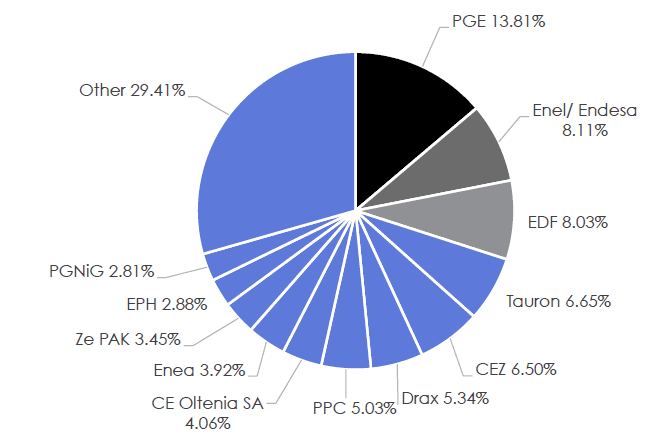
According to an analysis by the Institute for Energy Economics and Financial Analysis (IEEFA), coal-fired power plants and heating plants with a rated thermal input above 300 MWt will be the most affected facilities. Based on European Environment Agency data, IEEFA identified 108 coal-fired facilities that, according to available data, are the largest polluters in the EU and therefore also the most at risk.
As the following chart shows, a large proportion of these facilities are owned by Polish energy companies. However, ČEZ, a.s. also accounts for a significant share.
Among other things, IEEFA's analysis also focused on the recent acquisition of Swedish company Vattenfall's German coal assets by Czech Energetický a průmyslový holding (EPH). For example, according to IEEFA, the Jänschwalde coal-fired power plant has no economic future after 2021 when the age of the equipment and current pollutant emission levels are taken into account.
In general, IEEFA expects investment in measures to reduce NOx emissions to increase coal-fired power plants' electricity generation costs by between 2 and 4 €/MWh. For investment in SO2 emission reductions, IEEFA expects an impact on electricity generation costs of between 6 and 7 €/MWh.
Tighter limits will jeopardise investments made in the Czech heating sector
Tighter emission limits will also have a considerable impact on Czech heating plants. Representatives of heating plants previously stated in this connection that stricter emission limits would jeopardise investments made to comply with the emission limits set out in Annex V of European Directive 2010/75/EU on industrial emissions. These limits entered into force on 1 January 2016, but thanks to the Czech Republic's Transitional National Plan, their application to most affected facilities in the Czech Republic was postponed until 1 July 2020.
According to the Heating Plant Association, the tightening of emission limits will require a 100 to 200 % increase in investment in flue-gas desulphurisation compared with the originally proposed amounts. The Heating Plant Association puts the cost of all measures to make generation cleaner in the Czech Republic at around 44 billion Kč. The introduction of new technologies will also increase operating costs, which will need to be passed on into final prices for customers.
“From the perspective of operating economics, the new emission standards will affect essentially all facilities using coal. Selected facilities with the most modern flue-gas cleaning systems will be able to meet the new emission limits through increased consumption of additives, which will naturally be reflected in higher operating costs. However, most facilities in the Czech Republic will require further investment measures to achieve the required emission limits,” comments Michal Kubíček, project manager at consultancy Euroenergy, on the impact of tighter emission limits.
Kubíček added that the industrial emissions directive had already introduced standards that would gradually contribute to achieving a high level of air protection.
“The new emission requirements set out in the reference document on best available techniques (BAT) will already lead to disproportionate costs in relation to their benefits for air protection. However, besides the economic impacts, other aspects must also be considered. Compliance with the required emission limits will be problematic for facilities even during steady-state operation. Such strict emission requirements may preclude boiler plant operation under dynamic output changes and may therefore prevent the use of the facility's electrical output to provide ancillary services. The new emission limits therefore represent impacts – potentially even fatal ones – not only for the Czech heating sector, but also a possible threat to the future safe and reliable operation of the power system,” Kubíček said.
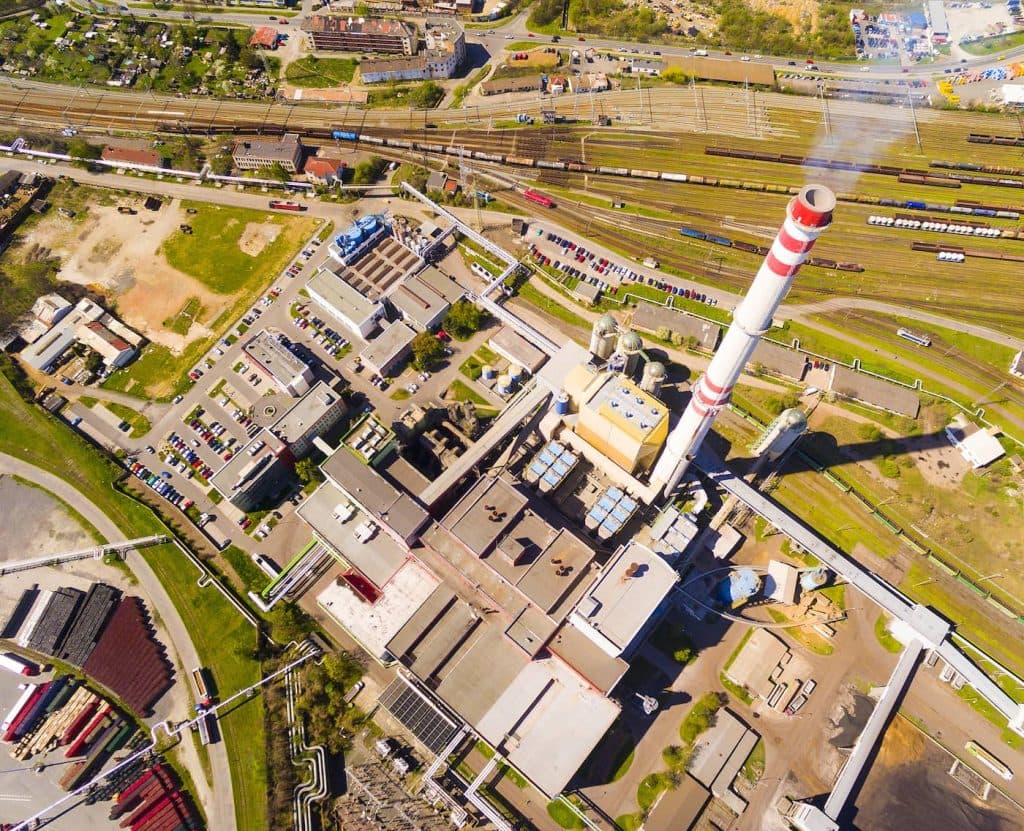
Lead photo: Ledvice Power Plant, source: www.cez.cz
Translation disclaimer
This article is a machine translation of the Czech original and has not yet been fully reviewed. In case of any doubt, please refer to the Czech version.
Sdílejte článek prostřednictvím:
You might also like
23 October 2026, 11:01
23 October 2026, 06:34