
25 September 2026, 09:51
Loading...
EV charging in Czechia surges. Largest networks report sharp growth

oEnergetice.cz, ČTK
19 July 2026, 13:29
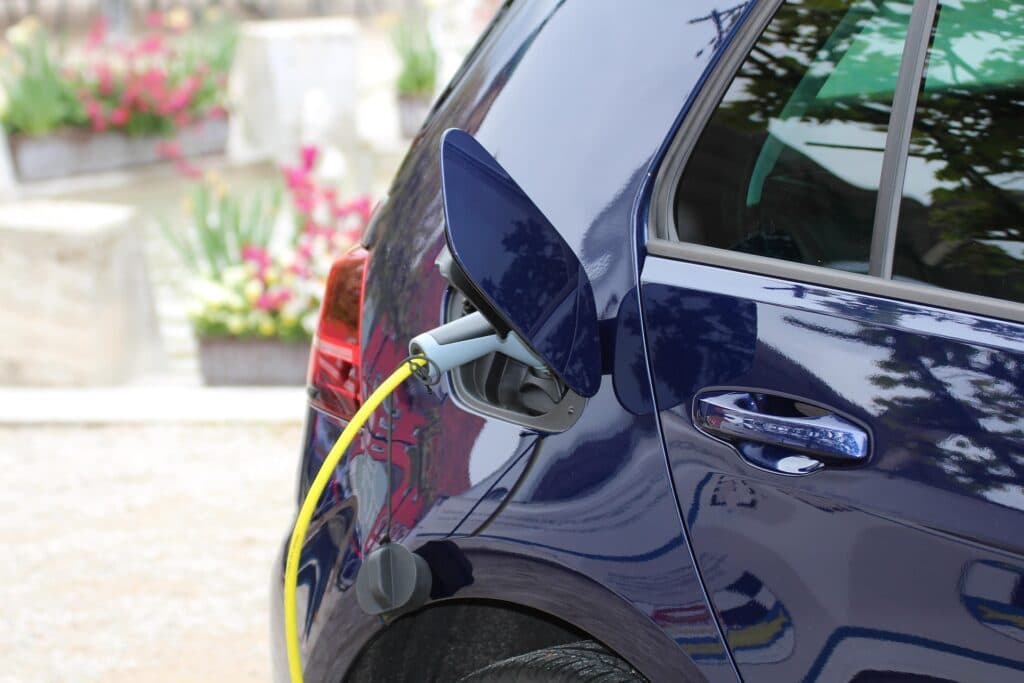
The operation of EV charging stations in Czechia continues to grow this year. After the first half of the year, operators of the largest networks are reporting increases in electricity consumption of several tens of percent, while the number of charging sessions is also rising. Construction of new stations is continuing as well, with around 3700 now operating in the Czech Republic. This follows from current information provided by operators to ČTK. Despite the rapid growth in activity, Czechia still lags behind Western and Northern European countries in terms of electric mobility density.
According to data from the Transport Research Centre (CDV), more than 73.000 all-electric passenger cars are currently registered in Czechia. Including light commercial vehicles, buses and trucks, their number is more than 5000 higher, according to the centre.
Charging station usage is growing alongside this. ČEZ, the operator of the largest network, opened its 1000th station at the start of the year and plans to continue expanding the network throughout the year. “Our goal for this year is to operate a network of 1200 stations and to continue reducing charging times. We are therefore building new high-power chargers on busy routes and replacing existing stations with ultra-fast ones,” said ČEZ vice-chairman Pavel Cyrani.
In the first half of the year, ČEZ recorded year-on-year growth of 29 percent in electricity consumption across its station network, to 8,5 gigawatt-hours (GWh). According to the company, the strongest demand is for ultra-fast chargers with output above 150 kilowatts (kW).
Prague Energy (PRE) operates the second-largest network. Its number of charging stations has grown by 32 this year to a total of 928, with more than 74 percent of them located in Prague. “We continue to see increased interest in EVs, which we link to high fossil fuel prices. At the same time, the trend of replacing large corporate fleets and switching them to battery-electric models is continuing,” said Libor Hladík, head of PRE’s e-mobility division. Electricity consumption in the PRE network thus rose year on year by 42 percent to 6,98 GWh, while the number of individual transactions increased by 37 percent.
E.ON now operates 918 charging points at 450 charging stations. This year, the company’s network has expanded by more than 60 points at 32 charging stations. During the first six months of the year, drivers drew 5,68 Gwh of electricity from the network, almost twice last year’s volume. The number of charging sessions rose by 100.000 to more than 229.000. “Our statistics also show that drivers are increasingly using ultra-fast charging stations within the public charging network,” spokesman Roman Šperňák added.
innogy is also gradually expanding its charging network, with the company currently offering 348 charging points. “Including stations currently under construction, this number will soon rise to 408. A key planned project is the preparation of a high-capacity charging hub on the D1 motorway in the South Moravian Region. It will offer 36 charging spaces with total capacity of 4,8 MW. In future, we plan to build another three to four similar hubs,” said innogy spokesman Lukáš Heřtus.
According to him, electricity consumption at innogy rose by 40 percent year on year in the first half to 302 MWh. The number of transactions increased by 32 percent to a total of 15.585 charging sessions.
According to transport experts, the density of charging infrastructure in the Czech Republic is currently sufficient relative to the number of registered EVs, but in Europe it ranks around average in terms of the number of stations. It lags particularly behind some countries in Western and Northern Europe. European leaders in e-mobility include Norway and the Netherlands.
Translation disclaimer
This article is a machine translation of the Czech original and has not yet been fully reviewed. In case of any doubt, please refer to the Czech version.
Sdílejte článek prostřednictvím:
You might also like

24 September 2026, 11:23

24 September 2026, 10:30
24 September 2026, 06:56