
25 September 2026, 09:51
Loading...
NKÚ: Czechia lags behind Europe in electric vehicles, state behind on chargers

oEnergetice.cz, ČTK
22 June 2026, 09:51
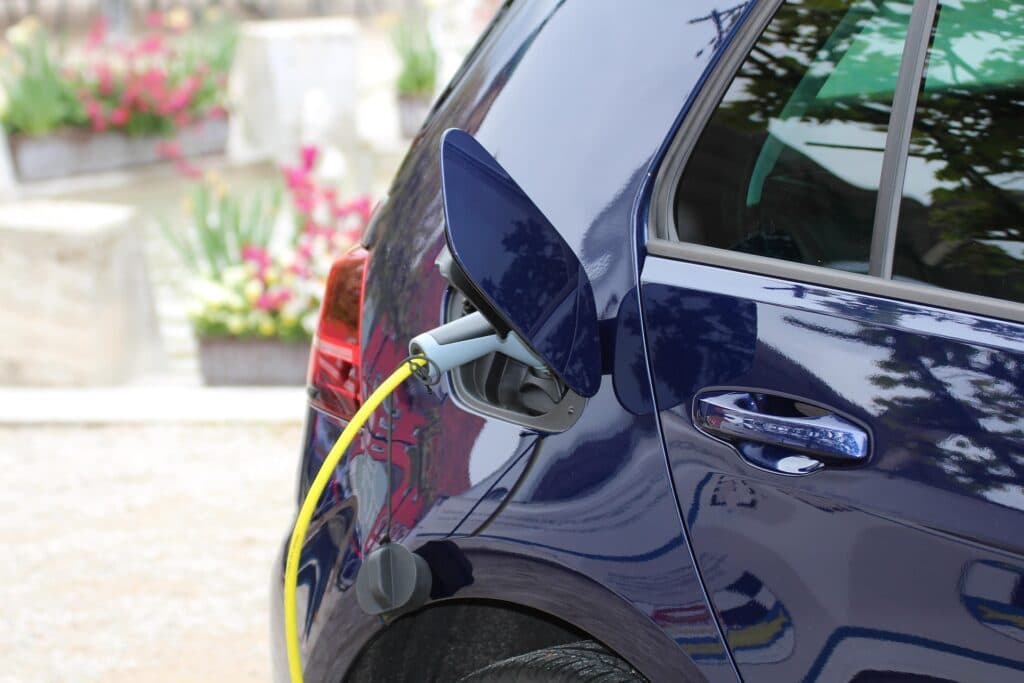
Czechia lags behind most European countries in the number of electric vehicles and is failing to meet national targets for the construction of charging and refuelling stations. This follows from the findings of an audit by the Supreme Audit Office (NKÚ), which the authority published today. It also lacks regulations for the parking of electric vehicles, according to the office. The Ministry of Transport told ČTK that the audit captures only a temporary situation and that the state will meet its electric vehicle charging targets by the end of the year.
The NKÚ audited funds allocated by the Ministry of Industry and Trade and the Ministry of Transport for the development of so-called clean mobility between 2019 and 2025. In terms of the number of electric or hybrid vehicles per capita, Czechia ranks only 24th in Europe. At the end of September 2025, 54,864 passenger electric cars and vans weighing up to 3.5 tonnes were registered in the country, accounting for 1.2 percent of the Czech vehicle fleet. In Germany, Austria and the UK, electric vehicles accounted for more than six percent of the fleet at the same time, and in Norway for more than 33 percent.
According to the authority, the audit found that three binding targets laid down in an EU regulation approved by the Czech Republic had not been met. These concern the coverage of the motorway network by public charging stations for both passenger and heavy-duty electric vehicles. For example, there are no publicly accessible charging hubs for passenger cars or vans with a total output of at least 400 kilowatts (kW) on the 86-kilometre section of the D5 between the state border and Plzeň, or on the 110-kilometre D11 motorway between Prague and Jaroměř.
Of the 3,258 publicly accessible charging stations in Czechia at the end of last September, around two-fifths were built with support from the European Transport Operational Programme 2014–2020, while none were built under the subsequent Transport 2021–2027 programme. These subsidies were supposed to support the construction of at least 500 stations by the end of 2024. The programme has allocated six billion crowns for the installation of 17,000 charging and refuelling stations by the end of 2029. However, the risk that Czechia will fail to meet this target is low, according to the authority, as the Ministry of Transport had registered 116 projects worth 5.5 billion by the end of the audit.
"The e-vehicle market and its users already have access to a charging network capable of serving more than three times the number of passenger electric vehicles and plug-in hybrids currently registered in the country. We are therefore fulfilling our role in supporting the construction of chargers," the ministry said."In comparisons of the level of public charging infrastructure, the Czech Republic is roughly in the middle of European country rankings," it added.
According to the ministry, the unmet targets currently concern mainly public charging for heavy-duty electric vehicles.
"Building very robust charging hubs for trucks is exceptionally demanding," it said."We have therefore launched several subsidy calls to support these projects and created the conditions for their implementation. Most of these targets will thus be met," it added.
Regarding the location of charging hubs for passenger cars, the ministry said Czechia is already failing to meet this target only on the D11, and that when projects due to be completed this year and next year are included, the targets would be met across the entire country.
According to the NKÚ, Czechia did meet its national target of reaching at least 50,000 passenger battery-electric vehicles in 2025, but failed to meet targets for the number of battery-electric commercial vehicles and buses or hydrogen-powered vehicles. As of 30 September 2025, the audit found no recorded registrations in the country of hydrogen-powered vans, trucks or buses, although the target was 50 vans, ten trucks and ten buses.
The audit also found that new legislation on the safe charging and parking of alternative-fuel vehicles in multi-storey garages has still not been completed. Rules for parking vehicles powered by gaseous fuels were supposed to be adopted by the end of 2021, while rules for the safe charging of electric vehicles were due by the end of 2025. The Ministries of Transport, Interior, Health and Regional Development are responsible for setting the rules. By the end of the NKÚ audit, the ministries had not agreed on the measures, according to the authority.
Translation disclaimer
This article is a machine translation of the Czech original and has not yet been fully reviewed. In case of any doubt, please refer to the Czech version.
Sdílejte článek prostřednictvím:
You might also like

24 September 2026, 11:23

24 September 2026, 10:30
24 September 2026, 06:56